 Add to Chrome
 Add to Firefox
 Add to Edge
SCRIBE: Diagnostic Evaluation and Rich Transcription Models for Indic ASR
May 20, 2026
Automatic speech recognition replaces typing only when correction costs less than manual entry, a threshold determined by error types, not counts: fixing a misrecognized domain term costs far more than inserting a comma. Word error rate (WER) fails on two fronts: it collapses distinct error categories into a single scalar, and it structurally penalizes agglutinative languages where valid sandhi merges inflate scores. We introduce SCRIBE, a diagnostic framework that provides categorical error decomposition into lexical, punctuation, numeral, and domain-entity rates through sandhi-tolerant alignment with domain vocabulary injection. Human validation confirms SCRIBE aligns with expert judgment where WER does not. We release SCRIBE, an LLM curation pipeline, benchmarks, and open-weight rich transcription models for Hindi, Malayalam, and Kannada.

Vividh-ASR: A Complexity-Tiered Benchmark and Optimization Dynamics for Robust Indic Speech Recognition
May 13, 2026Fine-tuning multilingual ASR models like Whisper for low-resource languages often improves read speech but degrades spontaneous audio performance, a phenomenon we term studio-bias. To diagnose this mismatch, we introduce Vividh-ASR, a complexity-stratified benchmark for Hindi and Malayalam across four tiers: studio, broadcast, spontaneous, and synthetic noise. Through a controlled study of learning-rate timing and curriculum ordering, we find that early large parameter updates improve global WER by 12 absolute points, while a hard-to-easy curriculum adds gains for spontaneous speech. These findings motivate reverse multi-stage fine-tuning (R-MFT), a training recipe that enables a parameter-efficient 244M Whisper model to match or exceed conventionally fine-tuned 769M counterparts. Representational analysis via CKA and SVD reveals effective schedules concentrate adaptation in the decoder, preserving the pre-trained encoder's acoustic geometry. We release the benchmark and models.
Introducing a new hyper-parameter for RAG: Context Window Utilization
Jul 29, 2024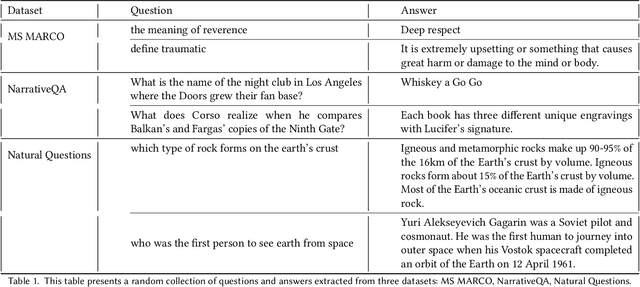
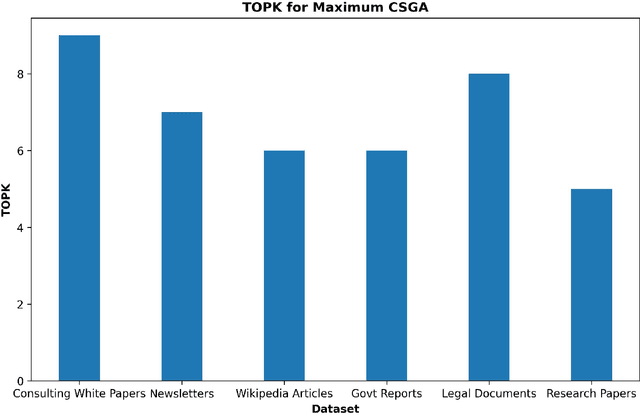
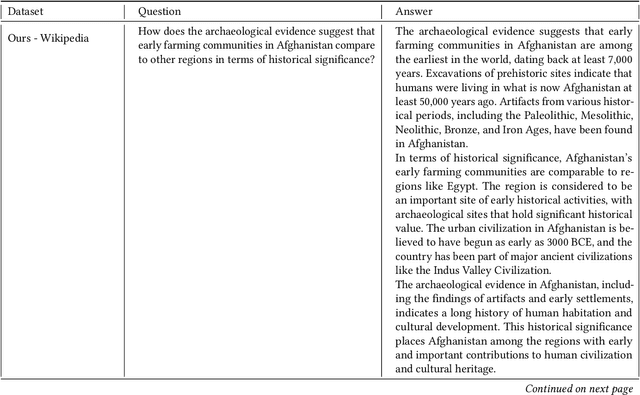
This paper introduces a new hyper-parameter for Retrieval-Augmented Generation (RAG) systems called Context Window Utilization. RAG systems enhance generative models by incorporating relevant information retrieved from external knowledge bases, improving the factual accuracy and contextual relevance of generated responses. The size of the text chunks retrieved and processed is a critical factor influencing RAG performance. This study aims to identify the optimal chunk size that maximizes answer generation quality. Through systematic experimentation, we analyze the effects of varying chunk sizes on the efficiency and effectiveness of RAG frameworks. Our findings reveal that an optimal chunk size balances the trade-off between providing sufficient context and minimizing irrelevant information. These insights are crucial for enhancing the design and implementation of RAG systems, underscoring the importance of selecting an appropriate chunk size to achieve superior performance.
COS-Mix: Cosine Similarity and Distance Fusion for Improved Information Retrieval
Jun 02, 2024This study proposes a novel hybrid retrieval strategy for Retrieval-Augmented Generation (RAG) that integrates cosine similarity and cosine distance measures to improve retrieval performance, particularly for sparse data. The traditional cosine similarity measure is widely used to capture the similarity between vectors in high-dimensional spaces. However, it has been shown that this measure can yield arbitrary results in certain scenarios. To address this limitation, we incorporate cosine distance measures to provide a complementary perspective by quantifying the dissimilarity between vectors. Our approach is experimented on proprietary data, unlike recent publications that have used open-source datasets. The proposed method demonstrates enhanced retrieval performance and provides a more comprehensive understanding of the semantic relationships between documents or items. This hybrid strategy offers a promising solution for efficiently and accurately retrieving relevant information in knowledge-intensive applications, leveraging techniques such as BM25 (sparse) retrieval , vector (Dense) retrieval, and cosine distance based retrieval to facilitate efficient information retrieval.