 Add to Chrome
 Add to Firefox
 Add to Edge
JASPR: Joint Spatial Representation learning of histology and spatial genomics for improved virtual genomic screening and clinical prognostication
Jun 24, 2026
Recent studies have shown that spatial properties of tumors are critical for understanding disease biology and predicting patient outcomes. These spatial properties are increasingly uncovered through complementary modalities: spatial transcriptomics (ST) captures spatially-resolved molecular states, while hematoxylin and eosin-stained whole slide images (HE) reveal tissue morphology. While approaches are emerging to fuse these modalities, effective methods that learn not only joint representations but also incorporate spatial context across modalities are lacking. Here, we present JASPR (Joint Spatial Representation learning), a self-supervised deep learning framework that integrates HE images and ST data through a cross-modal reconstruction objective that incorporates spatial context within HE images and ST profiles. It employs shared modules to capture universal spatial properties across modalities, while modality-specific experts encode features unique to morphological and genomic data. We train and validate JASPR on breast cancer datasets, demonstrating that its learned joint representation substantially improves HE-based prediction of 9,248 genes and provides prognostic value for breast cancer outcomes.

Statistical learning for accurate and interpretable battery lifetime prediction
Jan 06, 2021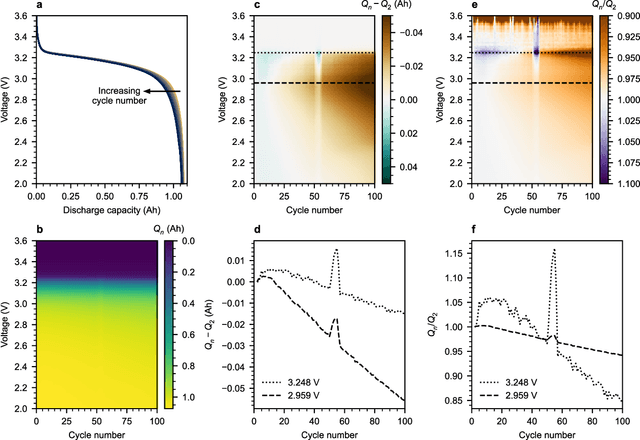
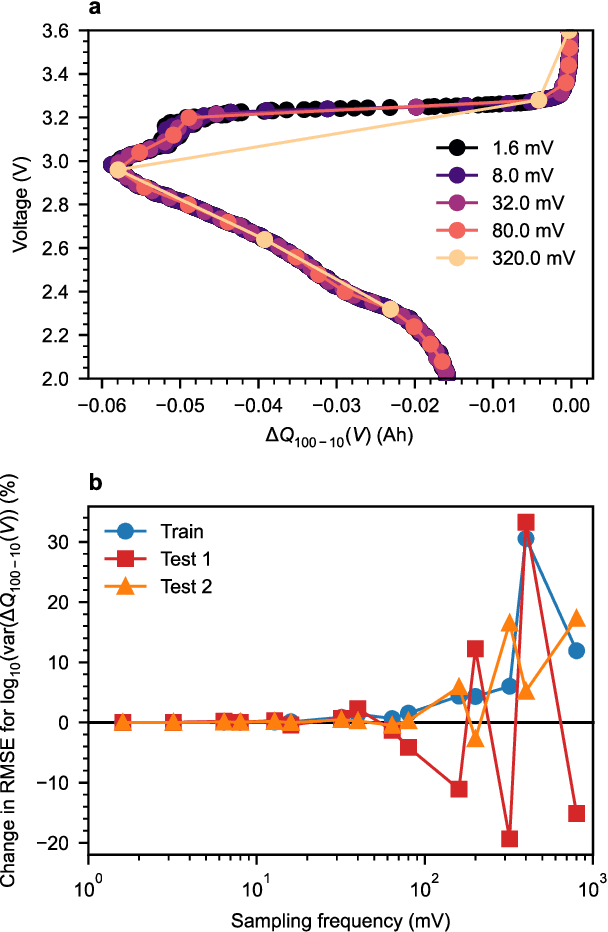
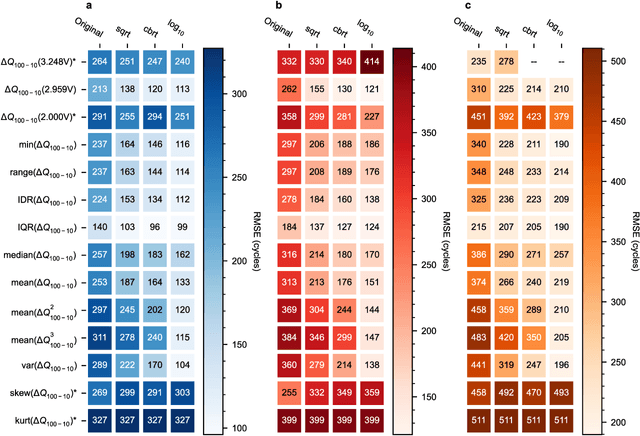
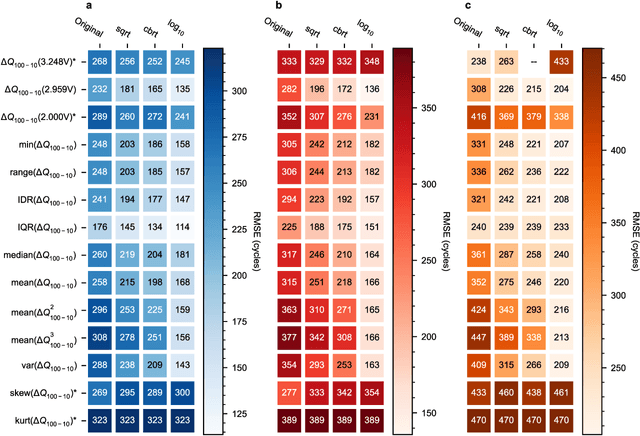
Data-driven methods for battery lifetime prediction are attracting increasing attention for applications in which the degradation mechanisms are poorly understood and suitable training sets are available. However, while advanced machine learning and deep learning methods offer high performance with minimal feature engineering, simpler "statistical learning" methods often achieve comparable performance, especially for small training sets, while also providing physical and statistical interpretability. In this work, we use a previously published dataset to develop simple, accurate, and interpretable data-driven models for battery lifetime prediction. We first present the "capacity matrix" concept as a compact representation of battery electrochemical cycling data, along with a series of feature representations. We then create a number of univariate and multivariate models, many of which achieve comparable performance to the highest-performing models previously published for this dataset. These models also provide insights into the degradation of these cells. Our approaches can be used both to quickly train models for a new dataset and to benchmark the performance of more advanced machine learning methods.