 Add to Chrome
 Add to Firefox
 Add to Edge
A Foundation Model for Multimodal Event Sequences in Financial Applications
Jul 10, 2026
Predictive modeling is a core component of modern financial services, where a wide range of tasks are traditionally addressed using separate models trained on manually engineered tabular features. This task-specific approach limits reuse and makes it difficult to fully exploit heterogeneous data sources such as transaction histories and digital interaction signals. In this paper, we present an approach based on pretraining a foundation transformer model on multimodal sequences of user events. Events from multiple data sources are unified into a single chronological sequence, enabling early fusion of heterogeneous modalities and learning of general-purpose representations via a next-event prediction objective. These representations are combined with existing engineered user features, on top of which lightweight neural models are trained for multiple downstream tasks. The proposed system outperforms traditional task-specific models while reducing development overhead. The approach was deployed in production at one of the biggest banks in Eastern Europe, resulting in measurable improvements in business metrics.

Startup success prediction and VC portfolio simulation using CrunchBase data
Sep 27, 2023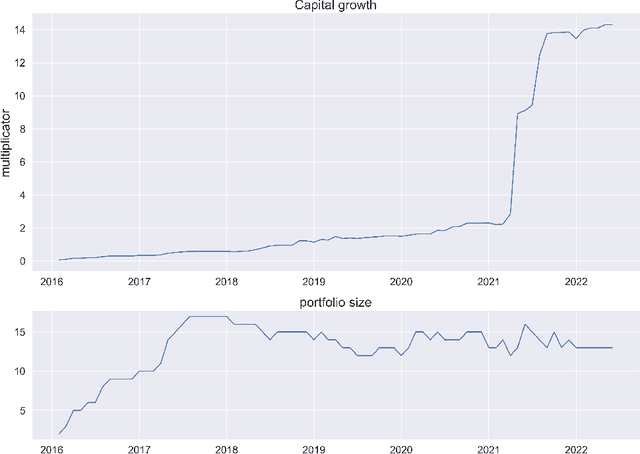
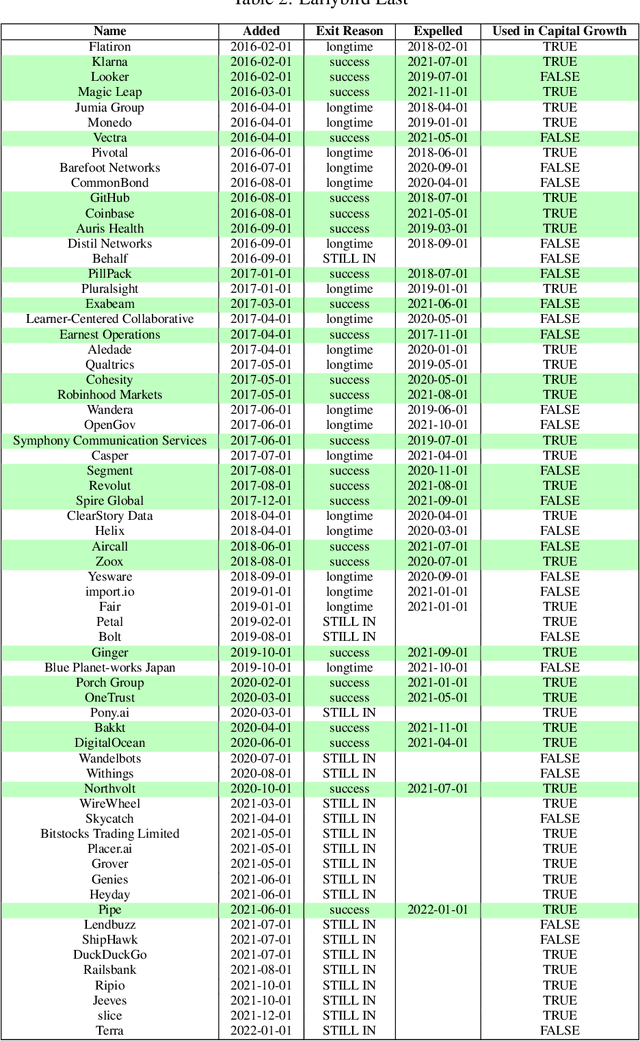
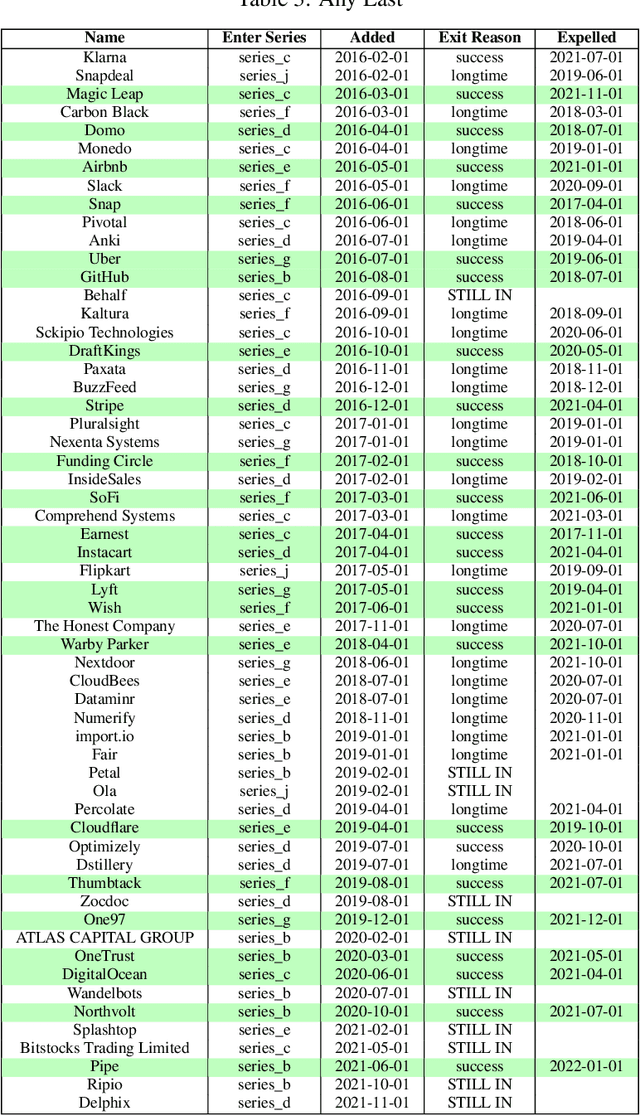
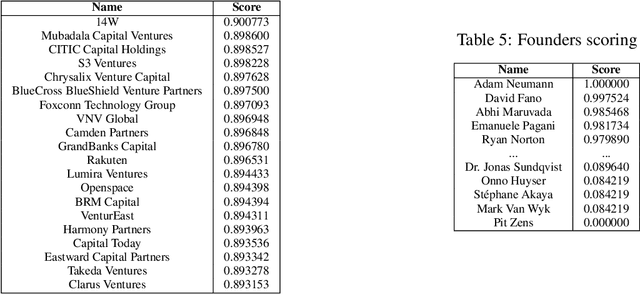
Predicting startup success presents a formidable challenge due to the inherently volatile landscape of the entrepreneurial ecosystem. The advent of extensive databases like Crunchbase jointly with available open data enables the application of machine learning and artificial intelligence for more accurate predictive analytics. This paper focuses on startups at their Series B and Series C investment stages, aiming to predict key success milestones such as achieving an Initial Public Offering (IPO), attaining unicorn status, or executing a successful Merger and Acquisition (M\&A). We introduce novel deep learning model for predicting startup success, integrating a variety of factors such as funding metrics, founder features, industry category. A distinctive feature of our research is the use of a comprehensive backtesting algorithm designed to simulate the venture capital investment process. This simulation allows for a robust evaluation of our model's performance against historical data, providing actionable insights into its practical utility in real-world investment contexts. Evaluating our model on Crunchbase's, we achieved a 14 times capital growth and successfully identified on B round high-potential startups including Revolut, DigitalOcean, Klarna, Github and others. Our empirical findings illuminate the importance of incorporating diverse feature sets in enhancing the model's predictive accuracy. In summary, our work demonstrates the considerable promise of deep learning models and alternative unstructured data in predicting startup success and sets the stage for future advancements in this research area.