 Add to Chrome
 Add to Firefox
 Add to Edge
Enhancing Persona Classification in Dialogue Systems: A Graph Neural Network Approach
Dec 17, 2024
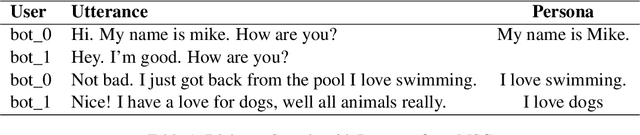
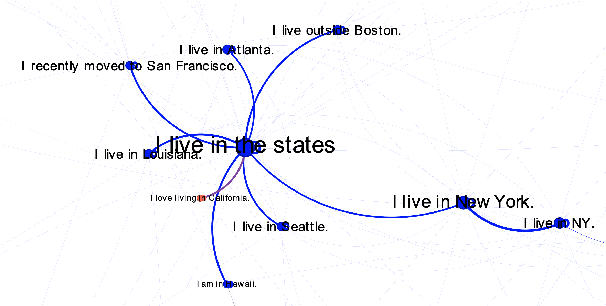
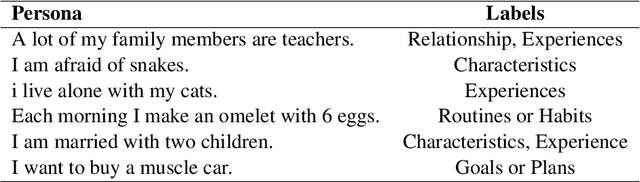
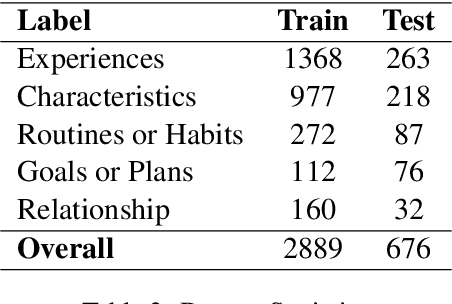
In recent years, Large Language Models (LLMs) gain considerable attention for their potential to enhance personalized experiences in virtual assistants and chatbots. A key area of interest is the integration of personas into LLMs to improve dialogue naturalness and user engagement. This study addresses the challenge of persona classification, a crucial component in dialogue understanding, by proposing a framework that combines text embeddings with Graph Neural Networks (GNNs) for effective persona classification. Given the absence of dedicated persona classification datasets, we create a manually annotated dataset to facilitate model training and evaluation. Our method involves extracting semantic features from persona statements using text embeddings and constructing a graph where nodes represent personas and edges capture their similarities. The GNN component uses this graph structure to propagate relevant information, thereby improving classification performance. Experimental results show that our approach, in particular the integration of GNNs, significantly improves classification performance, especially with limited data. Our contributions include the development of a persona classification framework and the creation of a dataset.

Exploring the Effectiveness of Methods for Persona Extraction
Jul 12, 2024The paper presents a study of methods for extracting information about dialogue participants and evaluating their performance in Russian. To train models for this task, the Multi-Session Chat dataset was translated into Russian using multiple translation models, resulting in improved data quality. A metric based on the F-score concept is presented to evaluate the effectiveness of the extraction models. The metric uses a trained classifier to identify the dialogue participant to whom the persona belongs. Experiments were conducted on MBart, FRED-T5, Starling-7B, which is based on the Mistral, and Encoder2Encoder models. The results demonstrated that all models exhibited an insufficient level of recall in the persona extraction task. The incorporation of the NCE Loss improved the model's precision at the expense of its recall. Furthermore, increasing the model's size led to enhanced extraction of personas.