 Add to Chrome
 Add to Firefox
 Add to Edge
On-Device Continual Learning for Unsupervised Visual Anomaly Detection in Dynamic Manufacturing
Dec 15, 2025
In modern manufacturing, Visual Anomaly Detection (VAD) is essential for automated inspection and consistent product quality. Yet, increasingly dynamic and flexible production environments introduce key challenges: First, frequent product changes in small-batch and on-demand manufacturing require rapid model updates. Second, legacy edge hardware lacks the resources to train and run large AI models. Finally, both anomalous and normal training data are often scarce, particularly for newly introduced product variations. We investigate on-device continual learning for unsupervised VAD with localization, extending the PatchCore to incorporate online learning for real-world industrial scenarios. The proposed method leverages a lightweight feature extractor and an incremental coreset update mechanism based on k-center selection, enabling rapid, memory-efficient adaptation from limited data while eliminating costly cloud retraining. Evaluations on an industrial use case are conducted using a testbed designed to emulate flexible production with frequent variant changes in a controlled environment. Our method achieves a 12% AUROC improvement over the baseline, an 80% reduction in memory usage, and faster training compared to batch retraining. These results confirm that our method delivers accurate, resource-efficient, and adaptive VAD suitable for dynamic and smart manufacturing.

SeLoC-ML: Semantic Low-Code Engineering for Machine Learning Applications in Industrial IoT
Jul 18, 2022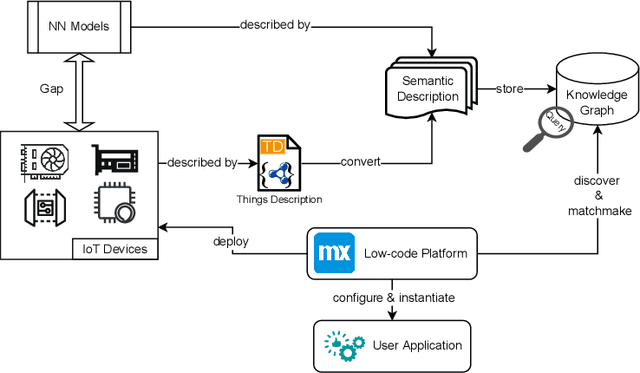
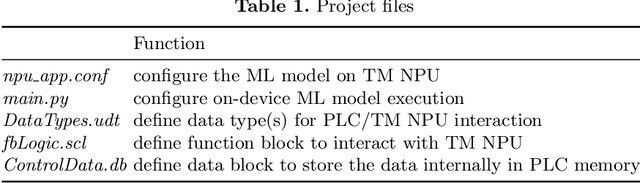
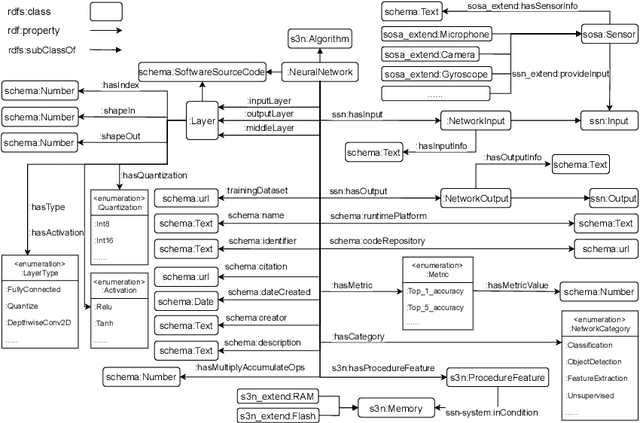

Internet of Things (IoT) is transforming the industry by bridging the gap between Information Technology (IT) and Operational Technology (OT). Machines are being integrated with connected sensors and managed by intelligent analytics applications, accelerating digital transformation and business operations. Bringing Machine Learning (ML) to industrial devices is an advancement aiming to promote the convergence of IT and OT. However, developing an ML application in industrial IoT (IIoT) presents various challenges, including hardware heterogeneity, non-standardized representations of ML models, device and ML model compatibility issues, and slow application development. Successful deployment in this area requires a deep understanding of hardware, algorithms, software tools, and applications. Therefore, this paper presents a framework called Semantic Low-Code Engineering for ML Applications (SeLoC-ML), built on a low-code platform to support the rapid development of ML applications in IIoT by leveraging Semantic Web technologies. SeLoC-ML enables non-experts to easily model, discover, reuse, and matchmake ML models and devices at scale. The project code can be automatically generated for deployment on hardware based on the matching results. Developers can benefit from semantic application templates, called recipes, to fast prototype end-user applications. The evaluations confirm an engineering effort reduction by a factor of at least three compared to traditional approaches on an industrial ML classification case study, showing the efficiency and usefulness of SeLoC-ML. We share the code and welcome any contributions.