 Add to Chrome
 Add to Firefox
 Add to Edge
AurigaNet: A Real-Time Multi-Task Network for Enhanced Urban Driving Perception
Feb 11, 2026
Self-driving cars hold significant potential to reduce traffic accidents, alleviate congestion, and enhance urban mobility. However, developing reliable AI systems for autonomous vehicles remains a substantial challenge. Over the past decade, multi-task learning has emerged as a powerful approach to address complex problems in driving perception. Multi-task networks offer several advantages, including increased computational efficiency, real-time processing capabilities, optimized resource utilization, and improved generalization. In this study, we present AurigaNet, an advanced multi-task network architecture designed to push the boundaries of autonomous driving perception. AurigaNet integrates three critical tasks: object detection, lane detection, and drivable area instance segmentation. The system is trained and evaluated using the BDD100K dataset, renowned for its diversity in driving conditions. Key innovations of AurigaNet include its end-to-end instance segmentation capability, which significantly enhances both accuracy and efficiency in path estimation for autonomous vehicles. Experimental results demonstrate that AurigaNet achieves an 85.2% IoU in drivable area segmentation, outperforming its closest competitor by 0.7%. In lane detection, AurigaNet achieves a remarkable 60.8% IoU, surpassing other models by more than 30%. Furthermore, the network achieves an mAP@0.5:0.95 of 47.6% in traffic object detection, exceeding the next leading model by 2.9%. Additionally, we validate the practical feasibility of AurigaNet by deploying it on embedded devices such as the Jetson Orin NX, where it demonstrates competitive real-time performance. These results underscore AurigaNet's potential as a robust and efficient solution for autonomous driving perception systems. The code can be found here https://github.com/KiaRational/AurigaNet.

Technical Report of Mobile Manipulator Robot for Industrial Environments
Sep 10, 2024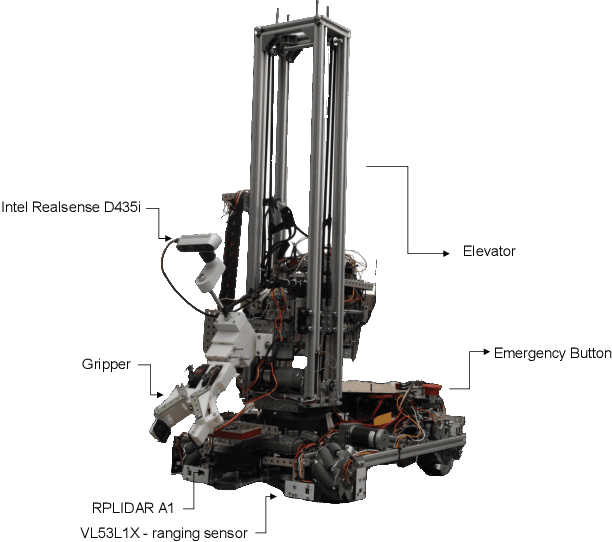
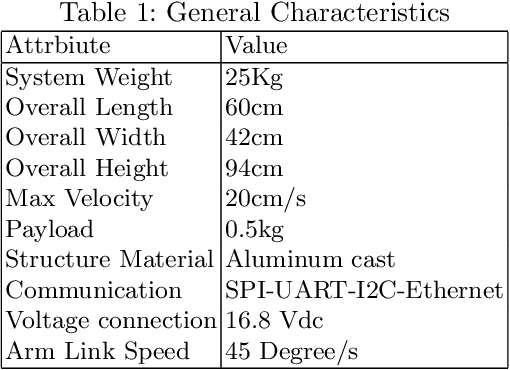
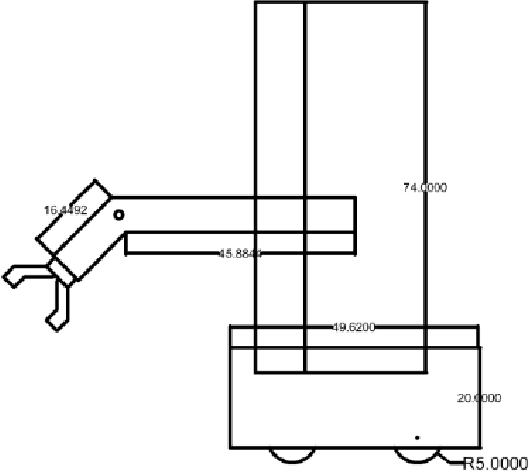
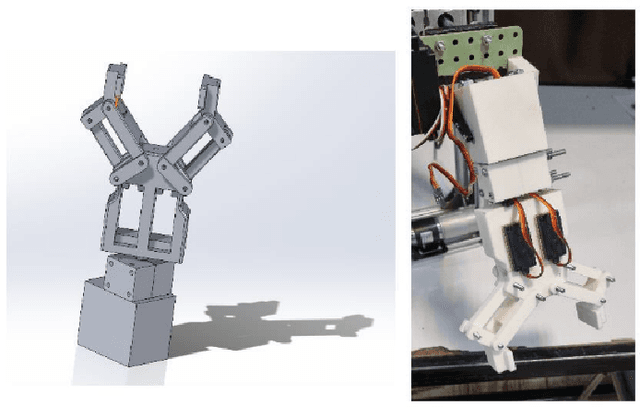
This paper presents the development of the Auriga @Work robot, designed by the Robotics and Intelligent Automation Lab at Shahid Beheshti University, Department of Electrical Engineering, for the RoboCup 2024 competition. The robot is tailored for industrial applications, focusing on enhancing efficiency in repetitive or hazardous environments. It is equipped with a 4-wheel Mecanum drive system for omnidirectional mobility and a 5-degree-of-freedom manipulator arm with a custom 3D-printed gripper for object manipulation and navigation tasks. The robot's electronics are powered by custom-designed boards utilizing ESP32 microcontrollers and an Nvidia Jetson Nano for real-time control and decision-making. The key software stack integrates Hector SLAM for mapping, the A* algorithm for path planning, and YOLO for object detection, along with advanced sensor fusion for improved navigation and collision avoidance.