 Add to Chrome
 Add to Firefox
 Add to Edge
A Systematic Literature Map on Big Data
Aug 08, 2024
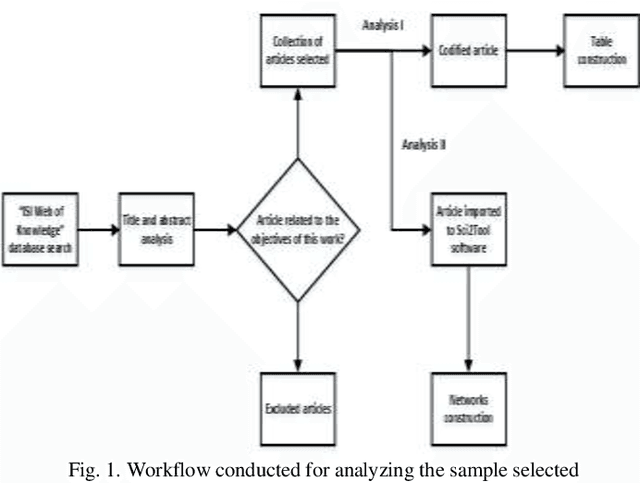
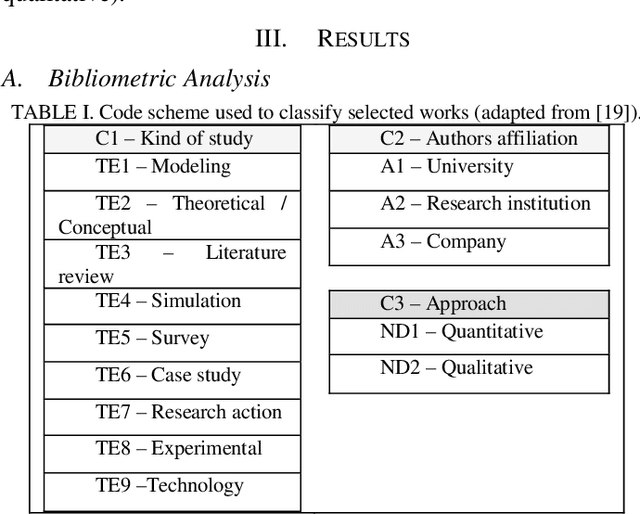
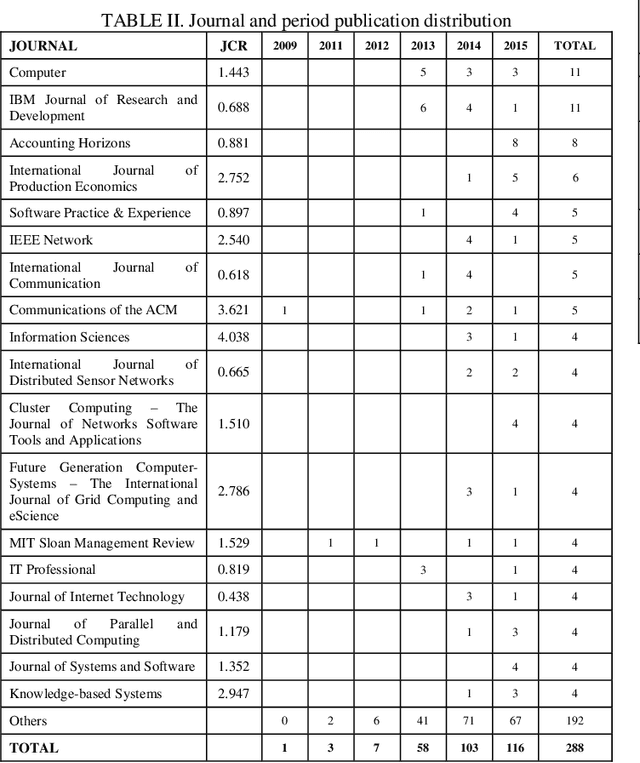
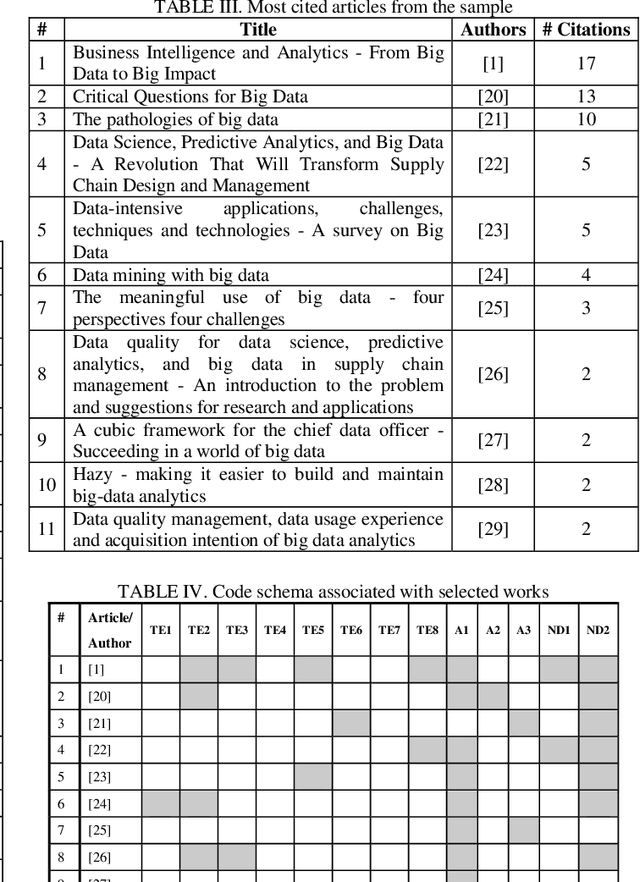
The paradigm of Big Data has been established as a solid field of studies in many areas such as healthcare, science, transport, education, government services, among others. Despite widely discussed, there is no agreed definition about the paradigm although there are many concepts proposed by the academy and industry. This work aims to provide an analytical view of the studies conducted and published regarding the Big Data paradigm. The approach used is the systematic map of the literature, combining bibliometric analysis and content analysis to depict the panorama of research works, identifying patterns, trends, and gaps. The results indicate that there is still a long way to go, both in research and in concepts, such as building and defining adequate infrastructures and standards, to meet future challenges and for the paradigm to become effective and bring the expected benefits.

Characterizing Big Data Management
Jan 15, 2022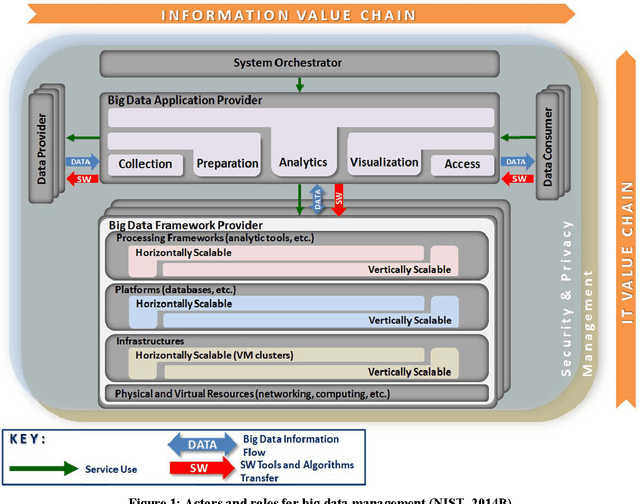
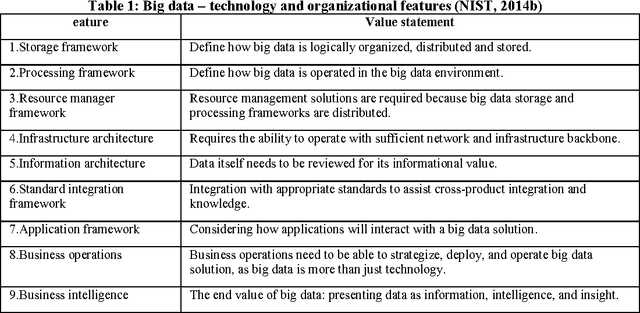
Big data management is a reality for an increasing number of organizations in many areas and represents a set of challenges involving big data modeling, storage and retrieval, analysis and visualization. However, technological resources, people and processes are crucial to facilitate the management of big data in any kind of organization, allowing information and knowledge from a large volume of data to support decision-making. Big data management can be supported by these three dimensions: technology, people and processes. Hence, this article discusses these dimensions: the technological dimension that is related to storage, analytics and visualization of big data; the human aspects of big data; and, in addition, the process management dimension that involves in a technological and business approach the aspects of big data management.
* volume 12, 2015