 Add to Chrome
 Add to Firefox
 Add to Edge
Adaptive Contrast Enhancement and Optimised Feature Matching for RootSIFT-Based Palm-Vein Recognition
Jul 17, 2026
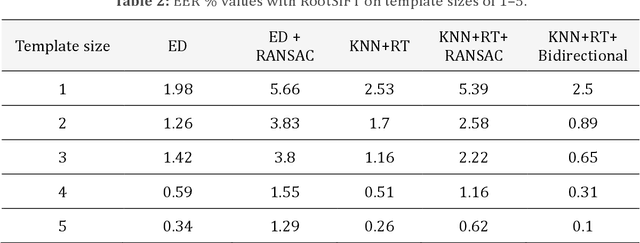
Palm-vein recognition is a highly secure biometric modality due to the uniqueness and subcutaneous nature of vein patterns. However, low contrast in palm-vein images, caused by NIR light scattering and sensor limitations, remains a significant challenge. To address this, we propose the Intensity-Limited Adaptive Contrast Stretching with Bidirectional Gaussian-weighted Overlapping Tiles (ILACS-BGOT) method, an enhancement of the previously developed ILACS with Layered Gaussian-weighted Overlapping Tiles (ILACS-LGOT) technique. ILACS enhances local contrast, while BGOT mitigates blocky artefacts. This study further integrates RootSIFT features with KNN+RT and incorporates the previously introduced Mean and Median Distance (MMD) filter to investigate the parameter variations of both MMD and RT, and their impact on recognition performance. A comprehensive analysis was conducted across three benchmark datasets (CASIA, PolyU, and PUT), using 42 combinations of MMD filter thresholds and RT values. Results were evaluated using EER and Accuracy. Findings reveal that higher template sizes improve performance, while varying MMD thresholds reflect dataset-specific rotational variations. The proposed system demonstrates superior generalisability, achieving significant improvements in both EER and Accuracy over existing methods. Furthermore, the underlying ILACS-BGOT mechanism suggests potential applicability beyond palm vein recognition to other biometric modalities such as finger vein and palmprint recognition, and more generally to low-contrast image enhancement across computer vision applications.

Robust Palm-Vein Recognition Using the MMD Filter: Improving SIFT-Based Feature Matching
Mar 03, 2025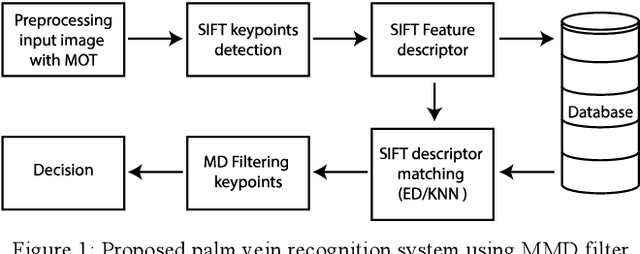
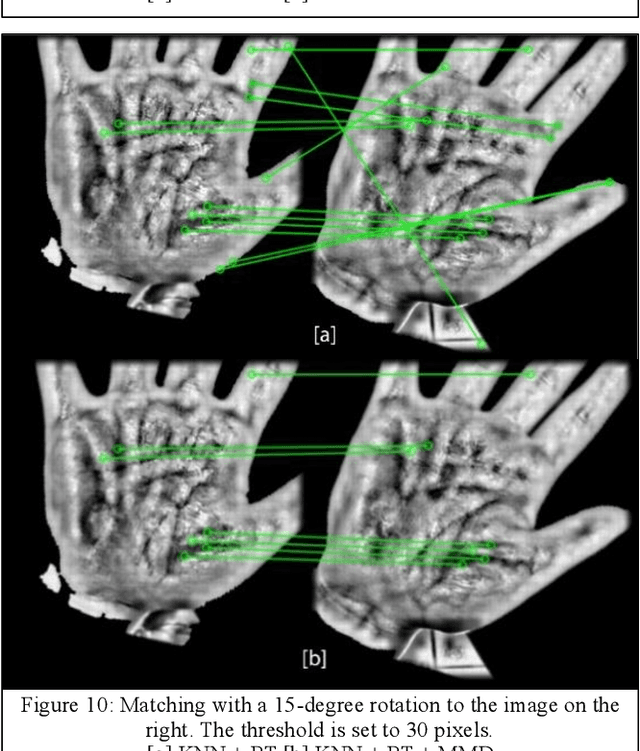
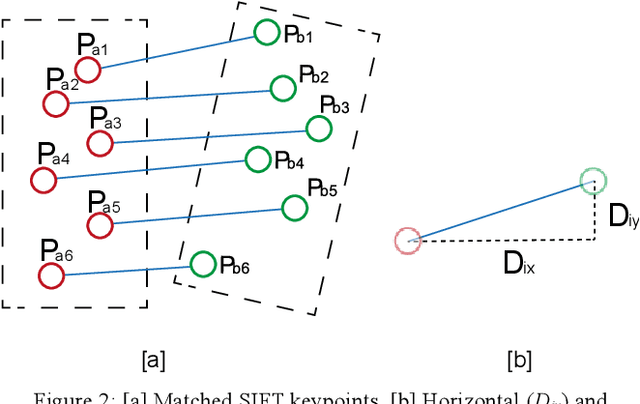
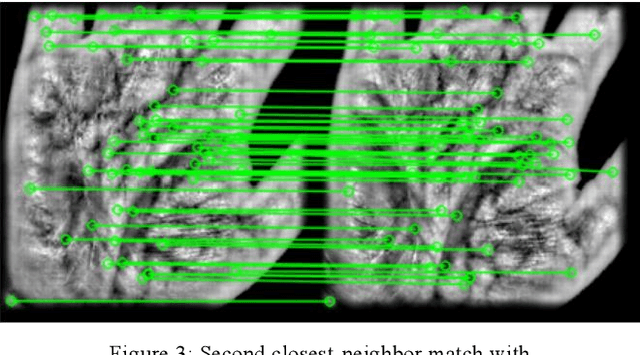
A major challenge with palm vein images is that slight movements of the fingers and thumb, or variations in hand posture, can stretch the skin in different areas and alter the vein patterns. This can result in an infinite number of variations in palm vein images for a given individual. This paper introduces a novel filtering technique for SIFT-based feature matching, known as the Mean and Median Distance (MMD) Filter. This method evaluates the differences in keypoint coordinates and computes the mean and median in each direction to eliminate incorrect matches. Experiments conducted on the 850nm subset of the CASIA dataset indicate that the proposed MMD filter effectively preserves correct points while reducing false positives detected by other filtering methods. A comparison with existing SIFT-based palm vein recognition systems demonstrates that the proposed MMD filter delivers outstanding performance, achieving lower Equal Error Rate (EER) values. This article presents an extended author's version based on our previous work, A Keypoint Filtering Method for SIFT based Palm-Vein Recognition.
ILACS-LGOT: A Multi-Layer Contrast Enhancement Approach for Palm-Vein Images
Feb 26, 2025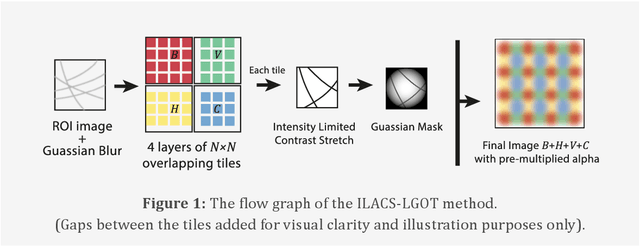
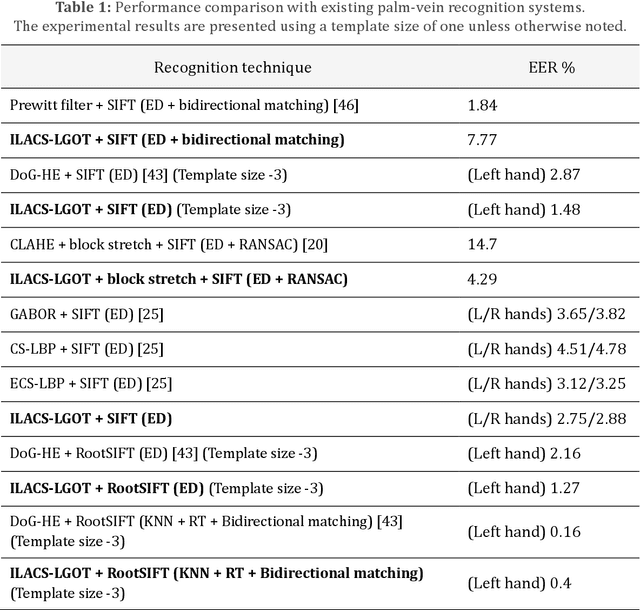
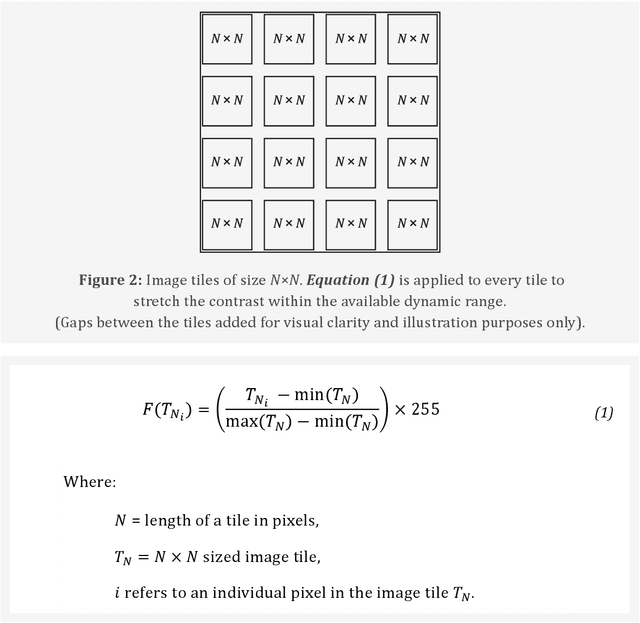
This article presents an extended author's version based on our previous work, where we introduced the Multiple Overlapping Tiles (MOT) method for palm vein image enhancement. To better reflect the specific operations involved, we rename MOT to ILACS-LGOT (Intensity-Limited Adaptive Contrast Stretching with Layered Gaussian-weighted Overlapping Tiles). This revised terminology more accurately represents the method's approach to contrast enhancement and blocky effect mitigation. Additionally, this article provides a more detailed analysis, including expanded evaluations, graphical representations, and sample-based comparisons, demonstrating the effectiveness of ILACS-LGOT over existing methods.