 Add to Chrome
 Add to Firefox
 Add to Edge
EntailLLM: Verifying LLM-Generated Vulnerability Discovery Paths with Domain Knowledge via Logic Programming
Aug 03, 2026
Large language models are increasingly used to reason about software vulnerabilities, but their outputs can silently violate domain knowledge, limiting their reliability in safety-critical settings such as medical devices. Prior work either treats that output as a prediction to be scored or constrains it to walks within a single knowledge graph; neither checks whether reasoning over a binary is consistent with an independent body of domain knowledge. We present EntailLLM, which validates each LLM-proposed analyst path by entailment: the path is a traversal of the binary's function call graph, the domain knowledge is represented in a separate graph, and verification aligns the two under temporal annotated logic. Across three CWE classes, four LLMs, three prompting strategies, and seven binaries varying in size from 405 to 12,696 function call-graph nodes, domain knowledge raises pooled entailment from 78% to 98%, with entailment decreasing in only 3% of the experiments. EntailLLM is deployed end-to-end on real medical-device binaries, reaching 98% pooled entailment without per-device tuning. Our system inherits the formal guarantees of generalized annotated logic, providing logical verification of LLM output that is both explainable and grounded in well-defined semantics.

Scalable Semantic Non-Markovian Simulation Proxy for Reinforcement Learning
Oct 15, 2023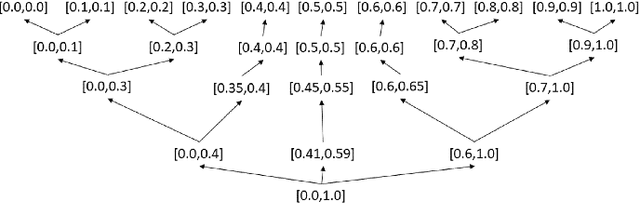
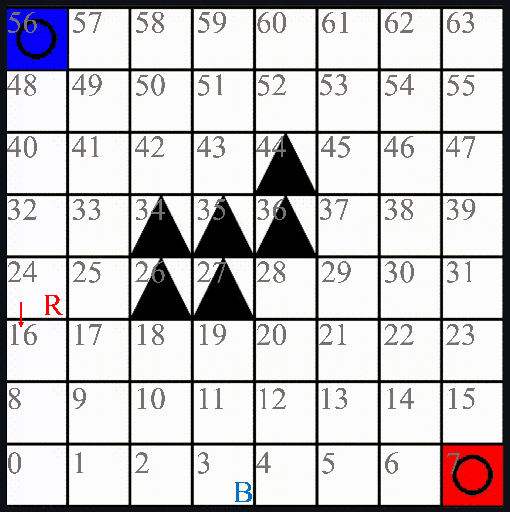

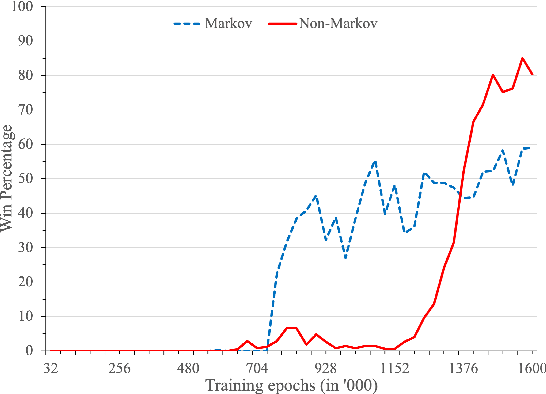
Recent advances in reinforcement learning (RL) have shown much promise across a variety of applications. However, issues such as scalability, explainability, and Markovian assumptions limit its applicability in certain domains. We observe that many of these shortcomings emanate from the simulator as opposed to the RL training algorithms themselves. As such, we propose a semantic proxy for simulation based on a temporal extension to annotated logic. In comparison with two high-fidelity simulators, we show up to three orders of magnitude speed-up while preserving the quality of policy learned. In addition, we show the ability to model and leverage non-Markovian dynamics and instantaneous actions while providing an explainable trace describing the outcomes of the agent actions.
PyReason: Software for Open World Temporal Logic
Mar 04, 2023
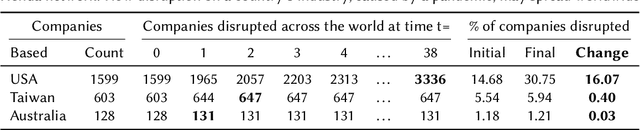
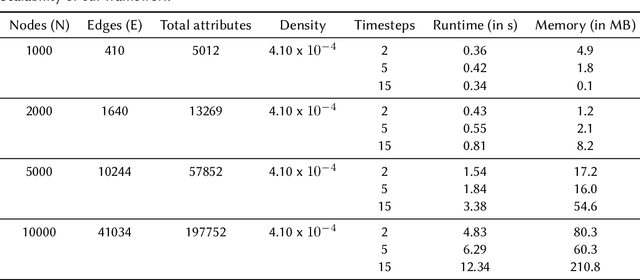
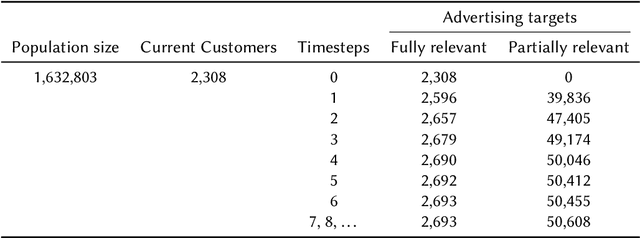
The growing popularity of neuro symbolic reasoning has led to the adoption of various forms of differentiable (i.e., fuzzy) first order logic. We introduce PyReason, a software framework based on generalized annotated logic that both captures the current cohort of differentiable logics and temporal extensions to support inference over finite periods of time with capabilities for open world reasoning. Further, PyReason is implemented to directly support reasoning over graphical structures (e.g., knowledge graphs, social networks, biological networks, etc.), produces fully explainable traces of inference, and includes various practical features such as type checking and a memory-efficient implementation. This paper reviews various extensions of generalized annotated logic integrated into our implementation, our modern, efficient Python-based implementation that conducts exact yet scalable deductive inference, and a suite of experiments. PyReason is available at: github.com/lab-v2/pyreason.