 Add to Chrome
 Add to Firefox
 Add to Edge
A Lightweight Multi-Cancer Tumor Localization Framework for Deployable Digital Pathology
Mar 09, 2026
Accurate localization of tumor regions from hematoxylin and eosin-stained whole-slide images is fundamental for translational research including spatial analysis, molecular profiling, and tissue architecture investigation. However, deep learning-based tumor detection trained within specific cancers may exhibit reduced robustness when applied across different tumor types. We investigated whether balanced training across cancers at modest scale can achieve high performance and generalize to unseen tumor types. A multi-cancer tumor localization model (MuCTaL) was trained on 79,984 non-overlapping tiles from four cancers (melanoma, hepatocellular carcinoma, colorectal cancer, and non-small cell lung cancer) using transfer learning with DenseNet169. The model achieved a tile-level ROC-AUC of 0.97 in validation data from the four training cancers, and 0.71 on an independent pancreatic ductal adenocarcinoma cohort. A scalable inference workflow was built to generate spatial tumor probability heatmaps compatible with existing digital pathology tools. Code and models are publicly available at https://github.com/AivaraX-AI/MuCTaL.

Can Deep Learning Assist Automatic Identification of Layered Pigments From XRF Data?
Jul 26, 2022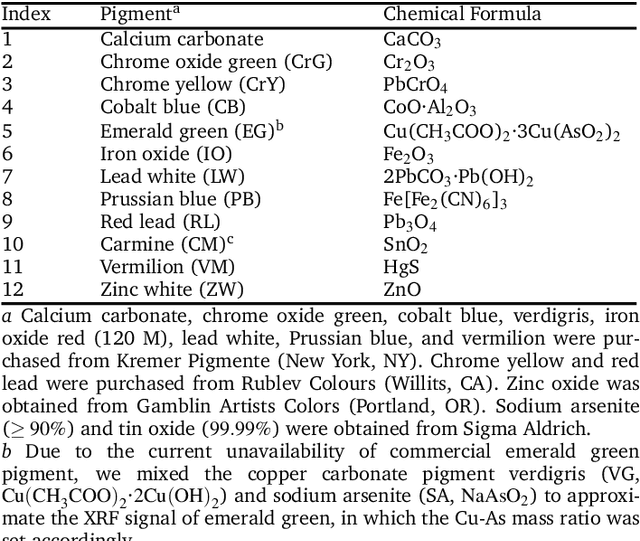
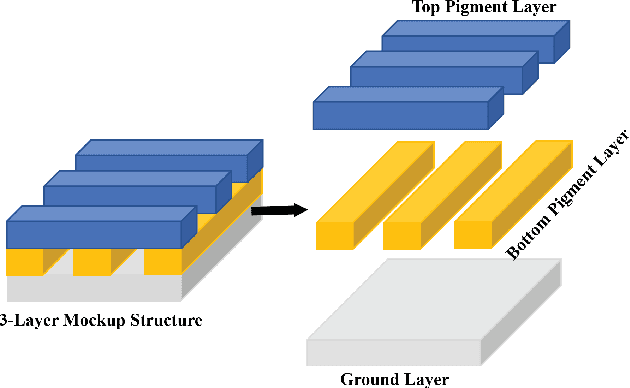
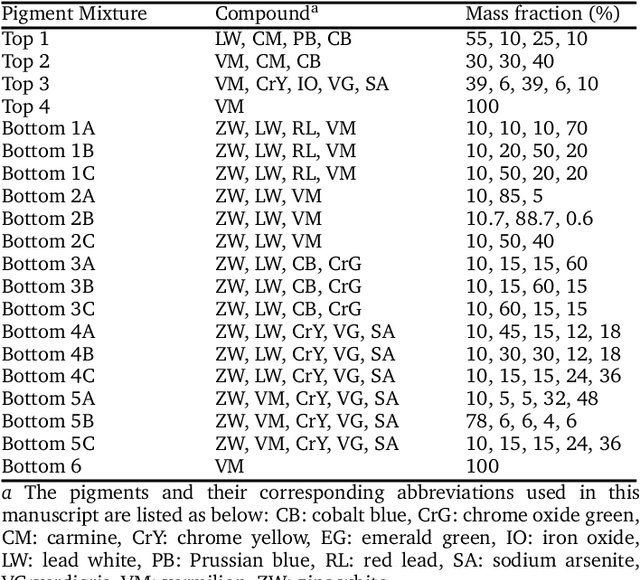
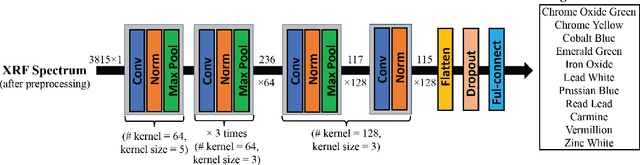
X-ray fluorescence spectroscopy (XRF) plays an important role for elemental analysis in a wide range of scientific fields, especially in cultural heritage. XRF imaging, which uses a raster scan to acquire spectra across artworks, provides the opportunity for spatial analysis of pigment distributions based on their elemental composition. However, conventional XRF-based pigment identification relies on time-consuming elemental mapping by expert interpretations of measured spectra. To reduce the reliance on manual work, recent studies have applied machine learning techniques to cluster similar XRF spectra in data analysis and to identify the most likely pigments. Nevertheless, it is still challenging for automatic pigment identification strategies to directly tackle the complex structure of real paintings, e.g. pigment mixtures and layered pigments. In addition, pixel-wise pigment identification based on XRF imaging remains an obstacle due to the high noise level compared with averaged spectra. Therefore, we developed a deep-learning-based end-to-end pigment identification framework to fully automate the pigment identification process. In particular, it offers high sensitivity to the underlying pigments and to the pigments with a low concentration, therefore enabling satisfying results in mapping the pigments based on single-pixel XRF spectrum. As case studies, we applied our framework to lab-prepared mock-up paintings and two 19th-century paintings: Paul Gauguin's Po\`emes Barbares (1896) that contains layered pigments with an underlying painting, and Paul Cezanne's The Bathers (1899-1904). The pigment identification results demonstrated that our model achieved comparable results to the analysis by elemental mapping, suggesting the generalizability and stability of our model.
A Comprehensive Survey of Data Mining-based Fraud Detection Research
Sep 30, 2010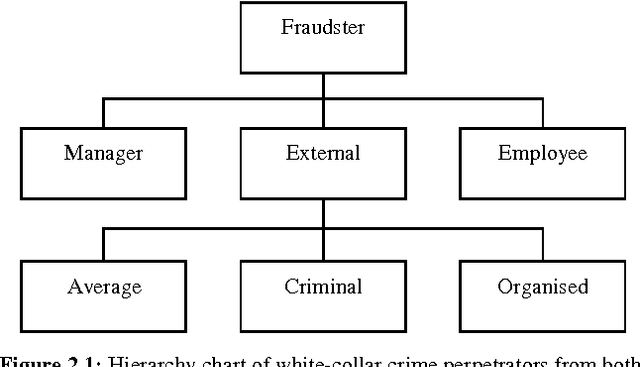
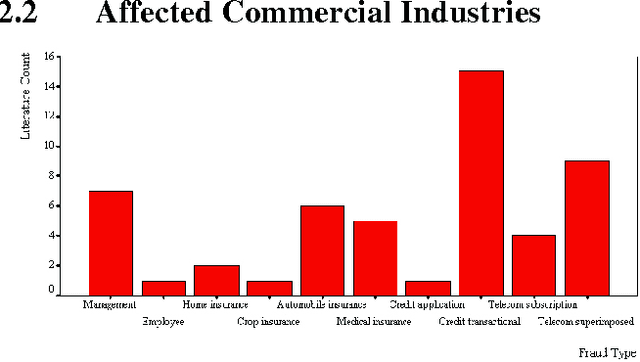
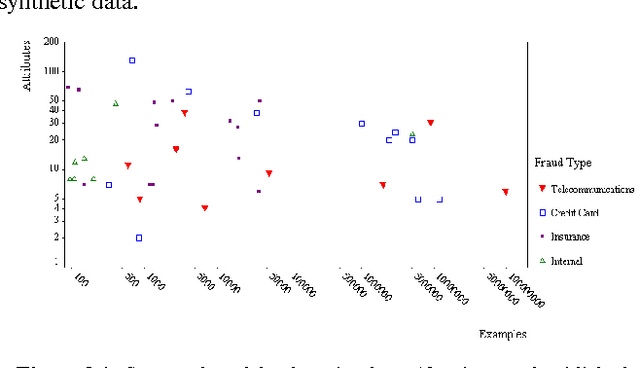
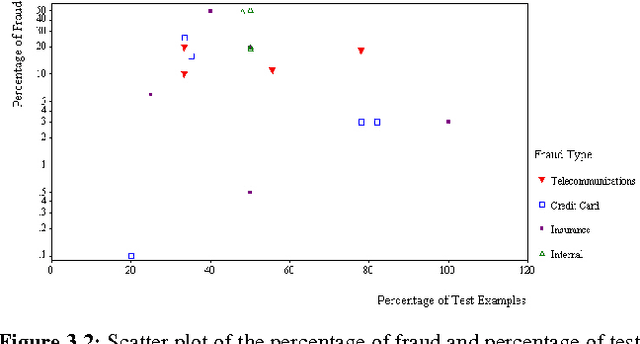
This survey paper categorises, compares, and summarises from almost all published technical and review articles in automated fraud detection within the last 10 years. It defines the professional fraudster, formalises the main types and subtypes of known fraud, and presents the nature of data evidence collected within affected industries. Within the business context of mining the data to achieve higher cost savings, this research presents methods and techniques together with their problems. Compared to all related reviews on fraud detection, this survey covers much more technical articles and is the only one, to the best of our knowledge, which proposes alternative data and solutions from related domains.