 Add to Chrome
 Add to Firefox
 Add to Edge
Functorial Neural Architectures from Higher Inductive Types
Mar 17, 2026
Neural networks systematically fail at compositional generalization -- producing correct outputs for novel combinations of known parts. We show that this failure is architectural: compositional generalization is equivalent to functoriality of the decoder, and this perspective yields both guarantees and impossibility results. We compile Higher Inductive Type (HIT) specifications into neural architectures via a monoidal functor from the path groupoid of a target space to a category of parametric maps: path constructors become generator networks, composition becomes structural concatenation, and 2-cells witnessing group relations become learned natural transformations. We prove that decoders assembled by structural concatenation of independently generated segments are strict monoidal functors (compositional by construction), while softmax self-attention is not functorial for any non-trivial compositional task. Both results are formalized in Cubical Agda. Experiments on three spaces validate the full hierarchy: on the torus ($\mathbb{Z}^2$), functorial decoders outperform non-functorial ones by 2-2.7x; on $S^1 \vee S^1$ ($F_2$), the type-A/B gap widens to 5.5-10x; on the Klein bottle ($\mathbb{Z} \rtimes \mathbb{Z}$), a learned 2-cell closes a 46% error gap on words exercising the group relation.

Structural Enforcement of Statistical Rigor in AI-Driven Discovery: A Functional Architecture
Nov 10, 2025Sequential statistical protocols require meticulous state management and robust error handling -- challenges naturally suited to functional programming. We present a functional architecture for structural enforcement of statistical rigor in automated research systems (AI-Scientists). These LLM-driven systems risk generating spurious discoveries through dynamic hypothesis testing. We introduce the Research monad, a Haskell eDSL that enforces sequential statistical protocols (e.g., Online FDR (false discovery rate) control) using a monad transformer stack. To address risks in hybrid architectures where LLMs generate imperative code, we employ Declarative Scaffolding -- generating rigid harnesses that structurally constrain execution and prevent methodological errors like data leakage. We validate this approach through large-scale simulation (N=2000 hypotheses) and an end-to-end case study, demonstrating essential defense-in-depth for automated science integrity.
Combinatorial Convolutional Neural Networks for Words
Mar 28, 2023
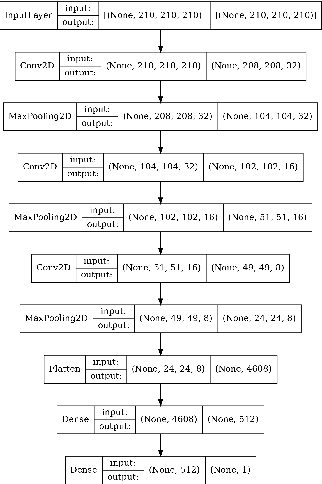
The paper discusses the limitations of deep learning models in identifying and utilizing features that remain invariant under a bijective transformation on the data entries, which we refer to as combinatorial patterns. We argue that the identification of such patterns may be important for certain applications and suggest providing neural networks with information that fully describes the combinatorial patterns of input entries and allows the network to determine what is relevant for prediction. To demonstrate the feasibility of this approach, we present a combinatorial convolutional neural network for word classification.