 Add to Chrome
 Add to Firefox
 Add to Edge
Targeted Neuron Modulation via Contrastive Pair Search
May 12, 2026
Language models are instruction-tuned to refuse harmful requests, but the mechanisms underlying this behavior remain poorly understood. Popular steering methods operate on the residual stream and degrade output coherence at high intervention strengths, limiting their practical use. We introduce contrastive neuron attribution (CNA), which identifies the 0.1% of MLP neurons whose activations most distinguish harmful from benign prompts, requiring only forward passes with no gradients or auxiliary training. In instruct models, ablating the discovered circuit reduces refusal rates by over 50% on a standard jailbreak benchmark while preserving fluency and non-degeneracy across all steering strengths. Applying CNA to matched base and instruct models across Llama and Qwen architectures (from 1B to 72B parameters), we find that base models contain similar late-layer discrimination structures but steering these neurons produces only content shifts, not behavioral change. These results demonstrate that neuron-level intervention enables reliable behavioral steering without the quality tradeoffs of residual-stream methods. More broadly, our findings suggest that alignment fine-tuning transforms pre-existing discrimination structure into a sparse, targetable refusal gate.

Hermes 4 Technical Report
Aug 25, 2025We present Hermes 4, a family of hybrid reasoning models that combine structured, multi-turn reasoning with broad instruction-following ability. We describe the challenges encountered during data curation, synthesis, training, and evaluation, and outline the solutions employed to address these challenges at scale. We comprehensively evaluate across mathematical reasoning, coding, knowledge, comprehension, and alignment benchmarks, and we report both quantitative performance and qualitative behavioral analysis. To support open research, all model weights are published publicly at https://huggingface.co/collections/NousResearch/hermes-4-collection-68a731bfd452e20816725728
Towards a Holodeck-style Simulation Game
Sep 12, 2023


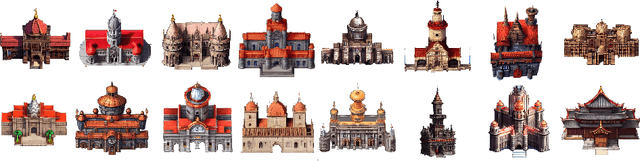
We introduce Infinitia, a simulation game system that uses generative image and language models at play time to reshape all aspects of the setting and NPCs based on a short description from the player, in a way similar to how settings are created on the fictional Holodeck. Building off the ideas of the Generative Agents paper, our system introduces gameplay elements, such as infinite generated fantasy worlds, controllability of NPC behavior, humorous dialogue, cost & time efficiency, collaboration between players and elements of non-determinism among in-game events. Infinitia is implemented in the Unity engine with a server-client architecture, facilitating the addition of exciting features by community developers in the future. Furthermore, it uses a multiplayer framework to allow humans to be present and interact in the simulation. The simulation will be available in open-alpha shortly at https://infinitia.ai/ and we are looking forward to building upon it with the community.