 Add to Chrome
 Add to Firefox
 Add to Edge
Design of an Novel Spectrum Sensing Scheme Based on Long Short-Term Memory and Experimental Validation
Nov 21, 2021
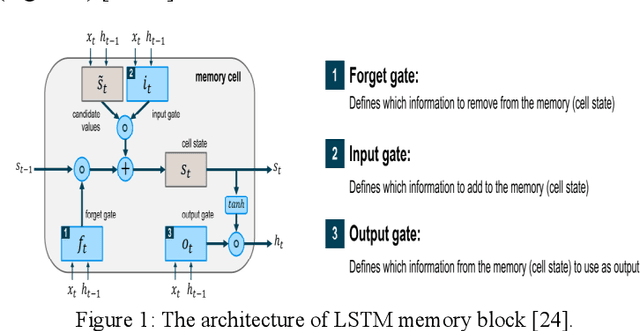
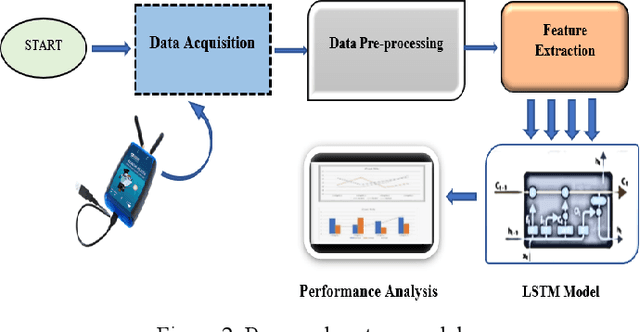

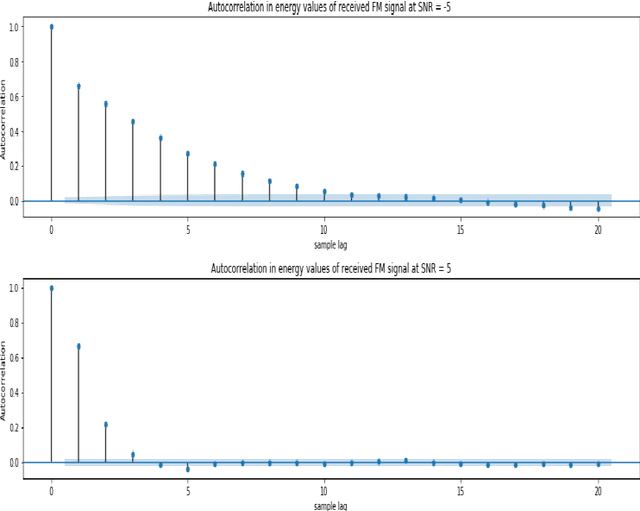
Spectrum sensing allows cognitive radio systems to detect relevant signals in despite the presence of severe interference. Most of the existing spectrum sensing techniques use a particular signal-noise model with certain assumptions and derive certain detection performance. To deal with this uncertainty, learning based approaches are being adopted and more recently deep learning based tools have become popular. Here, we propose an approach of spectrum sensing which is based on long short term memory (LSTM) which is a critical element of deep learning networks (DLN). Use of LSTM facilitates implicit feature learning from spectrum data. The DLN is trained using several features and the performance of the proposed sensing technique is validated with the help of an empirical testbed setup using Adalm Pluto. The testbed is trained to acquire the primary signal of a real world radio broadcast taking place using FM. Experimental data show that even at low signal to noise ratio, our approach performs well in terms of detection and classification accuracies, as compared to current spectrum sensing methods.

ANN-based Innovative Segmentation Method for Handwritten text in Assamese
Nov 04, 2009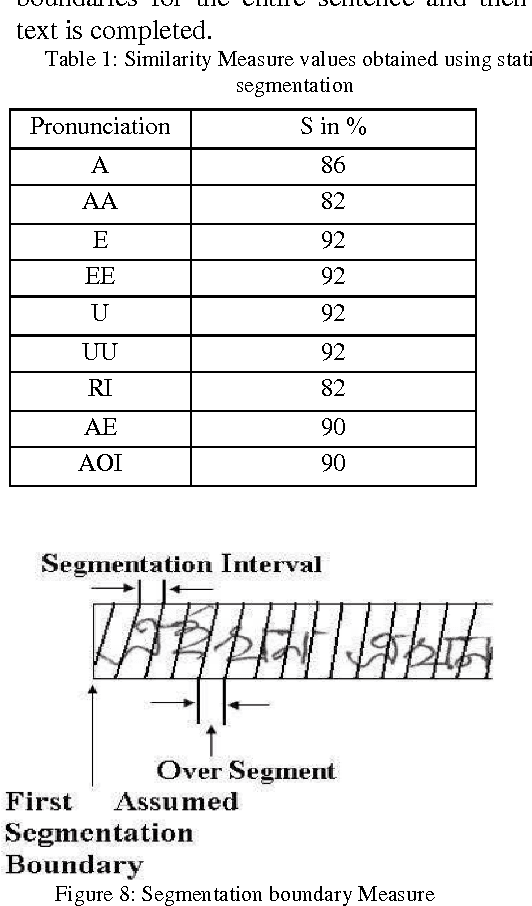
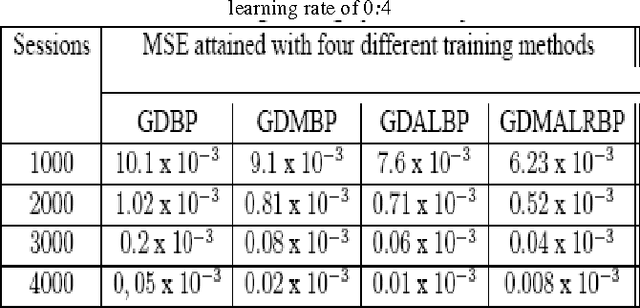
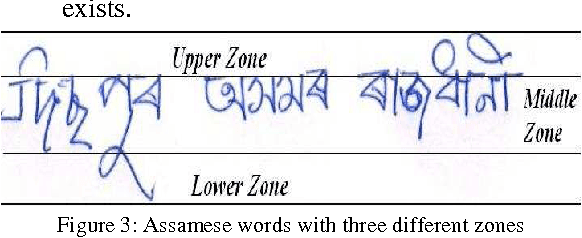
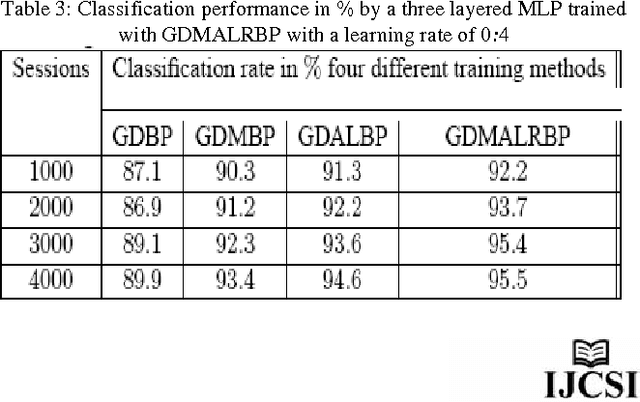
Artificial Neural Network (ANN) s has widely been used for recognition of optically scanned character, which partially emulates human thinking in the domain of the Artificial Intelligence. But prior to recognition, it is necessary to segment the character from the text to sentences, words etc. Segmentation of words into individual letters has been one of the major problems in handwriting recognition. Despite several successful works all over the work, development of such tools in specific languages is still an ongoing process especially in the Indian context. This work explores the application of ANN as an aid to segmentation of handwritten characters in Assamese- an important language in the North Eastern part of India. The work explores the performance difference obtained in applying an ANN-based dynamic segmentation algorithm compared to projection- based static segmentation. The algorithm involves, first training of an ANN with individual handwritten characters recorded from different individuals. Handwritten sentences are separated out from text using a static segmentation method. From the segmented line, individual characters are separated out by first over segmenting the entire line. Each of the segments thus obtained, next, is fed to the trained ANN. The point of segmentation at which the ANN recognizes a segment or a combination of several segments to be similar to a handwritten character, a segmentation boundary for the character is assumed to exist and segmentation performed. The segmented character is next compared to the best available match and the segmentation boundary confirmed.
* International Journal of Computer Science Issues, Volume 5, pp9-16, October 2009