 Add to Chrome
 Add to Firefox
 Add to Edge
An Adaptive Machine Learning Framework for Fluid Flow in Dual-Network Porous Media
Mar 20, 2026
Porous materials -- natural or engineered -- often exhibit dual pore-network structures that govern processes such as mineral exploration and hydrocarbon recovery from tight shales. Double porosity/permeability (DPP) mathematical models describe incompressible fluid flow through two interacting pore networks with inter-network mass exchange. Despite significant advances in numerical methods, there remains a need for computational frameworks that enable rapid forecasting, data assimilation, and reliable inverse analysis. To address this, we present a physics-informed neural network (PINN) framework for forward and inverse modeling of DPP systems. The proposed approach encodes the governing equations in mixed form, along with boundary conditions, directly into the loss function, with adaptive weighting strategies to balance their contributions. Key features of the framework include adaptive weight tuning, dynamic collocation point selection, and the use of shared trunk neural architectures to efficiently capture the coupled behavior of the dual pore networks. It is inherently mesh-free, making it well-suited for complex geometries typical of porous media. It accurately captures discontinuities in solution fields across layered domains without introducing spurious oscillations commonly observed in classical finite element formulations. Importantly, the framework is well-suited for inverse analysis, enabling robust parameter identification in scenarios where key physical quantities -- such as the mass transfer coefficient in DPP models -- are difficult to measure directly. In addition, a systematic convergence analysis is provided to rigorously assess the stability, accuracy, and reliability of the method. The effectiveness and computational advantages of the approach are demonstrated through a series of representative numerical experiments.

A Machine Learning-Enhanced Hopf-Cole Formulation for Nonlinear Gas Flow in Porous Media
Mar 11, 2026Accurate modeling of gas flow through porous media is critical for many technological applications, including reservoir performance prediction, carbon capture and sequestration, and fuel cells and batteries. However, such modeling remains challenging due to strong nonlinear behavior and uncertainty in model parameters. In particular, gas slippage effects described by the Klinkenberg model introduce pressure-dependent permeability, which complicates numerical simulation and obscures deviations from classical Darcy flow behavior. To address these challenges, we present an integrated modeling framework for gas transport in porous media that combines a Klinkenberg-enhanced constitutive relation, Hopf-Cole-transformed mixed-form linear governing equations, a shared-trunk neural network architecture, and a Deep Least-Squares (DeepLS) solver. The Hopf-Cole transformation reformulates the original nonlinear flow equations into an equivalent linear system closely related to the Darcy model, while the mixed formulation, together with a shared-trunk neural architecture, enables simultaneous and accurate prediction of both pressure and velocity fields. A rigorous convergence analysis is performed both theoretically and numerically, establishing the stability and convergence properties of the proposed solver. Importantly, the proposed framework also naturally facilitates inverse modeling of pressure-dependent permeability and slippage parameters from limited or indirect observations, enabling efficient estimation of flow properties that are difficult to measure experimentally. Numerical results demonstrate accurate recovery of flow dynamics and parameters across a wide range of pressure regimes, highlighting the framework's robustness, accuracy, and computational efficiency for gas transport modeling and inversion in tight formations.
CoolPINNs: A Physics-informed Neural Network Modeling of Active Cooling in Vascular Systems
Mar 09, 2023Emerging technologies like hypersonic aircraft, space exploration vehicles, and batteries avail fluid circulation in embedded microvasculatures for efficient thermal regulation. Modeling is vital during these engineered systems' design and operational phases. However, many challenges exist in developing a modeling framework. What is lacking is an accurate framework that (i) captures sharp jumps in the thermal flux across complex vasculature layouts, (ii) deals with oblique derivatives (involving tangential and normal components), (iii) handles nonlinearity because of radiative heat transfer, (iv) provides a high-speed forecast for real-time monitoring, and (v) facilitates robust inverse modeling. This paper addresses these challenges by availing the power of physics-informed neural networks (PINNs). We develop a fast, reliable, and accurate Scientific Machine Learning (SciML) framework for vascular-based thermal regulation -- called CoolPINNs: a PINNs-based modeling framework for active cooling. The proposed mesh-less framework elegantly overcomes all the mentioned challenges. The significance of the reported research is multi-fold. First, the framework is valuable for real-time monitoring of thermal regulatory systems because of rapid forecasting. Second, researchers can address complex thermoregulation designs inasmuch as the approach is mesh-less. Finally, the framework facilitates systematic parameter identification and inverse modeling studies, perhaps the current framework's most significant utility.
A deep learning modeling framework to capture mixing patterns in reactive-transport systems
Jan 11, 2021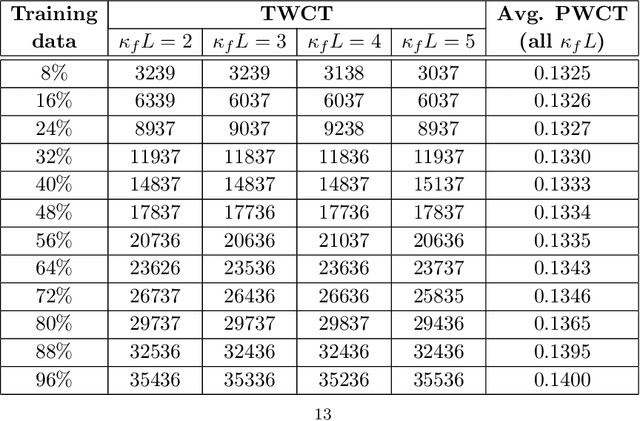
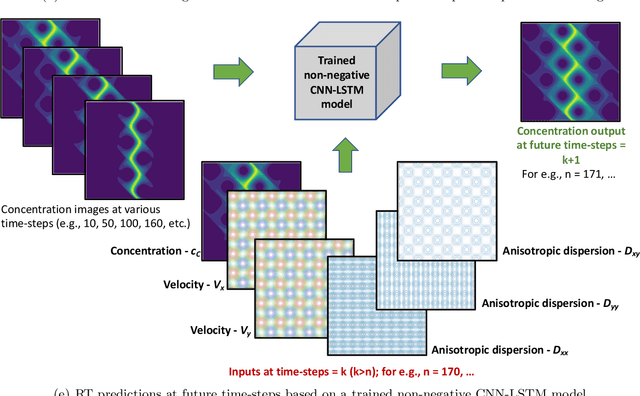
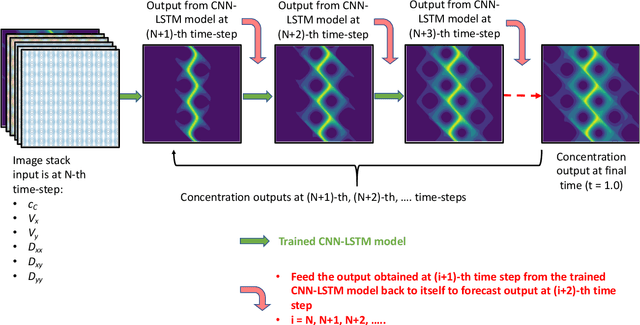
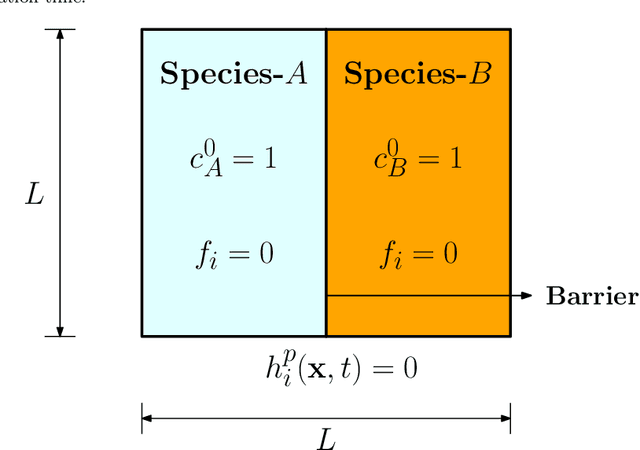
Prediction and control of chemical mixing are vital for many scientific areas such as subsurface reactive transport, climate modeling, combustion, epidemiology, and pharmacology. Due to the complex nature of mixing in heterogeneous and anisotropic media, the mathematical models related to this phenomenon are not analytically tractable. Numerical simulations often provide a viable route to predict chemical mixing accurately. However, contemporary modeling approaches for mixing cannot utilize available spatial-temporal data to improve the accuracy of the future prediction and can be compute-intensive, especially when the spatial domain is large and for long-term temporal predictions. To address this knowledge gap, we will present in this paper a deep-learning (DL) modeling framework applied to predict the progress of chemical mixing under fast bimolecular reactions. This framework uses convolutional neural networks (CNN) for capturing spatial patterns and long short-term memory (LSTM) networks for forecasting temporal variations in mixing. By careful design of the framework -- placement of non-negative constraint on the weights of the CNN and the selection of activation function, the framework ensures non-negativity of the chemical species at all spatial points and for all times. Our DL-based framework is fast, accurate, and requires minimal data for training.