 Add to Chrome
 Add to Firefox
 Add to Edge
Contrastive Learning for Multi Label ECG Classification with Jaccard Score Based Sigmoid Loss
Feb 11, 2026
Recent advances in large language models (LLMs) have enabled the development of multimodal medical AI. While models such as MedGemini achieve high accuracy on VQA tasks like USMLE MM, their performance on ECG based tasks remains limited, and some models, such as MedGemma, do not support ECG data at all. Interpreting ECGs is inherently challenging, and diagnostic accuracy can vary depending on the interpreter's experience. Although echocardiography provides rich diagnostic information, it requires specialized equipment and personnel, limiting its availability. In this study, we focus on constructing a robust ECG encoder for multimodal pretraining using real world hospital data. We employ SigLIP, a CLIP based model with a sigmoid based loss function enabling multi label prediction, and introduce a modified loss function tailored to the multi label nature of ECG data. Experiments demonstrate that incorporating medical knowledge in the language model and applying the modified loss significantly improve multi label ECG classification. To further enhance performance, we increase the embedding dimensionality and apply random cropping to mitigate data drift. Finally, per label analysis reveals which ECG findings are easier or harder to predict. Our study provides a foundational framework for developing medical models that utilize ECG data.

Application of Contrastive Learning on ECG Data: Evaluating Performance in Japanese and Classification with Around 100 Labels
Apr 12, 2025The electrocardiogram (ECG) is a fundamental tool in cardiovascular diagnostics due to its powerful and non-invasive nature. One of the most critical usages is to determine whether more detailed examinations are necessary, with users ranging across various levels of expertise. Given this diversity in expertise, it is essential to assist users to avoid critical errors. Recent studies in machine learning have addressed this challenge by extracting valuable information from ECG data. Utilizing language models, these studies have implemented multimodal models aimed at classifying ECGs according to labeled terms. However, the number of classes was reduced, and it remains uncertain whether the technique is effective for languages other than English. To move towards practical application, we utilized ECG data from regular patients visiting hospitals in Japan, maintaining a large number of Japanese labels obtained from actual ECG readings. Using a contrastive learning framework, we found that even with 98 labels for classification, our Japanese-based language model achieves accuracy comparable to previous research. This study extends the applicability of multimodal machine learning frameworks to broader clinical studies and non-English languages.
JRadiEvo: A Japanese Radiology Report Generation Model Enhanced by Evolutionary Optimization of Model Merging
Nov 15, 2024With the rapid advancement of large language models (LLMs), foundational models (FMs) have seen significant advancements. Healthcare is one of the most crucial application areas for these FMs, given the significant time and effort required for physicians to analyze large volumes of patient data. Recent efforts have focused on adapting multimodal FMs to the medical domain through techniques like instruction-tuning, leading to the development of medical foundation models (MFMs). However, these approaches typically require large amounts of training data to effectively adapt models to the medical field. Moreover, most existing models are trained on English datasets, limiting their practicality in non-English-speaking regions where healthcare professionals and patients are not always fluent in English. The need for translation introduces additional costs and inefficiencies. To address these challenges, we propose a \textbf{J}apanese \textbf{Radi}ology report generation model enhanced by \textbf{Evo}lutionary optimization of model merging (JRadiEvo). This is the first attempt to extend a non-medical vision-language foundation model to the medical domain through evolutionary optimization of model merging. We successfully created a model that generates accurate Japanese reports from X-ray images using only 50 translated samples from publicly available data. This model, developed with highly efficient use of limited data, outperformed leading models from recent research trained on much larger datasets. Additionally, with only 8 billion parameters, this relatively compact foundation model can be deployed locally within hospitals, making it a practical solution for environments where APIs and other external services cannot be used due to strict privacy and security requirements.
Game Agent Driven by Free-Form Text Command: Using LLM-based Code Generation and Behavior Branch
Feb 12, 2024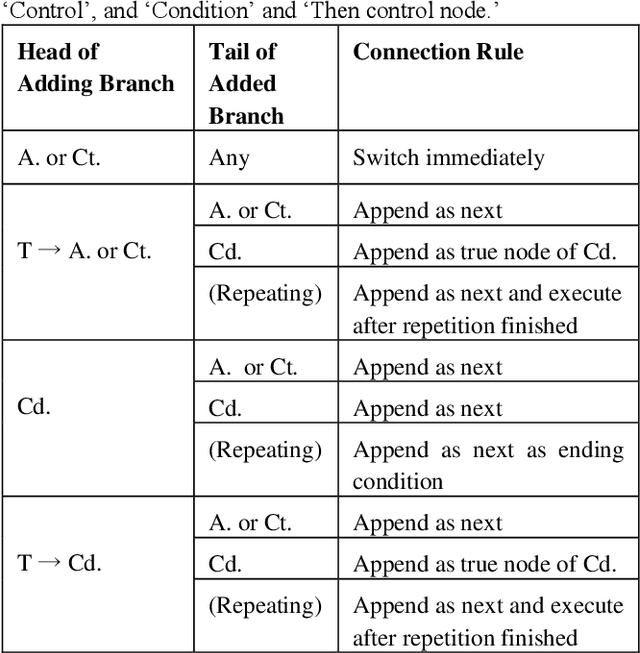
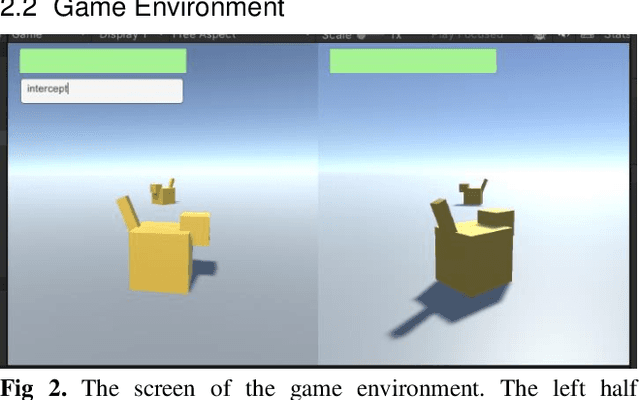
Several attempts have been made to implement text command control for game agents. However, current technologies are limited to processing predefined format commands. This paper proposes a pioneering text command control system for a game agent that can understand natural language commands expressed in free-form. The proposed system uses a large language model (LLM) for code generation to interpret and transform natural language commands into behavior branch, a proposed knowledge expression based on behavior trees, which facilitates execution by the game agent. This study conducted empirical validation within a game environment that simulates a Pok\'emon game and involved multiple participants. The results confirmed the system's ability to understand and carry out natural language commands, representing a noteworthy in the realm of real-time language interactive game agents. Notice for the use of this material. The copyright of this material is retained by the Japanese Society for Artificial Intelligence (JSAI). This material is published here with the agreement of JSAI. Please be complied with Copyright Law of Japan if any users wish to reproduce, make derivative work, distribute or make available to the public any part or whole thereof. All Rights Reserved, Copyright (C) The Japanese Society for Artificial Intelligence.