 Add to Chrome
 Add to Firefox
 Add to Edge
Boltzmann-GPT: Bridging Energy-Based World Models and Language Generation
Jan 23, 2026
Large Language Models (LLMs) generate fluent text, yet whether they truly understand the world or merely produce plausible language about it remains contested. We propose an architectural principle, the mouth is not the brain, that explicitly separates world models from language models. Our architecture comprises three components: a Deep Boltzmann Machine (DBM) that captures domain structure as an energy-based world model, an adapter that projects latent belief states into embedding space, and a frozen GPT-2 that provides linguistic competence without domain knowledge. We instantiate this framework in the consumer review domain using Amazon smartphone reviews. Experiments demonstrate that (1) conditioning through the world model yields significantly higher sentiment correlation, lower perplexity, and greater semantic similarity compared to prompt-based generation alone; (2) the DBM's energy function distinguishes coherent from incoherent market configurations, assigning higher energy to implausible brand-price combinations; and (3) interventions on specific attributes propagate causally to generated text with intervened outputs exhibiting distributions statistically consistent with naturally occurring samples sharing the target configuration. These findings suggest that even small-scale language models can achieve consistent, controllable generation when connected to an appropriate world model, providing empirical support for separating linguistic competence from world understanding.

Distortion Instead of Hallucination: The Effect of Reasoning Under Strict Constraints
Jan 04, 2026With the widespread adoption of large language models (LLMs), hallucinations, which are non-factual fabrications in model outputs, have become serious concerns. Reasoning capabilities have received attention as a self-verification process to improve output reliability. However, the effect of reasoning within a closed system where LLMs cannot rely on external tools or knowledge has yet to be clarified. We therefore conduct experiments under strict constraints (recommending peer-reviewed journal articles in computer science) to examine the effect of reasoning across multiple models (GPT-5.2 and Gemini 3 Flash). Our results reveal a problematic trade-off between constraint compliance and factual accuracy. Non-reasoning models exhibit high constraint violation rates (66-75%) but maintain factual accuracy, while reasoning models reduce violations (13-26%) but systematically distort known facts to satisfy constraints and increase complete fabrication. This trade-off pattern is consistent across both models despite different architectures, indicating a fundamental limitation of reasoning. Furthermore, reasoning does not uniformly improve output authenticity: effects diverge by model, reflecting different allocations of the compliance-truthfulness trade-off. These findings challenge the assumption that reasoning universally improves reliability: reasoning models trade honest constraint violations for detection-resistant distortions.
Hallucinate or Memorize? The Two Sides of Probabilistic Learning in Large Language Models
Nov 12, 2025Large language models (LLMs) have been increasingly applied to a wide range of tasks, from natural language understanding to code generation. While they have also been used to assist in citation recommendation, the hallucination of non-existent papers remains a major issue. Building on prior studies, this study hypothesizes that an LLM's ability to correctly produce bibliographic records depends on whether the underlying knowledge is generated or memorized, with highly cited papers (i.e., more frequently appear in the pretraining corpus) showing lower hallucination rates. We therefore assume citation count as a proxy for training data redundancy (i.e., the frequency with which a given bibliographic record appears in the pretraining corpus) and investigate how citation frequency affects hallucinated references in LLM outputs. Using GPT-4.1, we generated and manually verified 100 citations across twenty computer-science domains, and measured factual consistency via cosine similarity between generated and authentic metadata. The results revealed that (i) citation count is strongly correlated with factual accuracy, (ii) bibliographic information becomes almost verbatim memorized beyond roughly 1,000 citations, and (iii) memory interference occurs when multiple highly cited papers share similar content. These findings indicate a threshold where generalization shifts into memorization, with highly cited papers being nearly verbatim retained in the model.
A Simple Ensemble Strategy for LLM Inference: Towards More Stable Text Classification
Apr 26, 2025With the advance of large language models (LLMs), LLMs have been utilized for the various tasks. However, the issues of variability and reproducibility of results from each trial of LLMs have been largely overlooked in existing literature while actual human annotation uses majority voting to resolve disagreements among annotators. Therefore, this study introduces the straightforward ensemble strategy to a sentiment analysis using LLMs. As the results, we demonstrate that the ensemble of multiple inference using medium-sized LLMs produces more robust and accurate results than using a large model with a single attempt with reducing RMSE by 18.6%.
Dynamic Sentiment Analysis with Local Large Language Models using Majority Voting: A Study on Factors Affecting Restaurant Evaluation
Jul 18, 2024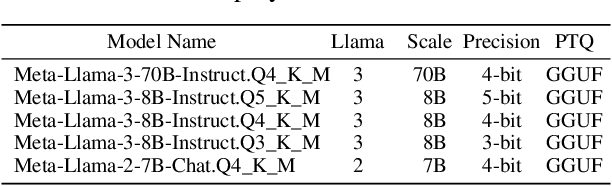

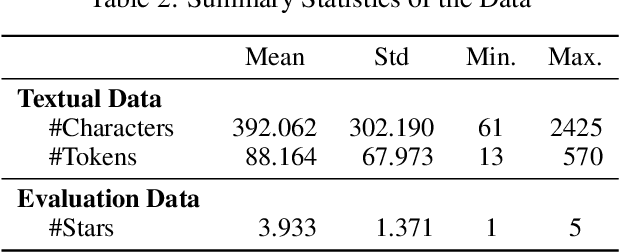
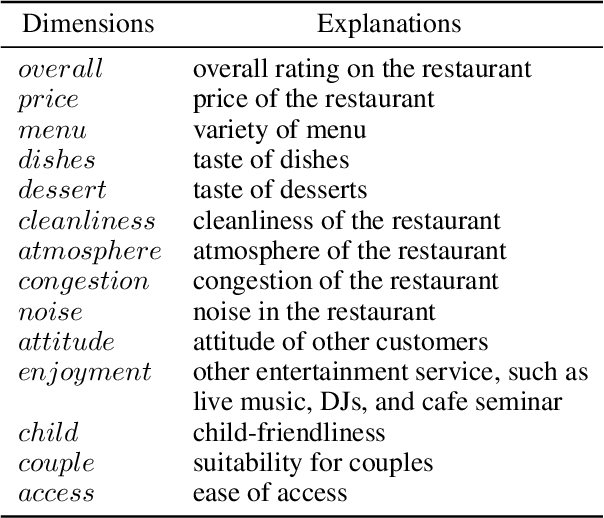
User-generated contents (UGCs) on online platforms allow marketing researchers to understand consumer preferences for products and services. With the advance of large language models (LLMs), some studies utilized the models for annotation and sentiment analysis. However, the relationship between the accuracy and the hyper-parameters of LLMs is yet to be thoroughly examined. In addition, the issues of variability and reproducibility of results from each trial of LLMs have rarely been considered in existing literature. Since actual human annotation uses majority voting to resolve disagreements among annotators, this study introduces a majority voting mechanism to a sentiment analysis model using local LLMs. By a series of three analyses of online reviews on restaurant evaluations, we demonstrate that majority voting with multiple attempts using a medium-sized model produces more robust results than using a large model with a single attempt. Furthermore, we conducted further analysis to investigate the effect of each aspect on the overall evaluation.
Multimodal Deep Learning of Word-of-Mouth Text and Demographics to Predict Customer Rating: Handling Consumer Heterogeneity in Marketing
Jan 22, 2024In the marketing field, understanding consumer heterogeneity, which is the internal or psychological difference among consumers that cannot be captured by behavioral logs, has long been a critical challenge. However, a number of consumers today usually post their evaluation on the specific product on the online platform, which can be the valuable source of such unobservable differences among consumers. Several previous studies have shown the validity of the analysis on text modality, but on the other hand, such analyses may not necessarily demonstrate sufficient predictive accuracy for text alone, as they may not include information readily available from cross-sectional data, such as consumer profile data. In addition, recent advances in machine learning techniques, such as large-scale language models (LLMs) and multimodal learning have made it possible to deal with the various kind of dataset simultaneously, including textual data and the traditional cross-sectional data, and the joint representations can be effectively obtained from multiple modalities. Therefore, this study constructs a product evaluation model that takes into account consumer heterogeneity by multimodal learning of online product reviews and consumer profile information. We also compare multiple models using different modalities or hyper-parameters to demonstrate the robustness of multimodal learning in marketing analysis.