 Add to Chrome
 Add to Firefox
 Add to Edge
Probing neural audio codecs for distinctions among English nuclear tunes
Mar 14, 2026
State-of-the-art spoken dialogue models (Défossez et al. 2024; Schalkwyk et al. 2025) use neural audio codecs to "tokenize" audio signals into a lower-frequency stream of vectorial latent representations, each quantized using a hierarchy of vector codebooks. A transformer layer allows these representations to reflect some time- and context-dependent patterns. We train probes on labeled audio data from Cole et al. (2023) to test whether the pitch trajectories that characterize English phrase-final (nuclear) intonational tunes are among these patterns. Results: Linear probes trained on the unquantized latents or some of the associated codewords yield above-chance accuracy in distinguishing eight phonologically specified nuclear tunes with monotonal pitch accents (top average test accuracy (TATA): 0.31) and the five clusters of these tunes that are robust in human speech production and perception (TATA: 0.45). Greater accuracy (TATAs: 0.74-0.89) is attained for binary distinctions between classes of rising vs. falling tunes, respectively used for questions and assertions. Information about tunes is spread among all codebooks, which calls into question a distinction between 'semantic' and 'acoustic' codebooks found in the literature. Accuracies improve with nonlinear probes, but discrimination among the five clusters remains far from human performance, suggesting a fundamental limitation of current codecs.

The Magnitude of Categories of Texts Enriched by Language Models
Jan 11, 2025
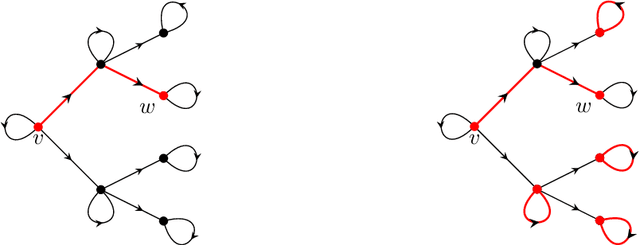
The purpose of this article is twofold. Firstly, we use the next-token probabilities given by a language model to explicitly define a $[0,1]$-enrichment of a category of texts in natural language, in the sense of Bradley, Terilla, and Vlassopoulos. We consider explicitly the terminating conditions for text generation and determine when the enrichment itself can be interpreted as a probability over texts. Secondly, we compute the M\"obius function and the magnitude of an associated generalized metric space $\mathcal{M}$ of texts using a combinatorial version of these quantities recently introduced by Vigneaux. The magnitude function $f(t)$ of $\mathcal{M}$ is a sum over texts $x$ (prompts) of the Tsallis $t$-entropies of the next-token probability distributions $p(-|x)$ plus the cardinality of the model's possible outputs. The derivative of $f$ at $t=1$ recovers a sum of Shannon entropies, which justifies seeing magnitude as a partition function. Following Leinster and Schulman, we also express the magnitude function of $\mathcal M$ as an Euler characteristic of magnitude homology and provide an explicit description of the zeroeth and first magnitude homology groups.