 Add to Chrome
 Add to Firefox
 Add to Edge
Evaluating Deep Learning-Based Nerve Segmentation in Brachial Plexus Ultrasound Under Realistic Data Constraints
Jan 31, 2026
Accurate nerve localization is critical for the success of ultrasound-guided regional anesthesia, yet manual identification remains challenging due to low image contrast, speckle noise, and inter-patient anatomical variability. This study evaluates deep learning-based nerve segmentation in ultrasound images of the brachial plexus using a U-Net architecture, with a focus on how dataset composition and annotation strategy influence segmentation performance. We find that training on combined data from multiple ultrasound machines (SIEMENS ACUSON NX3 Elite and Philips EPIQ5) provides regularization benefits for lower-performing acquisition sources, though it does not surpass single-source training when matched to the target domain. Extending the task from binary nerve segmentation to multi-class supervision (artery, vein, nerve, muscle) results in decreased nerve-specific Dice scores, with performance drops ranging from 9% to 61% depending on dataset, likely due to class imbalance and boundary ambiguity. Additionally, we observe a moderate positive correlation between nerve size and segmentation accuracy (Pearson r=0.587, p<0.001), indicating that smaller nerves remain a primary challenge. These findings provide methodological guidance for developing robust ultrasound nerve segmentation systems under realistic clinical data constraints.

A Framework for Synthetic Audio Conversations Generation using Large Language Models
Sep 02, 2024

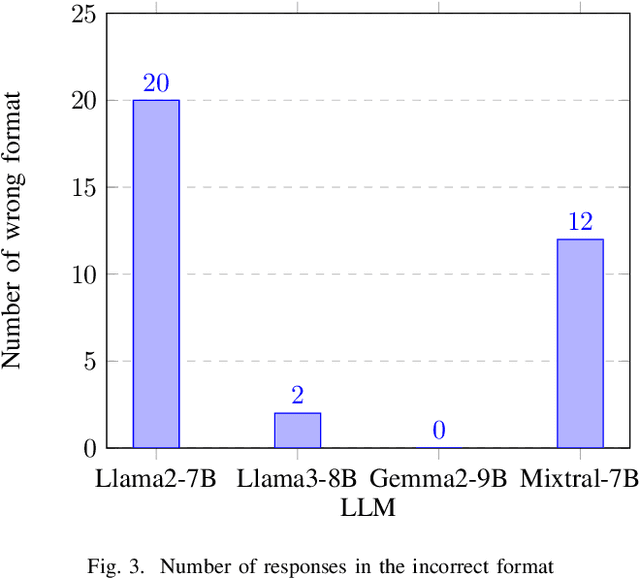
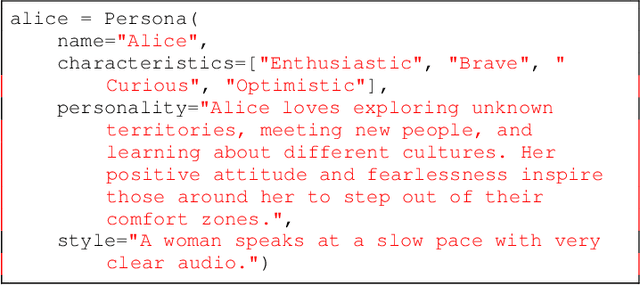
In this paper, we introduce ConversaSynth, a framework designed to generate synthetic conversation audio using large language models (LLMs) with multiple persona settings. The framework first creates diverse and coherent text-based dialogues across various topics, which are then converted into audio using text-to-speech (TTS) systems. Our experiments demonstrate that ConversaSynth effectively generates highquality synthetic audio datasets, which can significantly enhance the training and evaluation of models for audio tagging, audio classification, and multi-speaker speech recognition. The results indicate that the synthetic datasets generated by ConversaSynth exhibit substantial diversity and realism, making them suitable for developing robust, adaptable audio-based AI systems.