 Add to Chrome
 Add to Firefox
 Add to Edge
RedTWIZ: Diverse LLM Red Teaming via Adaptive Attack Planning
Oct 08, 2025
This paper presents the vision, scientific contributions, and technical details of RedTWIZ: an adaptive and diverse multi-turn red teaming framework, to audit the robustness of Large Language Models (LLMs) in AI-assisted software development. Our work is driven by three major research streams: (1) robust and systematic assessment of LLM conversational jailbreaks; (2) a diverse generative multi-turn attack suite, supporting compositional, realistic and goal-oriented jailbreak conversational strategies; and (3) a hierarchical attack planner, which adaptively plans, serializes, and triggers attacks tailored to specific LLM's vulnerabilities. Together, these contributions form a unified framework -- combining assessment, attack generation, and strategic planning -- to comprehensively evaluate and expose weaknesses in LLMs' robustness. Extensive evaluation is conducted to systematically assess and analyze the performance of the overall system and each component. Experimental results demonstrate that our multi-turn adversarial attack strategies can successfully lead state-of-the-art LLMs to produce unsafe generations, highlighting the pressing need for more research into enhancing LLM's robustness.

HAL 9000: Skynet's Risk Manager
Nov 15, 2023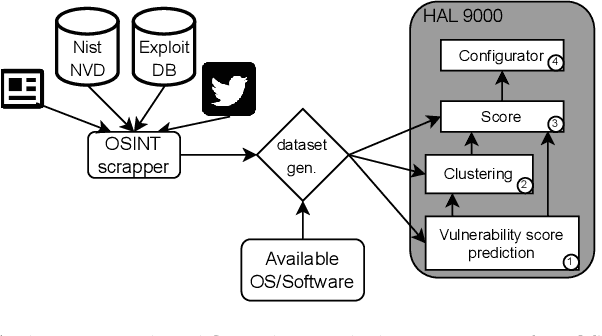
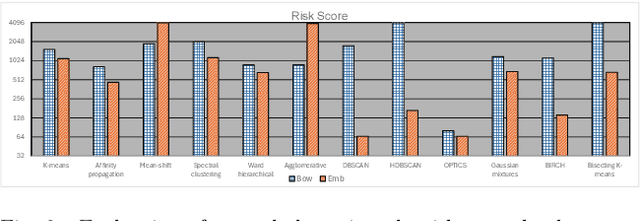
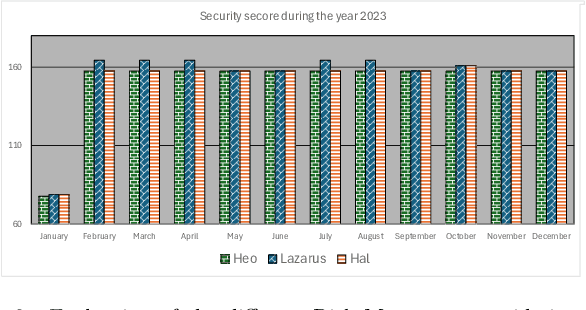
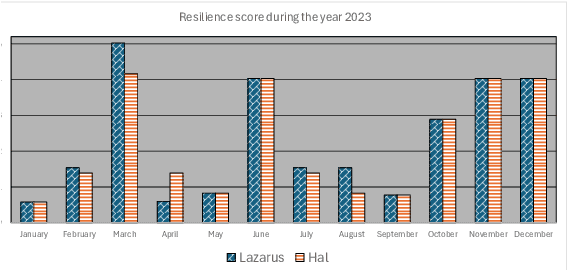
Intrusion Tolerant Systems (ITSs) are a necessary component for cyber-services/infrastructures. Additionally, as cyberattacks follow a multi-domain attack surface, a similar defensive approach should be applied, namely, the use of an evolving multi-disciplinary solution that combines ITS, cybersecurity and Artificial Intelligence (AI). With the increased popularity of AI solutions, due to Big Data use-case scenarios and decision support and automation scenarios, new opportunities to apply Machine Learning (ML) algorithms have emerged, namely ITS empowerment. Using ML algorithms, an ITS can augment its intrusion tolerance capability, by learning from previous attacks and from known vulnerabilities. As such, this work's contribution is twofold: (1) an ITS architecture (Skynet) based on the state-of-the-art and incorporates new components to increase its intrusion tolerance capability and its adaptability to new adversaries; (2) an improved Risk Manager design that leverages AI to improve ITSs by automatically assessing OS risks to intrusions, and advise with safer configurations. One of the reasons that intrusions are successful is due to bad configurations or slow adaptability to new threats. This can be caused by the dependency that systems have for human intervention. One of the characteristics in Skynet and HAL 9000 design is the removal of human intervention. Being fully automatized lowers the chance of successful intrusions caused by human error. Our experiments using Skynet, shows that HAL is able to choose 15% safer configurations than the state-of-the-art risk manager.