 Add to Chrome
 Add to Firefox
 Add to Edge
FiRe: Frequency Reparameterization as a Preconditioner for Periodic Implicit Neural Representations
Jun 28, 2026
Periodic Implicit Neural Representations (INRs) such as SIREN and FINER assign every neuron, the same global frequency, spending the representational budget inefficiently when local signal content varies. We introduce FiRe (Frequency Reparameterization), that accelerates optimization by reparameterizing per-neuron frequency of periodic INRs without changing their underlying activation function. FiRe gives each neuron a bounded, input-dependent frequency via a separate low-rank gating path and is applicable to any periodic activation function. The gate acts as an implicit preconditioner that improves optimization conditioning at initialization via the Neural Tangent Kernel (NTK). This better-conditioned initialization makes optimization converge faster, and the high-frequency content of the reconstruction tracks the target more closely at a fixed computational budget. On 2D image fitting, FiRe increases PSNR over a parameter-matched baseline (up to +1 dB at short training budgets), with gains that vary with resolution and diminish at full convergence. We characterize how performance depends on resolution, rank, and training budget, and give an NTK account that predicts these trends.

Samasāmayik: A Parallel Dataset for Hindi-Sanskrit Machine Translation
Mar 25, 2026We release Samasāmayik, a novel, meticulously curated, large-scale Hindi-Sanskrit corpus, comprising 92,196 parallel sentences. Unlike most data available in Sanskrit, which focuses on classical era text and poetry, this corpus aggregates data from diverse sources covering contemporary materials, including spoken tutorials, children's magazines, radio conversations, and instruction materials. We benchmark this new dataset by fine-tuning three complementary models - ByT5, NLLB and IndicTrans-v2, to demonstrate its utility. Our experiments demonstrate that models trained on the Samasamayik corpus achieve significant performance gains on in-domain test data, while achieving comparable performance on other widely used test sets, establishing a strong new performance baseline for contemporary Hindi-Sanskrit translation. Furthermore, a comparative analysis against existing corpora reveals minimal semantic and lexical overlap, confirming the novelty and non-redundancy of our dataset as a robust new resource for low-resource Indic language MT.
Pathology-Aware Multi-View Contrastive Learning for Patient-Independent ECG Reconstruction
Mar 18, 2026Reconstructing a 12-lead electrocardiogram (ECG) from a reduced lead set is an ill-posed inverse problem due to anatomical variability. Standard deep learning methods often ignore underlying cardiac pathology losing vital morphology in precordial leads. We propose Pathology-Aware Multi-View Contrastive Learning, a framework that regularizes the latent space through a pathological manifold. Our architecture integrates high-fidelity time-domain waveforms with pathology-aware embeddings learned via supervised contrastive alignment. By maximizing mutual information between latent representations and clinical labels, the framework learns to filter anatomical "nuisance" variables. On the PTB-XL dataset, our method achieves approx. 76\% reduction in RMSE compared to state-of-the-art model in patient-independent setting. Cross-dataset evaluation on the PTB Diagnostic Database confirms superior generalization, bridging the gap between hardware portability and diagnostic-grade reconstruction.
On Learning with LAD
Sep 28, 2023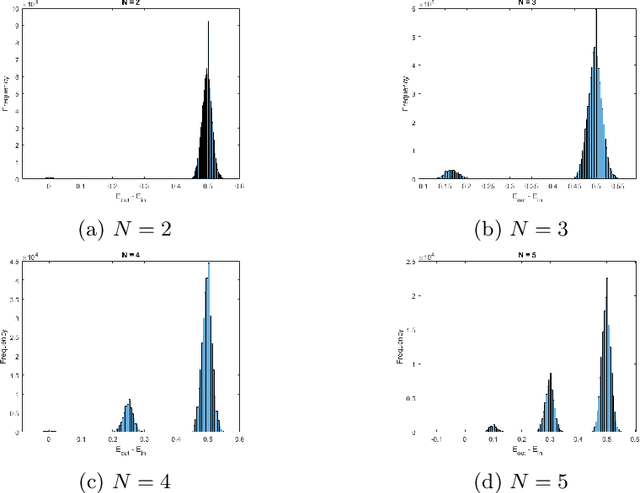

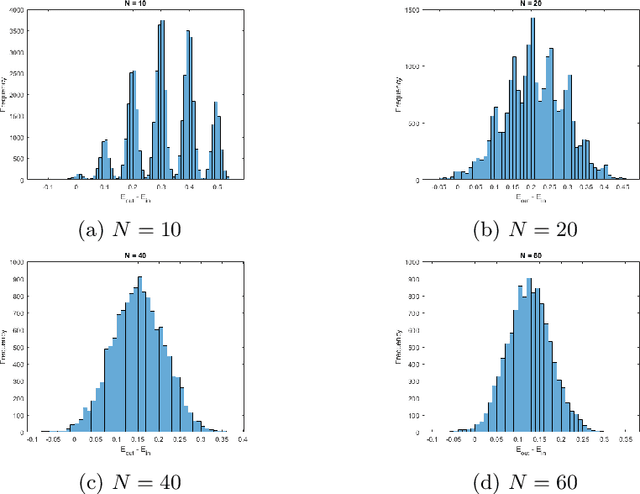
The logical analysis of data, LAD, is a technique that yields two-class classifiers based on Boolean functions having disjunctive normal form (DNF) representation. Although LAD algorithms employ optimization techniques, the resulting binary classifiers or binary rules do not lead to overfitting. We propose a theoretical justification for the absence of overfitting by estimating the Vapnik-Chervonenkis dimension (VC dimension) for LAD models where hypothesis sets consist of DNFs with a small number of cubic monomials. We illustrate and confirm our observations empirically.
Sāmayik: A Benchmark and Dataset for English-Sanskrit Translation
May 23, 2023
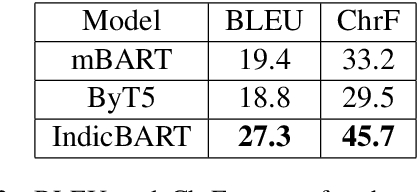
Sanskrit is a low-resource language with a rich heritage. Digitized Sanskrit corpora reflective of the contemporary usage of Sanskrit, specifically that too in prose, is heavily under-represented at present. Presently, no such English-Sanskrit parallel dataset is publicly available. We release a dataset, S\={a}mayik, of more than 42,000 parallel English-Sanskrit sentences, from four different corpora that aim to bridge this gap. Moreover, we also release benchmarks adapted from existing multilingual pretrained models for Sanskrit-English translation. We include training splits from our contemporary dataset and the Sanskrit-English parallel sentences from the training split of Itih\={a}sa, a previously released classical era machine translation dataset containing Sanskrit.