 Add to Chrome
 Add to Firefox
 Add to Edge
Estimation of Ground Reaction Forces from Kinematic Data during Locomotion
Feb 03, 2026
Ground reaction forces (GRFs) provide fundamental insight into human gait mechanics and are widely used to assess joint loading, limb symmetry, balance control, and motor function. Despite their clinical relevance, the use of GRF remains underutilised in clinical workflows due to the practical limitations of force plate systems. In this work, we present a force-plate-free approach for estimating GRFs using only marker-based motion capture data. This kinematics only method to estimate and decompose GRF makes it well suited for widespread clinical depolyment. By using kinematics from sixteen body segments, we estimate the centre of mass (CoM) and compute GRFs, which are subsequently decomposed into individual components through a minimization-based approach. Through this framework, we can identify gait stance phases and provide access to clinically meaningful kinetic measures without a dedicated force plate system. Experimental results demonstrate the viability of CoM and GRF estimation based solely on kinematic data, supporting force-plate-free gait analysis.

Robot-mediated physical Human-Human Interaction in Neurorehabilitation: a position paper
Jul 23, 2025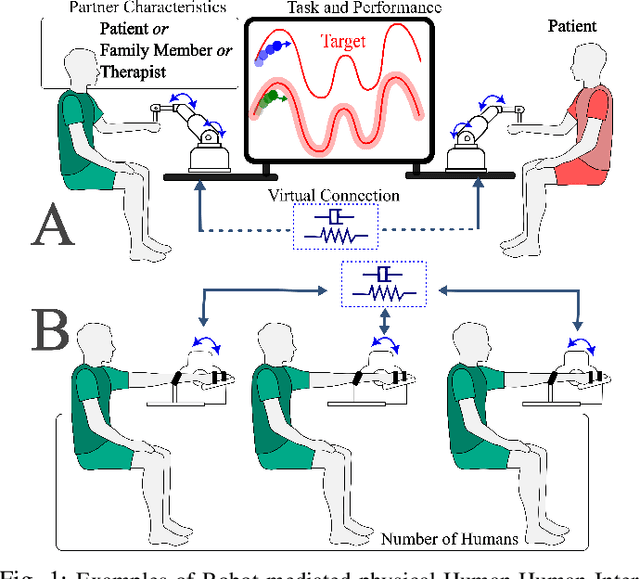
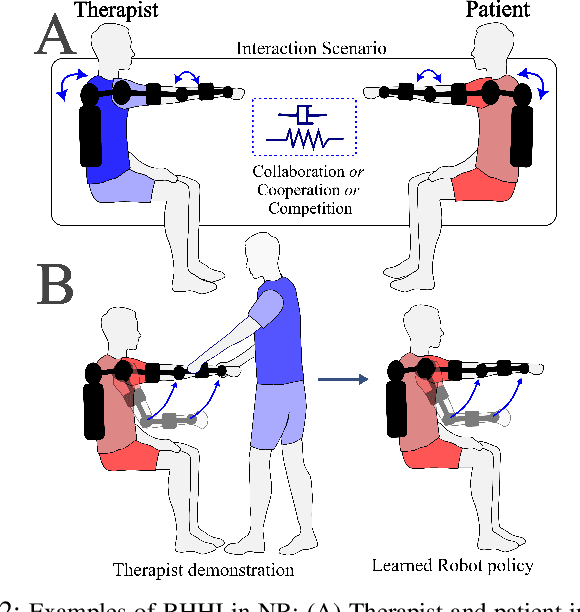
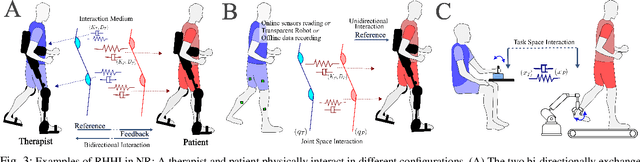
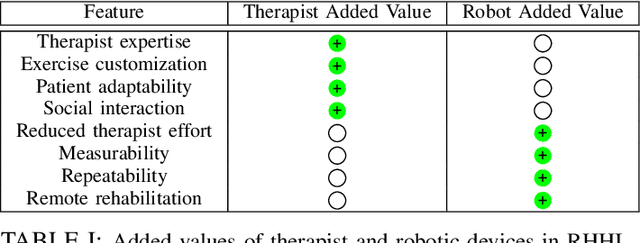
Neurorehabilitation conventionally relies on the interaction between a patient and a physical therapist. Robotic systems can improve and enrich the physical feedback provided to patients after neurological injury, but they under-utilize the adaptability and clinical expertise of trained therapists. In this position paper, we advocate for a novel approach that integrates the therapist's clinical expertise and nuanced decision-making with the strength, accuracy, and repeatability of robotics: Robot-mediated physical Human-Human Interaction. This framework, which enables two individuals to physically interact through robotic devices, has been studied across diverse research groups and has recently emerged as a promising link between conventional manual therapy and rehabilitation robotics, harmonizing the strengths of both approaches. This paper presents the rationale of a multidisciplinary team-including engineers, doctors, and physical therapists-for conducting research that utilizes: a unified taxonomy to describe robot-mediated rehabilitation, a framework of interaction based on social psychology, and a technological approach that makes robotic systems seamless facilitators of natural human-human interaction.