 Add to Chrome
 Add to Firefox
 Add to Edge
Flash-CNNCap: Capacitance Extraction via Image Mapping
Jul 26, 2026
We present Flash-CNNCap, a CNN-based capacitance extractor that reformulates full-matrix capacitance prediction as image-to-image regression over spatial contribution maps. Prior scalar CNN-based extractors require $O(n^2)$ forward passes to recover all pairwise capacitances in a window with $n$ conductors. Flash-CNNCap replaces the scalar target with dense contribution maps: a total-capacitance model and a master-conditioned coupling model each predict a spatial map that is reduced to conductor-level values through mask aggregation, cutting full-matrix reconstruction to $O(n)$ passes. The resulting totals and symmetrized pairwise couplings define the corresponding Maxwell-style capacitance matrix under the standard off-diagonal sign convention. The maps are learned from conductor-level labels without per-pixel supervision. An ablation study over 13 model configurations selects a U-Net that matches ResNet baselines on total capacitance (1.5-3.1% MARE) and achieves the strongest coupling accuracy (3.0-4.6% MARE) across all evaluated CapBench subsets, with a $17.5\times$ full-matrix speedup on windows containing 134 conductors on average. A deployed pipeline reads Design Exchange Format (DEF) geometry and writes Standard Parasitic Exchange Format (SPEF) output, processing 1,024 windows in 51.23 seconds with a $4.4\times$ speedup over OpenRCX on the same benchmark. Code and trained models are available at https://github.com/THU-numbda/flash-cnncap.

AttentionCap: Transformer Based Capacitance Matrix Learning Toward Full-Chip Extraction
Jun 06, 2026As capacitance extraction accuracy of rule-based pattern matching becomes difficult to sustain at advanced nodes, a growing trend emerges to develop deep-learning-based 2D capacitance models. However, existing MLP- and CNN-based methods constrain their input to fixed metal-layer combinations in a specific process node, limiting their usability in practice. Recognizing the inherent similarity between capacitance matrix and the prevailing attention mechanism, we propose AttentionCap, a customized Transformer for capacitance matrix learning, with a Gram representation framework, a physics-aligned symmetric-attention output layer, and a novel normalized Laplacian loss. We also introduce a process-node embedding to enable multi-node learning. Trained on synthetic data, AttentionCap attains 0.67\%/3.99\% self/coupling-capacitance error on unseen real designs under a multi-layer and multi-node setting, surpassing the CNN-Cap baseline with 4.6$\times$/5.7$\times$ lower self/coupling error and 192$\times$ faster inference speed. A pretrained AttentionCap accurately transfers to an unseen node with only 5K samples and 4K finetuning steps. With sufficient accuracy on unseen real designs and strong transferability to new process nodes, AttentionCap offers highly practical value for modern EDA workflows. Code and data are available at https://github.com/THU-numbda/AttentionCap.
CapBench: A Multi-PDK Dataset for Machine-Learning-Based Post-Layout Capacitance Extraction
Apr 13, 2026We present CapBench, a fully reproducible, multi-PDK dataset for capacitance extraction. The dataset is derived from open-source designs, including single-core CPUs, systems-on-chip, and media accelerators. All designs are fully placed and routed using 14 independent OpenROAD flow runs spanning three technology nodes: ASAP7, NanGate45, and Sky130HD. From these layouts, we extract 61,855 3D windows across three size tiers to enable transfer learning and scalability studies. High-fidelity capacitance labels are generated using RWCap, a state-of-the-art random-walk solver, and validated against the industry-standard Raphael, achieving a mean absolute error of 0.64% for total capacitance. Each window is pre-processed into density maps, graph representations, and point clouds. We evaluate 10 machine learning architectures that illustrate dataset usage and serve as baselines, including convolutional neural networks (CNNs), point cloud transformers, and graph neural networks (GNNs). CNNs demonstrate the lowest errors (1.75%), while GNNs are up to 41.4x faster but exhibit larger errors (10.2%), illustrating a clear accuracy-speed trade-off. Code and dataset are available at https://github.com/THU-numbda/CapBench.
DeepRWCap: Neural-Guided Random-Walk Capacitance Solver for IC Design
Nov 10, 2025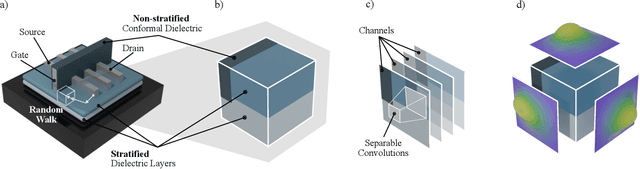
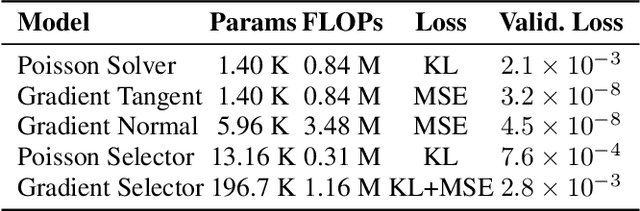
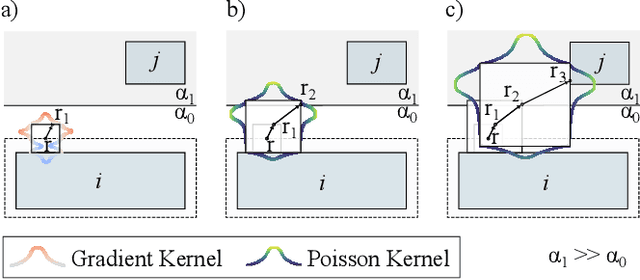
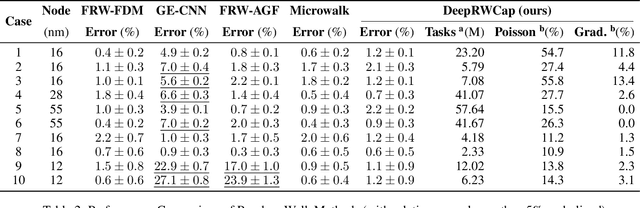
Monte Carlo random walk methods are widely used in capacitance extraction for their mesh-free formulation and inherent parallelism. However, modern semiconductor technologies with densely packed structures present significant challenges in unbiasedly sampling transition domains in walk steps with multiple high-contrast dielectric materials. We present DeepRWCap, a machine learning-guided random walk solver that predicts the transition quantities required to guide each step of the walk. These include Poisson kernels, gradient kernels, signs and magnitudes of weights. DeepRWCap employs a two-stage neural architecture that decomposes structured outputs into face-wise distributions and spatial kernels on cube faces. It uses 3D convolutional networks to capture volumetric dielectric interactions and 2D depthwise separable convolutions to model localized kernel behavior. The design incorporates grid-based positional encodings and structural design choices informed by cube symmetries to reduce learning redundancy and improve generalization. Trained on 100,000 procedurally generated dielectric configurations, DeepRWCap achieves a mean relative error of $1.24\pm0.53$\% when benchmarked against the commercial Raphael solver on the self-capacitance estimation of 10 industrial designs spanning 12 to 55 nm nodes. Compared to the state-of-the-art stochastic difference method Microwalk, DeepRWCap achieves an average 23\% speedup. On complex designs with runtimes over 10 s, it reaches an average 49\% acceleration.