 Add to Chrome
 Add to Firefox
 Add to Edge
Amnesia: Adversarial Semantic Layer Specific Activation Steering in Large Language Models
Mar 10, 2026
Warning: This article includes red-teaming experiments, which contain examples of compromised LLM responses that may be offensive or upsetting. Large Language Models (LLMs) have the potential to create harmful content, such as generating sophisticated phishing emails and assisting in writing code of harmful computer viruses. Thus, it is crucial to ensure their safe and responsible response generation. To reduce the risk of generating harmful or irresponsible content, researchers have developed techniques such as reinforcement learning with human feedback to align LLM's outputs with human values and preferences. However, it is still undetermined whether such measures are sufficient to prevent LLMs from generating interesting responses. In this study, we propose Amnesia, a lightweight activation-space adversarial attack that manipulates internal transformer states to bypass existing safety mechanisms in open-weight LLMs. Through experimental analysis on state-of-the-art, open-weight LLMs, we demonstrate that our attack effectively circumvents existing safeguards, enabling the generation of harmful content without the need for any fine-tuning or additional training. Our experiments on benchmark datasets show that the proposed attack can induce various antisocial behaviors in LLMs. These findings highlight the urgent need for more robust security measures in open-weight LLMs and underscore the importance of continued research to prevent their potential misuse.

Analysis of ChatGPT on Source Code
Jun 06, 2023
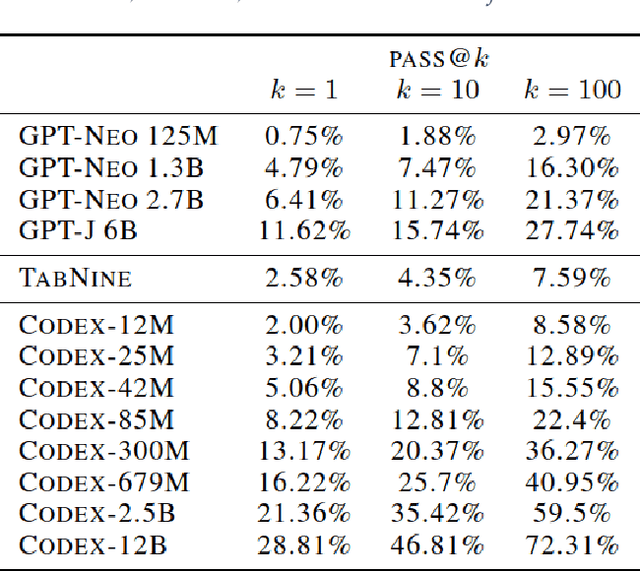
This paper explores the use of Large Language Models (LLMs) and in particular ChatGPT in programming, source code analysis, and code generation. LLMs and ChatGPT are built using machine learning and artificial intelligence techniques, and they offer several benefits to developers and programmers. While these models can save time and provide highly accurate results, they are not yet advanced enough to replace human programmers entirely. The paper investigates the potential applications of LLMs and ChatGPT in various areas, such as code creation, code documentation, bug detection, refactoring, and more. The paper also suggests that the usage of LLMs and ChatGPT is expected to increase in the future as they offer unparalleled benefits to the programming community.