 Add to Chrome
 Add to Firefox
 Add to Edge
Continuity-Driven Representation Learning for Industrial Defect Detection
Aug 18, 2026
Industrial defect detection differs from natural-image object detection because inspection images are captured under controlled conditions and contain large normal-dominant regions with repetitive structures. Defects therefore appear as localized disruptions of otherwise predictable patterns, while conventional detectors rely mainly on sparse bounding-box supervision, resulting in weakly constrained normal-region representations. We propose a continuity-driven representation regularization framework that exploits normal-dominant regions as dense auxiliary supervision. The framework introduces two detector-agnostic objectives: Multi-Continuity Loss, which combines 1D patch-sequence prediction and 2D masked spatial prediction, and Differencing Loss, which regularizes first-order feature variation and second-order curvature between neighboring patch embeddings. Both objectives are applied with box-derived region weighting to stabilize normal-region representations while preserving defect-related discontinuities. Experiments on two real-world industrial datasets and the public NEU-DET benchmark, using six detector architectures including YOLO-family models, MambaYOLO, and DETR, demonstrate consistent improvements over native detector baselines. In the full-data setting, the proposed regularizers improve average mAP@0.5:0.95 by up to 3.49 percentage points on Industrial Metal, 5.38 percentage points on MEA, and 5.03 percentage points on NEU-DET. Under limited-data conditions, the gains become more pronounced, with Differencing Loss achieving improvements of up to 21.07 percentage points in mAP@0.5 and 8.23 percentage points in mAP@0.5:0.95 on NEU-DET using only 25% of the training data. These results suggest that continuity-driven regularization provides an effective prior for improving industrial defect detection, particularly when annotated data are scarce.

Identification of Crystal Symmetry from Noisy Diffraction Patterns by A Shape Analysis and Deep Learning
May 26, 2020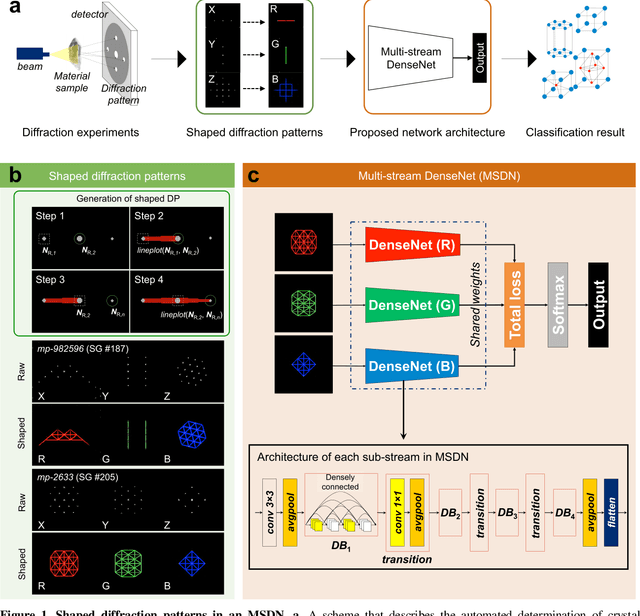
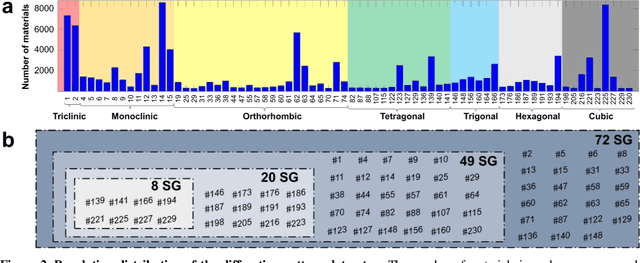
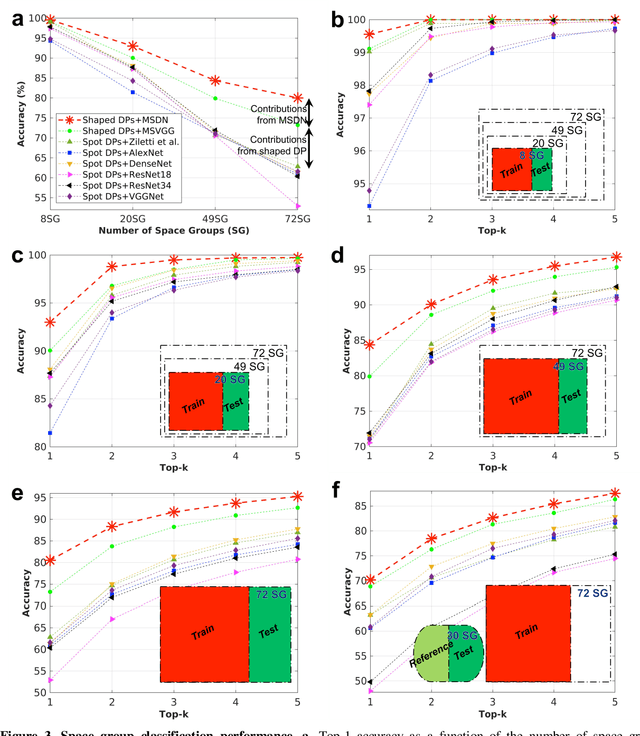
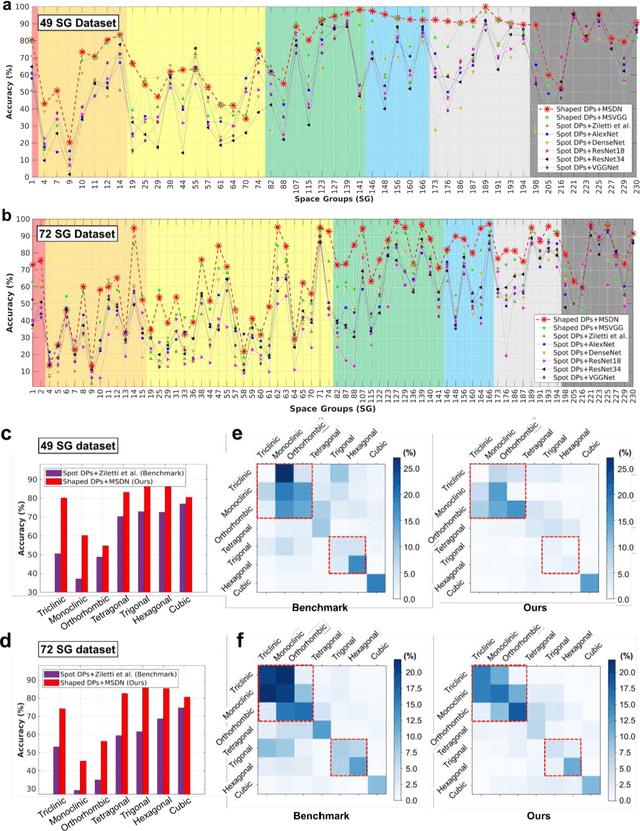
The robust and automated determination of crystal symmetry is of utmost importance in material characterization and analysis. Recent studies have shown that deep learning (DL) methods can effectively reveal the correlations between X-ray or electron-beam diffraction patterns and crystal symmetry. Despite their promise, most of these studies have been limited to identifying relatively few classes into which a target material may be grouped. On the other hand, the DL-based identification of crystal symmetry suffers from a drastic drop in accuracy for problems involving classification into tens or hundreds of symmetry classes (e.g., up to 230 space groups), severely limiting its practical usage. Here, we demonstrate that a combined approach of shaping diffraction patterns and implementing them in a multistream DenseNet (MSDN) substantially improves the accuracy of classification. Even with an imbalanced dataset of 108,658 individual crystals sampled from 72 space groups, our model achieves 80.2% space group classification accuracy, outperforming conventional benchmark models by 17-27 percentage points (%p). The enhancement can be largely attributed to the pattern shaping strategy, through which the subtle changes in patterns between symmetrically close crystal systems (e.g., monoclinic vs. orthorhombic or trigonal vs. hexagonal) are well differentiated. We additionally find that the novel MSDN architecture is advantageous for capturing patterns in a richer but less redundant manner relative to conventional convolutional neural networks. The newly proposed protocols in regard to both input descriptor processing and DL architecture enable accurate space group classification and thus improve the practical usage of the DL approach in crystal symmetry identification.