 Add to Chrome
 Add to Firefox
 Add to Edge
Measuring Biological Capabilities and Risks of AI Agents
Jun 18, 2026
This paper addresses a rapidly emerging policy challenge: how to generate and interpret credible evidence about the biological capabilities and risks of AI scientists, or agentic AI systems capable of autonomously or collaboratively performing multi-step scientific tasks. As these systems enter real research workflows, decision-makers increasingly face evaluation results whose meaning depends on underlying design choices that are often implicit or under-documented. We synthesize current evidence on AI-enabled biological risks and introduce biological agentic evaluations as a promising, but interpretation-sensitive, tool for assessing these systems. Our central contribution is a set of practical, experience-grounded considerations -- drawing from our own evaluations -- that show how choices around defining, designing, running, scoring, and documenting evaluations materially shape what results do and do not imply about risk. The analysis is intended to help policymakers interpret biological evaluation outputs with appropriate caution; guide public and private funders toward high-leverage investments in AI-biology evaluation research; and support biosecurity practitioners assessing emerging AI systems. A secondary audience includes researchers designing or conducting agentic evaluations within frontier AI labs, AI providers, scientific institutions, and third-party evaluation organizations.

Cross-Cultural Fashion Design via Interactive Large Language Models and Diffusion Models
Jan 26, 2025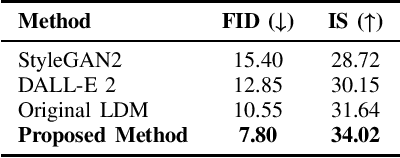
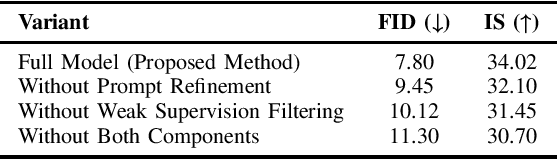
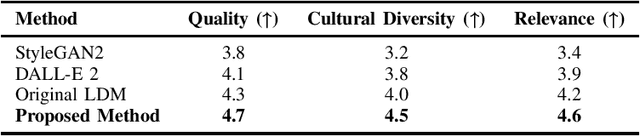
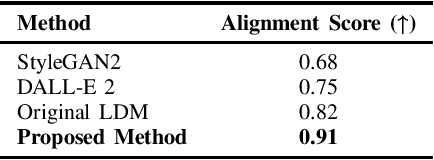
Fashion content generation is an emerging area at the intersection of artificial intelligence and creative design, with applications ranging from virtual try-on to culturally diverse design prototyping. Existing methods often struggle with cultural bias, limited scalability, and alignment between textual prompts and generated visuals, particularly under weak supervision. In this work, we propose a novel framework that integrates Large Language Models (LLMs) with Latent Diffusion Models (LDMs) to address these challenges. Our method leverages LLMs for semantic refinement of textual prompts and introduces a weak supervision filtering module to effectively utilize noisy or weakly labeled data. By fine-tuning the LDM on an enhanced DeepFashion+ dataset enriched with global fashion styles, the proposed approach achieves state-of-the-art performance. Experimental results demonstrate that our method significantly outperforms baselines, achieving lower Frechet Inception Distance (FID) and higher Inception Scores (IS), while human evaluations confirm its ability to generate culturally diverse and semantically relevant fashion content. These results highlight the potential of LLM-guided diffusion models in driving scalable and inclusive AI-driven fashion innovation.