 Add to Chrome
 Add to Firefox
 Add to Edge
Development of a European Union Time-Indexed Reference Dataset for Assessing the Performance of Signal Detection Methods in Pharmacovigilance using a Large Language Model
Mar 27, 2026
Background: The identification of optimal signal detection methods is hindered by the lack of reliable reference datasets. Existing datasets do not capture when adverse events (AEs) are officially recognized by regulatory authorities, preventing restriction of analyses to pre-confirmation periods and limiting evaluation of early detection performance. This study addresses this gap by developing a time-indexed reference dataset for the European Union (EU), incorporating the timing of AE inclusion in product labels along with regulatory metadata. Methods: Current and historical Summaries of Product Characteristics (SmPCs) for all centrally authorized products (n=1,513) were retrieved from the EU Union Register of Medicinal Products (data lock: 15 December 2025). Section 4.8 was extracted and processed using DeepSeek V3 to identify AEs. Regulatory metadata, including labelling changes, were programmatically extracted. Time indexing was based on the date of AE inclusion in the SmPC. Results: The database includes 17,763 SmPC versions spanning 1995-2025, comprising 125,026 drug-AE associations. The time-indexed reference dataset, restricted to active products, included 1,479 medicinal products and 110,823 drug-AE associations. Most AEs were identified pre-marketing (74.5%) versus post-marketing (25.5%). Safety updates peaked around 2012. Gastrointestinal, skin, and nervous system disorders were the most represented System Organ Classes. Drugs had a median of 48 AEs across 14 SOCs. Conclusions: The proposed dataset addresses a critical gap in pharmacovigilance by incorporating temporal information on AE recognition for the EU, supporting more accurate assessment of signal detection performance and facilitating methodological comparisons across analytical approaches.

CTG-DB: An Ontology-Based Transformation of ClinicalTrials.gov to Enable Cross-Trial Drug Safety Analyses
Mar 16, 2026ClinicalTrials.gov (CT.gov) is the largest publicly accessible registry of clinical studies, yet its registry-oriented architecture and heterogeneous adverse event (AE) terminology limit systematic pharmacovigilance (PV) analytics. AEs are typically recorded as investigator-reported text rather than standardized identifiers, requiring manual reconciliation to identify coherent safety concepts. We present the ClinicalTrials.gov Transformation Database (CTG-DB), an open-source pipeline that ingests the complete CT.gov XML archive and produces a relational database aligned to standardized AE terminology using the Medical Dictionary for Regulatory Activities (MedDRA). CTG-DB preserves arm-level denominators, represents placebo and comparator arms, and normalizes AE terminology using deterministic exact and fuzzy matching to ensure transparent and reproducible mappings. This framework enables concept-level retrieval and cross-trial aggregation for scalable placebo-referenced safety analyses and integration of clinical trial evidence into downstream PV signal detection.
Bridging the Gap in Drug Safety Data Analysis: Large Language Models for SQL Query Generation
Jun 15, 2024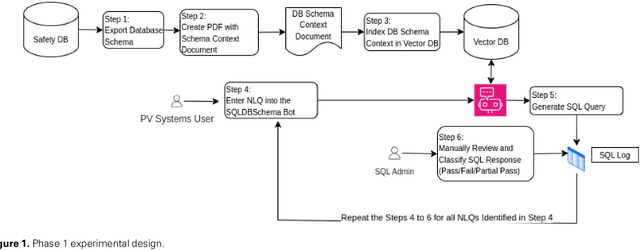
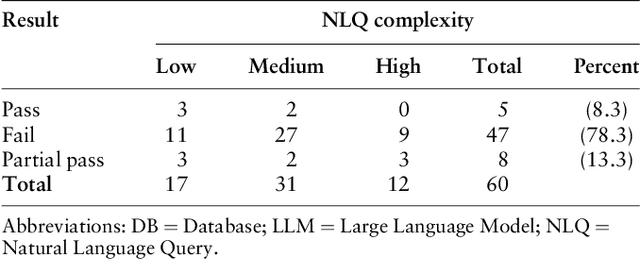
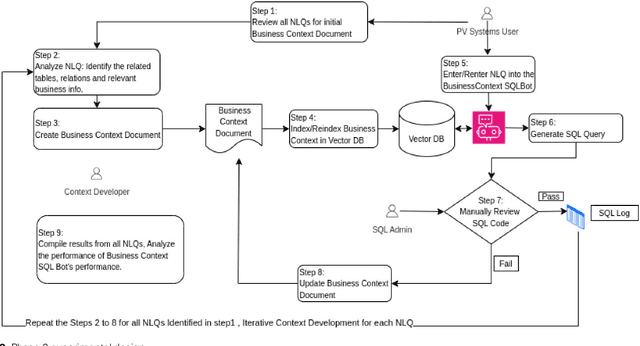
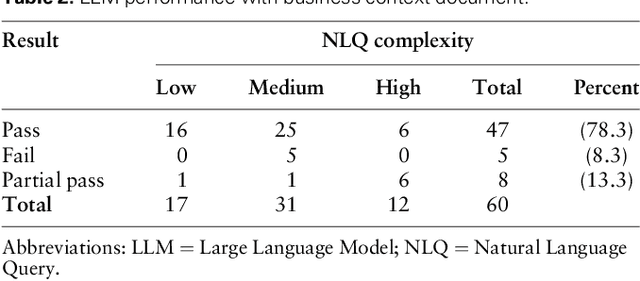
Pharmacovigilance (PV) is essential for drug safety, primarily focusing on adverse event monitoring. Traditionally, accessing safety data required database expertise, limiting broader use. This paper introduces a novel application of Large Language Models (LLMs) to democratize database access for non-technical users. Utilizing OpenAI's GPT-4, we developed a chatbot that generates structured query language (SQL) queries from natural language, bridging the gap between domain knowledge and technical requirements. The proposed application aims for more inclusive and efficient data access, enhancing decision making in drug safety. By providing LLMs with plain language summaries of expert knowledge, our approach significantly improves query accuracy over methods relying solely on database schemas. The application of LLMs in this context not only optimizes PV data analysis, ensuring timely and precise drug safety reporting -- a crucial component in adverse drug reaction monitoring -- but also promotes safer pharmacological practices and informed decision making across various data intensive fields.