 Add to Chrome
 Add to Firefox
 Add to Edge
Designing Conversations with the Dead: How People Engage with Generative Ghosts
May 20, 2026
We examine how people experience two choices in the design of generative ghosts, AI systems that are trained on data of the dead: representation, where an AI speaks about a deceased person in the third person, and reincarnation, where the AI speaks as the deceased in the first person. Through a qualitative user study with 16 participants, we explore how each shaped authenticity, affect, and risk. Reincarnation was preferred for its immediacy, but participants shared fears of over-reliance. Representation was preferred for engaging with memory over conversational presence, though participants often ignored this distinction, engaging in dialogue despite third-person framing. Across both modes, participants privileged affective resonance over factual fidelity. We conclude by showing how factors such as tone, language, and conversational rhythm -- factors unique to the user's memory of the deceased -- shape interactions with generative ghosts, and argue that those interactions are always collaborative.

Scholastic: Graphical Human-Al Collaboration for Inductive and Interpretive Text Analysis
Aug 12, 2022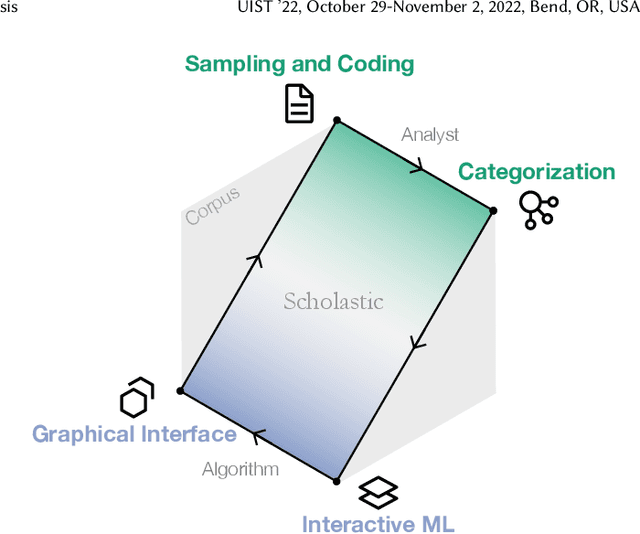
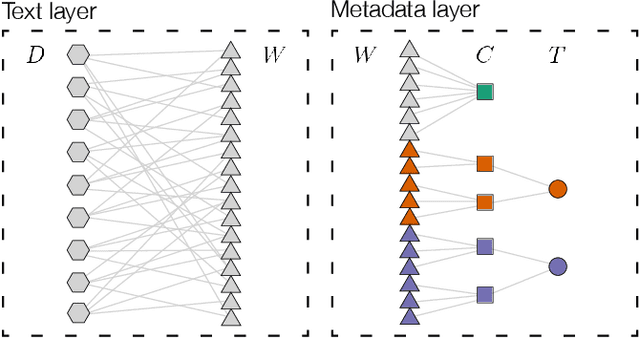
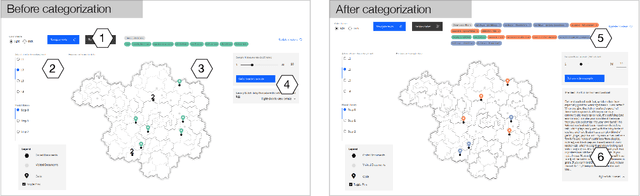
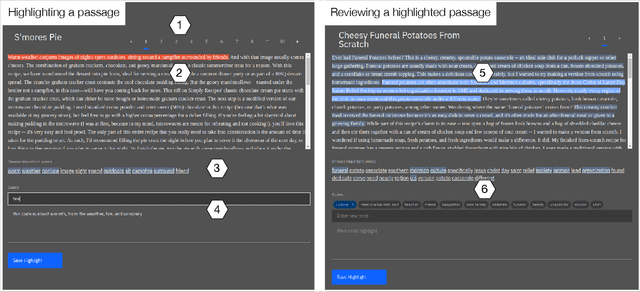
Interpretive scholars generate knowledge from text corpora by manually sampling documents, applying codes, and refining and collating codes into categories until meaningful themes emerge. Given a large corpus, machine learning could help scale this data sampling and analysis, but prior research shows that experts are generally concerned about algorithms potentially disrupting or driving interpretive scholarship. We take a human-centered design approach to addressing concerns around machine-assisted interpretive research to build Scholastic, which incorporates a machine-in-the-loop clustering algorithm to scaffold interpretive text analysis. As a scholar applies codes to documents and refines them, the resulting coding schema serves as structured metadata which constrains hierarchical document and word clusters inferred from the corpus. Interactive visualizations of these clusters can help scholars strategically sample documents further toward insights. Scholastic demonstrates how human-centered algorithm design and visualizations employing familiar metaphors can support inductive and interpretive research methodologies through interactive topic modeling and document clustering.