 Add to Chrome
 Add to Firefox
 Add to Edge
Making AI-Generated Feedback Matter: A Large-Scale Study of Feedback Workflows and Student Enactment
Aug 13, 2026
Feedback processes strongly influence student learning, yet their educational value depends on addressing two distinct challenges: providing high-quality, timely, and individualised feedback at scale, and supporting students to interpret, evaluate, and act on that feedback productively. Generative AI offers a credible means of addressing the provision challenge, but students' uptake of AI-generated feedback remains limited. We conducted a large-scale quasi-experimental sequential cohort study comparing three AI-mediated feedback workflows across 13,037 students and 51,296 student-authored resources. In Directed Feedback (n = 3,723), students received AI-generated feedback comments without structured support. In Self-Directed Feedback (n = 3,951), students could initiate optional AI-supported dialogue. In Enacted Feedback (n = 5,363), students were prompted to select feedback suggestions, evaluate their relevance, and engage in targeted AI-supported dialogue anchored to those selections. Enacted Feedback was associated with significantly higher uptake of AI-generated feedback, with an estimated probability of 26.2%, compared with 14.1% for Directed Feedback and 0.1% for Self-Directed Feedback. It was also associated with significantly higher self-assessment confidence and submitted-work quality than both comparison conditions. These findings suggest that the educational value of AI-generated feedback depends not only on the quality of feedback comments, but also on workflows that actively structure students' enactment of feedback literacy processes. The results have implications for the design of AI feedback systems that position learners as active participants in judgement, dialogue, and improvement rather than passive recipients of comments. Overall findings show that AI access alone is insufficient; purposeful workflow design is central to productive feedback use.

Making AI-Generated Feedback Matter: From Provision to Student Enactment
Aug 12, 2026Feedback processes strongly influence student learning, yet their educational value depends on addressing two distinct challenges: providing high-quality, timely, and individualised feedback at scale, and supporting students to interpret, evaluate, and act on that feedback productively. Generative AI offers a credible means of addressing the provision challenge, but students' uptake of AI-generated feedback remains limited. We conducted a large-scale quasi-experimental sequential cohort study comparing three AI-mediated feedback workflows across 13,037 students and 51,296 student-authored resources. In Directed Feedback (n = 3,723), students received AI-generated feedback comments without structured support. In Self-Directed Feedback (n = 3,951), students could initiate optional AI-supported dialogue. In Enacted Feedback (n = 5,363), students were prompted to select feedback suggestions, evaluate their relevance, and engage in targeted AI-supported dialogue anchored to those selections. Enacted Feedback was associated with significantly higher uptake of AI-generated feedback, with an estimated probability of 26.2%, compared with 14.1% for Directed Feedback and 0.1% for Self-Directed Feedback. It was also associated with significantly higher self-assessment confidence and submitted-work quality than both comparison conditions. These findings suggest that the educational value of AI-generated feedback depends not only on the quality of feedback comments, but also on workflows that actively structure students' enactment of feedback literacy processes. The results have implications for the design of AI feedback systems that position learners as active participants in judgement, dialogue, and improvement rather than passive recipients of comments. Overall findings show that AI access alone is insufficient; purposeful workflow design is central to productive feedback use.
Distinguishing performance gains from learning when using generative AI
May 13, 2026Generative artificial intelligence (AI) is increasingly being integrated into education, where it can boost learners' performance. However, these uses do not promote the deep cognitive and metacognitive processing that are required for high-quality learning.
How critically can an AI think? A framework for evaluating the quality of thinking of generative artificial intelligence
Jun 20, 2024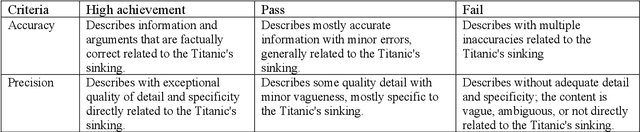

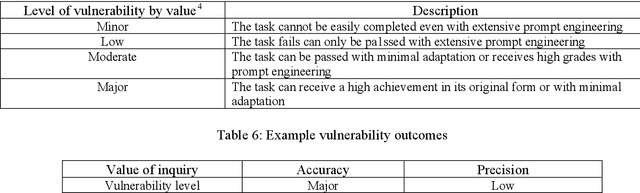
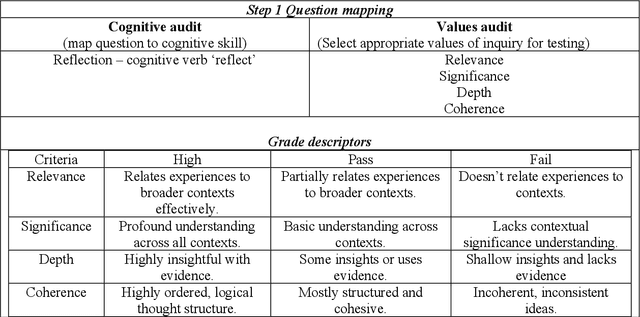
Generative AI such as those with large language models have created opportunities for innovative assessment design practices. Due to recent technological developments, there is a need to know the limits and capabilities of generative AI in terms of simulating cognitive skills. Assessing student critical thinking skills has been a feature of assessment for time immemorial, but the demands of digital assessment create unique challenges for equity, academic integrity and assessment authorship. Educators need a framework for determining their assessments vulnerability to generative AI to inform assessment design practices. This paper presents a framework that explores the capabilities of the LLM ChatGPT4 application, which is the current industry benchmark. This paper presents the Mapping of questions, AI vulnerability testing, Grading, Evaluation (MAGE) framework to methodically critique their assessments within their own disciplinary contexts. This critique will provide specific and targeted indications of their questions vulnerabilities in terms of the critical thinking skills. This can go on to form the basis of assessment design for their tasks.