 Add to Chrome
 Add to Firefox
 Add to Edge
Personality Engineering with AI Agents: A New Methodology for Negotiation Research
May 19, 2026
According to canonical negotiation theory, people's success in a negotiation depends on how well they balance competing demands--empathizing and asserting, demonstrating concern for other and concern for self, being soft on the people and hard on the problem. Yet people struggle to manage these tensions, so researchers have lacked the ability to rigorously test the field's prescriptions under controlled conditions. AI agents do not face the same limitations, and their precision, repertoire, consistency, and scalability enable a new class of experiments to contribute to negotiation theory. In this article, we introduce personality engineering: a methodology that uses AI agents to precisely parameterize, manipulate, and evaluate negotiator personality. We propose using the interpersonal circumplex--and its two core dimensions of warmth and dominance--as a foundational coordinate system for the field. This approach offers both a rigorous methodology for testing classic negotiation theories and a practical guide for designing the personalities of AI negotiation agents.

Advancing AI Negotiations: New Theory and Evidence from a Large-Scale Autonomous Negotiations Competition
Mar 09, 2025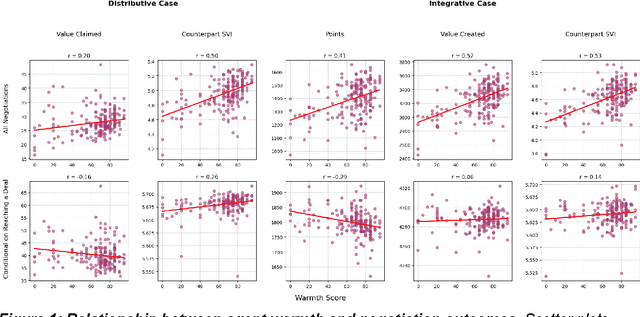
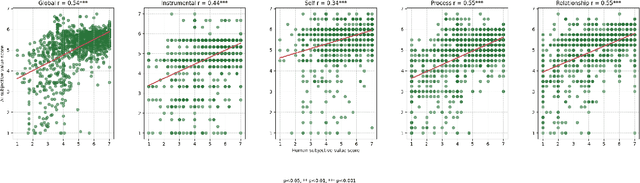
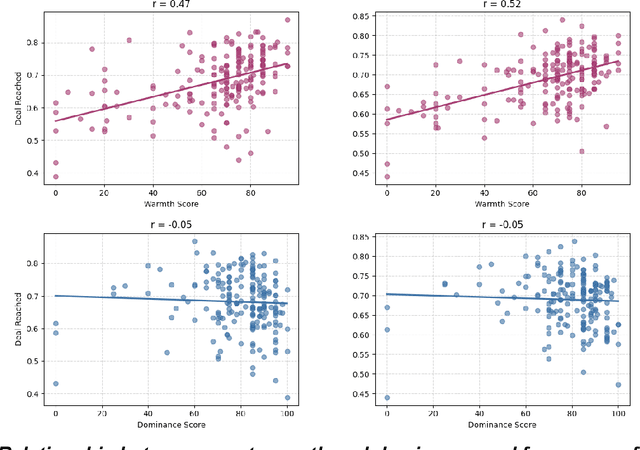
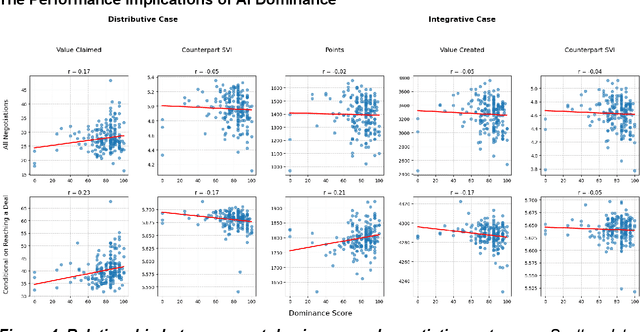
Despite the rapid proliferation of artificial intelligence (AI) negotiation agents, there has been limited integration of computer science research and established negotiation theory to develop new theories of AI negotiation. To bridge this gap, we conducted an International AI Negotiations Competition in which participants iteratively designed and refined prompts for large language model (LLM) negotiation agents. We then facilitated over 120,000 negotiations between these agents across multiple scenarios with diverse characteristics and objectives. Our findings revealed that fundamental principles from established human-human negotiation theory remain crucial in AI-AI negotiations. Specifically, agents exhibiting high warmth fostered higher counterpart subjective value and reached deals more frequently, which enabled them to create and claim more value in integrative settings. However, conditional on reaching a deal, warm agents claimed less value while dominant agents claimed more value. These results align with classic negotiation theory emphasizing relationship-building, assertiveness, and preparation. Our analysis also revealed unique dynamics in AI-AI negotiations not fully explained by negotiation theory, particularly regarding the effectiveness of AI-specific strategies like chain-of-thought reasoning and prompt injection. The agent that won our competition implemented an approach that blended traditional negotiation preparation frameworks with AI-specific methods. Together, these results suggest the importance of establishing a new theory of AI negotiations that integrates established negotiation theory with AI-specific strategies to optimize agent performance. Our research suggests this new theory must account for the unique characteristics of autonomous agents and establish the conditions under which traditional negotiation theory applies in automated settings.