 Add to Chrome
 Add to Firefox
 Add to Edge
Efficient Transformer-Based Localized Patch Sampling for Choroid Plexus Segmentation in Multiple Sclerosis
Jun 02, 2026
Background: The lateral ventricle choroid plexus (LVCP) is gaining recognition as a key imaging biomarker for multiple sclerosis (MS) related to physical disability and neuroinflammation. Yet, manual segmentation of the LVCP is highly tedious, restricting its use in broad clinical trials and longitudinal assessments. This research aims to develop a SwinUNETR-driven pipeline that leverages targeted intra- and peri-ventricular small patch sampling to automatically segment the LVCP in MS from both standalone and multi-modal MRI inputs. Methods: We retrospectively assessed 3T MRI scans across three sets of data stemming from two separate MS-dominant cohorts (Dataset 1: n=177; Dataset 2: n=177; expanded test set: n=388). Our method employed a SwinUNETR architecture trained on 32x32x32 voxel patches, benchmarking it against the 3D UXNET model. The primary metric for evaluation was the Dice Similarity Coefficient (DSC), supplemented by computational demand (GFLOPs) and the 95th percentile Hausdorff Distance (HD95). Results: On the extended test set, the SwinUNETR model secured a mean DSC of 0.868 (95% CI: 0.863-0.872) with MPRAGE and FLAIR combined, showing a statistically significant gain over UXNET (DSC: 0.858 [95% CI: 0.853-0.862], p<0.0001). When restricted to standalone FLAIR inputs, the transformer-based approach sustained a high DSC of 0.863, while the spatial localization of UXNET worsened considerably (HD95: 1.86 vs. 3.00 mm). Importantly, the proposed framework lowered computational load by 99% (91.8 vs. 22,080 GFLOPs). By integrating localized patch sampling with a SwinUNETR architecture, this methodology offers an accurate, robust, and statistically superior alternative to current leading models for LVCP segmentation. Its vast reduction in computational cost makes it ideal for widespread implementation in clinical and research environments.

Creating a Synthesizer from Schrödinger's Equation
Feb 01, 2024
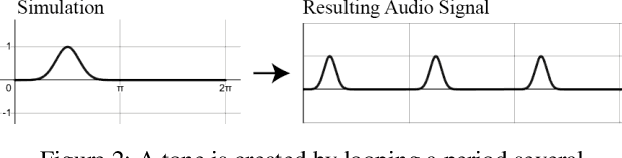
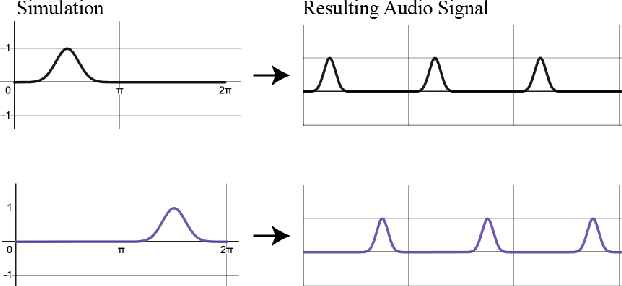
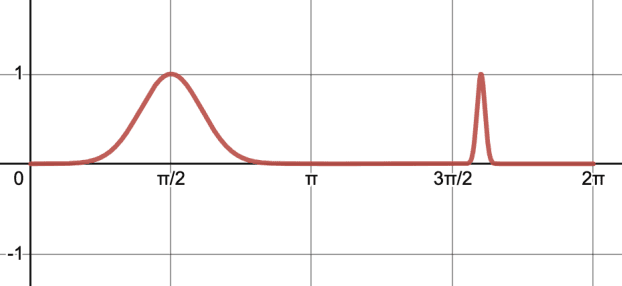
Our project offers an alternative approach to the sensory perception of the Schr\"odinger equation (an elementary model of quantum phenomena) by interpreting it as a sound wave. We are building a synthesizer plugin that simulates a quantum mechanical state that evolves over time. Thus, our tool allows the creation of unique sounds that are in motion and feel alive. These can be used in professional music production without any knowledge of physics, while at the same time providing insight into a chapter of quantum mechanics. The goal is to lower the threshold for entering complex theory by first developing an intuition for the subject; but the tool can also be used purely as a musical instrument. The user is encouraged, but not forced, to learn more about the underlying physics. Simulation parameters are adjustable in real-time, allowing intuitive experimentation. Despite the approximate calculations, real physical effects such as quantum tunneling can be observed acoustically and visually.