 Add to Chrome
 Add to Firefox
 Add to Edge
Chebyshev Policies and the Mountain Car Problem: Reinforcement Learning for Low-Dimensional Control Tasks
May 21, 2026
We analytically solve the Mountain Car problem, a canonical benchmark in RL, and derive an optimal control solution, closing a gap after 36 years. This enables us to reveal two surprising insights: The optimal control is quite simple, yet modern RL agents display a large gap to optimality. Motivated by the analysis of the optimal control, we introduce Chebyshev policies as a universal (i.e. dense) class of RL policies from first principles. They can be trained as drop-in replacements of neural nets, reducing the regret by a factor of 4.18, while requiring 277 times fewer parameters, fostering sample efficiency, explainability and realtime capability. Chebyshev policies are evaluated on further RL tasks, including a real-world nonlinear motion control testbed. They consistently improve performance over neural nets with PPO, ARS and REINFORCE. Our results demonstrate how Chebyshev policies offer a compelling and lightweight alternative or addition to neural nets for low-dimensional control tasks.

The Crucial Role of Problem Formulation in Real-World Reinforcement Learning
Mar 26, 2025Reinforcement Learning (RL) offers promising solutions for control tasks in industrial cyber-physical systems (ICPSs), yet its real-world adoption remains limited. This paper demonstrates how seemingly small but well-designed modifications to the RL problem formulation can substantially improve performance, stability, and sample efficiency. We identify and investigate key elements of RL problem formulation and show that these enhance both learning speed and final policy quality. Our experiments use a one-degree-of-freedom (1-DoF) helicopter testbed, the Quanser Aero~2, which features non-linear dynamics representative of many industrial settings. In simulation, the proposed problem design principles yield more reliable and efficient training, and we further validate these results by training the agent directly on physical hardware. The encouraging real-world outcomes highlight the potential of RL for ICPS, especially when careful attention is paid to the design principles of problem formulation. Overall, our study underscores the crucial role of thoughtful problem formulation in bridging the gap between RL research and the demands of real-world industrial systems.
Comparison of Model Predictive Control and Proximal Policy Optimization for a 1-DOF Helicopter System
Aug 28, 2024This study conducts a comparative analysis of Model Predictive Control (MPC) and Proximal Policy Optimization (PPO), a Deep Reinforcement Learning (DRL) algorithm, applied to a 1-Degree of Freedom (DOF) Quanser Aero 2 system. Classical control techniques such as MPC and Linear Quadratic Regulator (LQR) are widely used due to their theoretical foundation and practical effectiveness. However, with advancements in computational techniques and machine learning, DRL approaches like PPO have gained traction in solving optimal control problems through environment interaction. This paper systematically evaluates the dynamic response characteristics of PPO and MPC, comparing their performance, computational resource consumption, and implementation complexity. Experimental results show that while LQR achieves the best steady-state accuracy, PPO excels in rise-time and adaptability, making it a promising approach for applications requiring rapid response and adaptability. Additionally, we have established a baseline for future RL-related research on this specific testbed. We also discuss the strengths and limitations of each control strategy, providing recommendations for selecting appropriate controllers for real-world scenarios.
Python-Based Reinforcement Learning on Simulink Models
May 14, 2024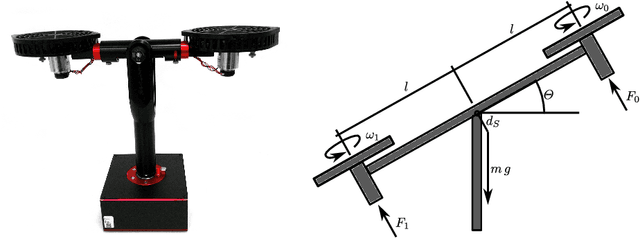
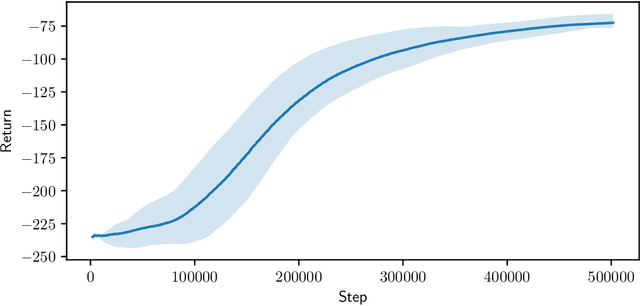
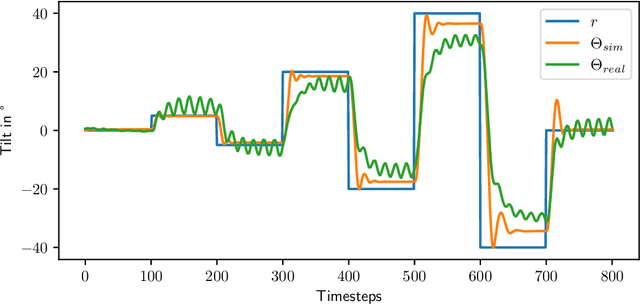
This paper proposes a framework for training Reinforcement Learning agents using Python in conjunction with Simulink models. Leveraging Python's superior customization options and popular libraries like Stable Baselines3, we aim to bridge the gap between the established Simulink environment and the flexibility of Python for training bleeding edge agents. Our approach is demonstrated on the Quanser Aero 2, a versatile dual-rotor helicopter. We show that policies trained on Simulink models can be seamlessly transferred to the real system, enabling efficient development and deployment of Reinforcement Learning agents for control tasks. Through systematic integration steps, including C-code generation from Simulink, DLL compilation, and Python interface development, we establish a robust framework for training agents on Simulink models. Experimental results demonstrate the effectiveness of our approach, surpassing previous efforts and highlighting the potential of combining Simulink with Python for Reinforcement Learning research and applications.