 Add to Chrome
 Add to Firefox
 Add to Edge
LAG-XAI: A Lie-Inspired Affine Geometric Framework for Interpretable Paraphrasing in Transformer Latent Spaces
Apr 07, 2026
Modern Transformer-based language models achieve strong performance in natural language processing tasks, yet their latent semantic spaces remain largely uninterpretable black boxes. This paper introduces LAG-XAI (Lie Affine Geometry for Explainable AI), a novel geometric framework that models paraphrasing not as discrete word substitutions, but as a structured affine transformation within the embedding space. By conceptualizing paraphrasing as a continuous geometric flow on a semantic manifold, we propose a computationally efficient mean-field approximation, inspired by local Lie group actions. This allows us to decompose paraphrase transitions into geometrically interpretable components: rotation, deformation, and translation. Experiments on the noisy PIT-2015 Twitter corpus, encoded with Sentence-BERT, reveal a "linear transparency" phenomenon. The proposed affine operator achieves an AUC of 0.7713. By normalizing against random chance (AUC 0.5), the model captures approximately 80% of the non-linear baseline's effective classification capacity (AUC 0.8405), offering explicit parametric interpretability in exchange for a marginal drop in absolute accuracy. The model identifies fundamental geometric invariants, including a stable matrix reconfiguration angle (~27.84°) and near-zero deformation, indicating local isometry. Cross-domain generalization is confirmed via direct cross-corpus validation on an independent TURL dataset. Furthermore, the practical utility of LAG-XAI is demonstrated in LLM hallucination detection: using a "cheap geometric check," the model automatically detected 95.3% of factual distortions on the HaluEval dataset by registering deviations beyond the permissible semantic corridor. This approach provides a mathematically grounded, resource-efficient path toward the mechanistic interpretability of Transformers.

Multi-Stage Segmentation and Cascade Classification Methods for Improving Cardiac MRI Analysis
Dec 12, 2024The segmentation and classification of cardiac magnetic resonance imaging are critical for diagnosing heart conditions, yet current approaches face challenges in accuracy and generalizability. In this study, we aim to further advance the segmentation and classification of cardiac magnetic resonance images by introducing a novel deep learning-based approach. Using a multi-stage process with U-Net and ResNet models for segmentation, followed by Gaussian smoothing, the method improved segmentation accuracy, achieving a Dice coefficient of 0.974 for the left ventricle and 0.947 for the right ventricle. For classification, a cascade of deep learning classifiers was employed to distinguish heart conditions, including hypertrophic cardiomyopathy, myocardial infarction, and dilated cardiomyopathy, achieving an average accuracy of 97.2%. The proposed approach outperformed existing models, enhancing segmentation accuracy and classification precision. These advancements show promise for clinical applications, though further validation and interpretation across diverse imaging protocols is necessary.
Integration of Contextual Descriptors in Ontology Alignment for Enrichment of Semantic Correspondence
Nov 28, 2024
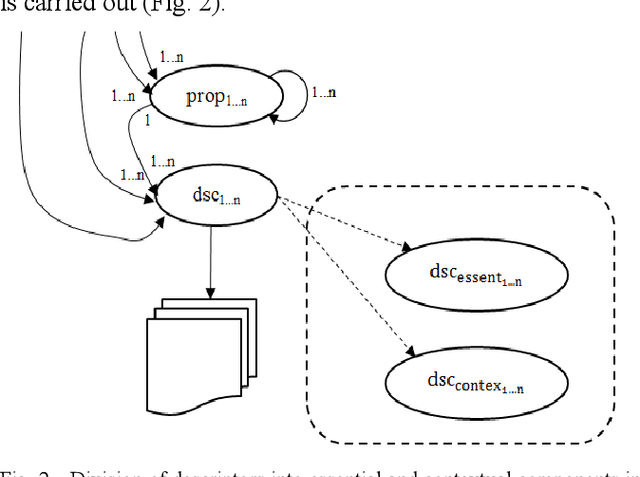


This paper proposes a novel approach to semantic ontology alignment using contextual descriptors. A formalization was developed that enables the integration of essential and contextual descriptors to create a comprehensive knowledge model. The hierarchical structure of the semantic approach and the mathematical apparatus for analyzing potential conflicts between concepts, particularly in the example of "Transparency" and "Privacy" in the context of artificial intelligence, are demonstrated. Experimental studies showed a significant improvement in ontology alignment metrics after the implementation of contextual descriptors, especially in the areas of privacy, responsibility, and freedom & autonomy. The application of contextual descriptors achieved an average overall improvement of approximately 4.36%. The results indicate the effectiveness of the proposed approach for more accurately reflecting the complexity of knowledge and its contextual dependence.