 Add to Chrome
 Add to Firefox
 Add to Edge
Fuzzy Inference Procedure for Intelligent and Automated Control of Refrigerant Charging
Nov 02, 2019


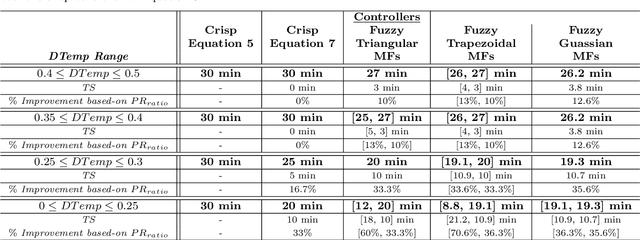
Fuzzy logic controllers are readily customizable in natural language terms and can effectively deal with nonlinearities and uncertainties in control systems. This paper presents an intelligent and automated fuzzy control procedure for the refrigerant charging of refrigerators. The elements that affect the experimental charging and the optimization of the performance of refrigerators are fuzzified and used in an inference model. The objective is to represent the intelligent behavior of a human tester and ultimately make the developed model available for the use in an automated data acquisition, monitoring, and decision-making system. The proposed system is capable of determining the needed amount of refrigerant in the shortest possible time. The system automates the refrigerant charging and performance testing of parallel units. The system is built using data acquisition systems from National Instruments and programmed under LabVIEW. The developed fuzzy models, and their testing results, are evaluated according to their compatibility with the principles that govern the intelligent behavior of human experts when performing the refrigerant-charging process. In addition, comparisons of the fuzzy models with classical inference models are presented. The obtained results confirm that the proposed fuzzy controllers outperform traditional crisp controllers and provide major test time and energy savings. The paper includes thorough discussions, analysis, and evaluation.
* 17 pages, 20 figures, 3 tables

Parallel Hardware for Faster Morphological Analysis
Apr 09, 2019



Morphological analysis in the Arabic language is computationally intensive, has numerous forms and rules, and is intrinsically parallel. The investigation presented in this paper confirms that the effective development of parallel algorithms and the derivation of corresponding processors in hardware enable implementations with appealing performance characteristics. The presented developments of parallel hardware comprise the application of a variety of algorithm modelling techniques, strategies for concurrent processing, and the creation of pioneering hardware implementations that target modern programmable devices. The investigation includes the creation of a linguistic-based stemmer for Arabic verb root extraction with extended infix processing to attain high-levels of accuracy. The implementations comprise three versions, namely, software, non-pipelined processor, and pipelined processor with high throughput. The targeted systems are high-performance multi-core processors for software implementations and high-end Field Programmable Gate Array systems for hardware implementations. The investigation includes a thorough evaluation of the methodology, and performance and accuracy analyses of the developed software and hardware implementations. The pipelined processor achieved a significant speedup of 5571.4 over the software implementation. The developed stemmer for verb root extraction with infix processing attained accuracies of 87% and 90.7% for analyzing the texts of the Holy Quran and its Chapter 29 - Surat Al-Ankabut.
* 16 pages, 19 figures, 7 tables