 Add to Chrome
 Add to Firefox
 Add to Edge
ReliableNet: A Chance-Constrained Approach to Trustworthy Classification in Deep Learning
Aug 10, 2026
A prediction that is both confident and wrong is a critical reliability failure because it can bypass abstention and human review precisely when the model is mistaken. Empirical risk minimization (ERM) controls average loss but not this failure directly, while calibration, uncertainty estimation, conformal risk control, and selective prediction methods target related reliability properties rather than bounding the joint failure event during training. We propose ReliableNet, which constrains the Joint Confident-Wrong (JCW) probability, the probability that a prediction is simultaneously confident and incorrect, below a user-specified risk budget $α\in(0,1)$. We formulate this as a chance-constrained ERM problem, use a conservative smooth inner approximation whose population feasibility implies the original JCW constraint. Across four tabular and two image datasets, ReliableNet is the only method certified within the JCW budget for every dataset and seed in distribution, when compared against baselines spanning ERM, post-hoc calibration, conformal risk control, and selective prediction. Under demographic, ambiguity, spurious-correlation, novel-class, and covariate shifts, it achieves the lowest empirical JCW among the compared methods while remaining very competitive in accuracy, coverage, calibration, and selective prediction. Risk-coverage results further indicate that ReliableNet achieves better selective ranking than the benchmark methods on most datasets. Overall, ReliableNet provides a principled approach to trustworthy classification.

Physics-Informed Neural Networks for Source Inversion and Parameters Estimation in Atmospheric Dispersion
Dec 08, 2025Recent studies have shown the success of deep learning in solving forward and inverse problems in engineering and scientific computing domains, such as physics-informed neural networks (PINNs). In the fields of atmospheric science and environmental monitoring, estimating emission source locations is a central task that further relies on multiple model parameters that dictate velocity profiles and diffusion parameters. Estimating these parameters at the same time as emission sources from scarce data is a difficult task. In this work, we achieve this by leveraging the flexibility and generality of PINNs. We use a weighted adaptive method based on the neural tangent kernels to solve a source inversion problem with parameter estimation on the 2D and 3D advection-diffusion equations with unknown velocity and diffusion coefficients that may vary in space and time. Our proposed weighted adaptive method is presented as an extension of PINNs for forward PDE problems to a highly ill-posed source inversion and parameter estimation problem. The key idea behind our methodology is to attempt the joint recovery of the solution, the sources along with the unknown parameters, thereby using the underlying partial differential equation as a constraint that couples multiple unknown functional parameters, leading to more efficient use of the limited information in the measurements. We present various numerical experiments, using different types of measurements that model practical engineering systems, to show that our proposed method is indeed successful and robust to additional noise in the measurements.
Localized Weather Prediction Using Kolmogorov-Arnold Network-Based Models and Deep RNNs
May 27, 2025Weather forecasting is crucial for managing risks and economic planning, particularly in tropical Africa, where extreme events severely impact livelihoods. Yet, existing forecasting methods often struggle with the region's complex, non-linear weather patterns. This study benchmarks deep recurrent neural networks such as $\texttt{LSTM, GRU, BiLSTM, BiGRU}$, and Kolmogorov-Arnold-based models $(\texttt{KAN} and \texttt{TKAN})$ for daily forecasting of temperature, precipitation, and pressure in two tropical cities: Abidjan, Cote d'Ivoire (Ivory Coast) and Kigali (Rwanda). We further introduce two customized variants of $ \texttt{TKAN}$ that replace its original $\texttt{SiLU}$ activation function with $ \texttt{GeLU}$ and \texttt{MiSH}, respectively. Using station-level meteorological data spanning from 2010 to 2024, we evaluate all the models on standard regression metrics. $\texttt{KAN}$ achieves temperature prediction ($R^2=0.9986$ in Abidjan, $0.9998$ in Kigali, $\texttt{MSE} < 0.0014~^\circ C ^2$), while $\texttt{TKAN}$ variants minimize absolute errors for precipitation forecasting in low-rainfall regimes. The customized $\texttt{TKAN}$ models demonstrate improvements over the standard $\texttt{TKAN}$ across both datasets. Classical \texttt{RNNs} remain highly competitive for atmospheric pressure ($R^2 \approx 0.83{-}0.86$), outperforming $\texttt{KAN}$-based models in this task. These results highlight the potential of spline-based neural architectures for efficient and data-efficient forecasting.
AI and the Future of Work in Africa White Paper
Nov 15, 2024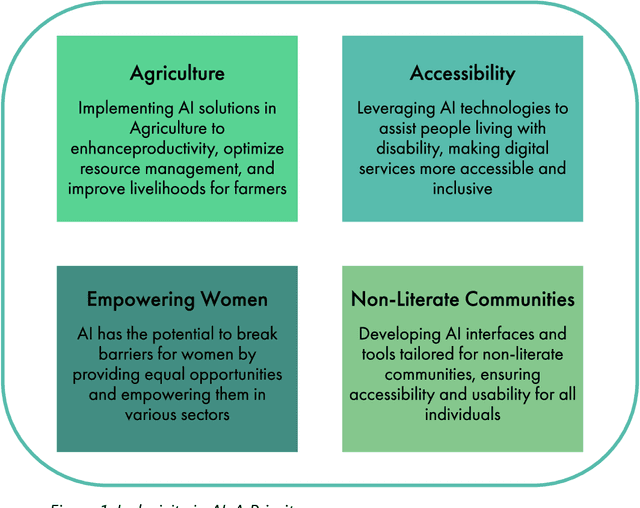

This white paper is the output of a multidisciplinary workshop in Nairobi (Nov 2023). Led by a cross-organisational team including Microsoft Research, NEPAD, Lelapa AI, and University of Oxford. The workshop brought together diverse thought-leaders from various sectors and backgrounds to discuss the implications of Generative AI for the future of work in Africa. Discussions centred around four key themes: Macroeconomic Impacts; Jobs, Skills and Labour Markets; Workers' Perspectives and Africa-Centris AI Platforms. The white paper provides an overview of the current state and trends of generative AI and its applications in different domains, as well as the challenges and risks associated with its adoption and regulation. It represents a diverse set of perspectives to create a set of insights and recommendations which aim to encourage debate and collaborative action towards creating a dignified future of work for everyone across Africa.
A physics-informed neural network framework for modeling obstacle-related equations
Apr 07, 2023Deep learning has been highly successful in some applications. Nevertheless, its use for solving partial differential equations (PDEs) has only been of recent interest with current state-of-the-art machine learning libraries, e.g., TensorFlow or PyTorch. Physics-informed neural networks (PINNs) are an attractive tool for solving partial differential equations based on sparse and noisy data. Here extend PINNs to solve obstacle-related PDEs which present a great computational challenge because they necessitate numerical methods that can yield an accurate approximation of the solution that lies above a given obstacle. The performance of the proposed PINNs is demonstrated in multiple scenarios for linear and nonlinear PDEs subject to regular and irregular obstacles.