 Add to Chrome
 Add to Firefox
 Add to Edge
Towards Standardized Light Field Quality Assessment: Hybrid Subjective Benchmarking and Objective Metric Evaluation
Jul 03, 2026
Benchmarking immersive media coding solutions, especially in the standardization context, requires reliable and reproducible subjective quality assessment (QA) procedures, along with objective quality metrics that remain accurate across different distortion types. This paper presents a standardized workflow for light field QA, developed and deployed in the context of JPEG Pleno standardization activities, which integrates benchmark generation, a hybrid subjective evaluation, and objective metric analysis into a common workflow. The benchmark is designed to encompass not only traditional coding-only artifacts but also distortions that arise in processing pipelines in which light field encoding is accompanied with view synthesis and reconstruction techniques. A hybrid subjective method is proposed enabling fine-grained assessment by combining reference-anchored quality rating with targeted pairwise refinement in perceptually ambiguous regions. The reliability of subjective scores is verified using statistical consistency analyses between observers of two cohorts. Finally, a large set of objective metrics is systematically evaluated in terms of global prediction accuracy, local agreement in ambiguous quality regions, and robustness across distortion families. The results show that several metrics achieve strong agreement for coding-only stimuli, but their performance consistently drops when view synthesis distortions are included. The analysis further highlights the importance of view-pooling strategy in the design of future light field quality metrics. The work provides a reproducible and standardization-ready framework for fine-grained light field QA, while identifying key limitations of current objective metrics under emerging coding pipelines. The subjectively annotated dataset is publicly available at https://plenodb.jpeg.org/lfqa/objectivecfp.


Relying on a rate constraint to reduce Motion Estimation complexity
Feb 18, 2021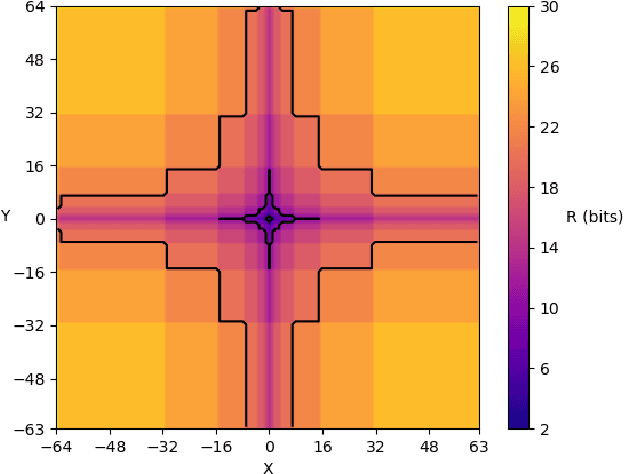
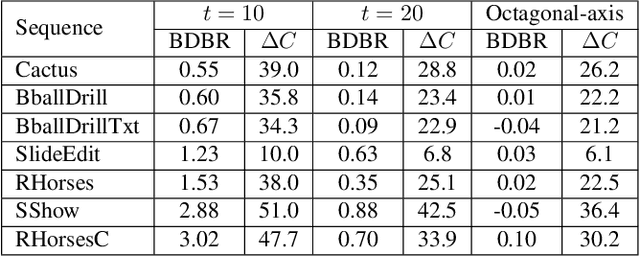
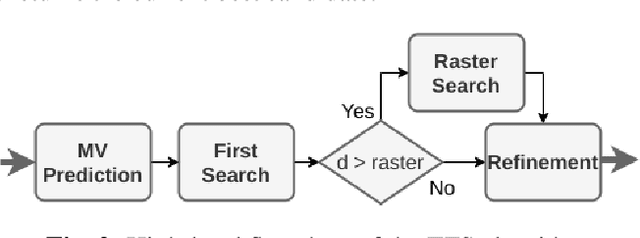
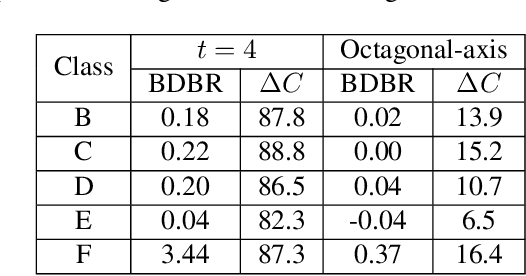
This paper proposes a rate-based candidate elimination strategy for Motion Estimation, which is considered one of the main sources of encoder complexity. We build from findings of previous works that show that selected motion vectors are generally near the predictor to propose a solution that uses the motion vector bitrate to constrain the candidate search to a subset of the original search window, resulting in less distortion computations. The proposed method is not tied to a particular search pattern, which makes it applicable to several ME strategies. The technique was tested in the VVC reference software implementation and showed complexity reductions of over 80% at the cost of an average 0.74% increase in BD-Rate with respect to the original TZ Search algorithm in the LDP configuration.