 Add to Chrome
 Add to Firefox
 Add to Edge
CyberGFM: Graph Foundation Models for Lateral Movement Detection in Enterprise Networks
Jan 09, 2026
Representing networks as a graph and training a link prediction model using benign connections is an effective method of anomaly-based intrusion detection. Existing works using this technique have shown great success using temporal graph neural networks and skip-gram-based approaches on random walks. However, random walk-based approaches are unable to incorporate rich edge data, while the GNN-based approaches require large amounts of memory to train. In this work, we propose extending the original insight from random walk-based skip-grams--that random walks through a graph are analogous to sentences in a corpus--to the more modern transformer-based foundation models. Using language models that take advantage of GPU optimizations, we can quickly train a graph foundation model to predict missing tokens in random walks through a network of computers. The graph foundation model is then finetuned for link prediction and used as a network anomaly detector. This new approach allows us to combine the efficiency of random walk-based methods and the rich semantic representation of deep learning methods. This system, which we call CyberGFM, achieved state-of-the-art results on three widely used network anomaly detection datasets, delivering a up to 2$\times$ improvement in average precision. We found that CyberGFM outperforms all prior works in unsupervised link prediction for network anomaly detection, using the same number of parameters, and with equal or better efficiency than the previous best approaches.

Automated Cyber Defense with Generalizable Graph-based Reinforcement Learning Agents
Sep 19, 2025

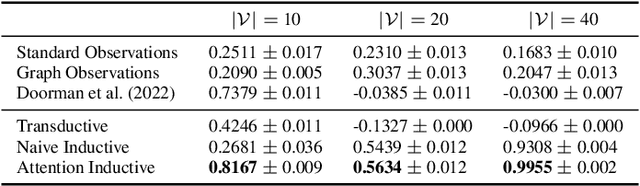
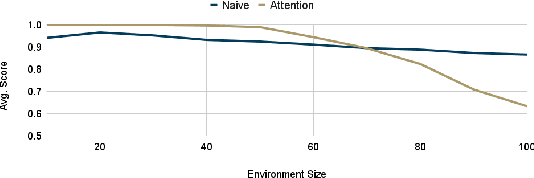
Deep reinforcement learning (RL) is emerging as a viable strategy for automated cyber defense (ACD). The traditional RL approach represents networks as a list of computers in various states of safety or threat. Unfortunately, these models are forced to overfit to specific network topologies, rendering them ineffective when faced with even small environmental perturbations. In this work, we frame ACD as a two-player context-based partially observable Markov decision problem with observations represented as attributed graphs. This approach allows our agents to reason through the lens of relational inductive bias. Agents learn how to reason about hosts interacting with other system entities in a more general manner, and their actions are understood as edits to the graph representing the environment. By introducing this bias, we will show that our agents can better reason about the states of networks and zero-shot adapt to new ones. We show that this approach outperforms the state-of-the-art by a wide margin, and makes our agents capable of defending never-before-seen networks against a wide range of adversaries in a variety of complex, and multi-agent environments.