 Add to Chrome
 Add to Firefox
 Add to Edge
A Comparative Analysis on the Performance of Upper Confidence Bound Algorithms in Adaptive Deep Neural Networks
Apr 27, 2026
Edge computing environments impose strict constraints on energy consumption and latency, making the deployment of deep neural networks a significant challenge. Therefore, smart and adaptive inference strategies that dynamically balance computational cost or latency with predictive accuracy are critical in edge computing scenarios. In this work, we build on Adaptive Deep Neural Networks (ADNNs) that employ the Multi-Armed Bandit (MAB) framework. Current literature leverages the first version of the Upper Confidence Bound (UCB1) strategy to dynamically select the optimal confidence threshold, enabling efficient early exits without sacrificing accuracy. However, we introduce four additional Upper Confidence Bound strategies in ADNNs, namely UCB-V, UCB-Tuned, UCB-Bayes, and UCB-BwK, and perform, for the first time, a comparative study of these strategies with respect to trade-offs between accuracy, energy consumption, and latency. The proposed UCB strategies are employed on the ResNet and MobileViT neural networks, and are evaluated on the benchmark datasets of CIFAR-10, CIFAR-10.1, and CIFAR-100. Experimental results demonstrate that all strategies achieve sub-linear cumulative regret, with UCB-Bayes converging the fastest, followed by UCB-Tuned and UCB-V. Finally, UCB-V and UCB-Tuned dominate the Pareto Frontiers of accuracy-latency and accuracy-energy trade-offs.

An evaluation of time series forecasting models on water consumption data: A case study of Greece
Mar 30, 2023


In recent years, the increased urbanization and industrialization has led to a rising water demand and resources, thus increasing the gap between demand and supply. Proper water distribution and forecasting of water consumption are key factors in mitigating the imbalance of supply and demand by improving operations, planning and management of water resources. To this end, in this paper, several well-known forecasting algorithms are evaluated over time series, water consumption data from Greece, a country with diverse socio-economic and urbanization issues. The forecasting algorithms are evaluated on a real-world dataset provided by the Water Supply and Sewerage Company of Greece revealing key insights about each algorithm and its use.
TraClets: Harnessing the power of computer vision for trajectory classification
May 30, 2022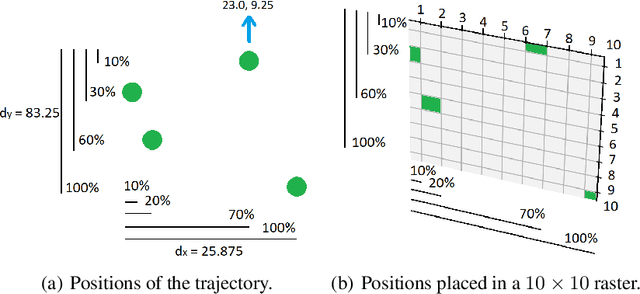
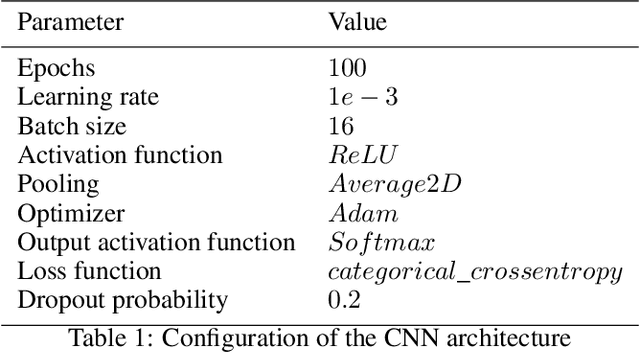
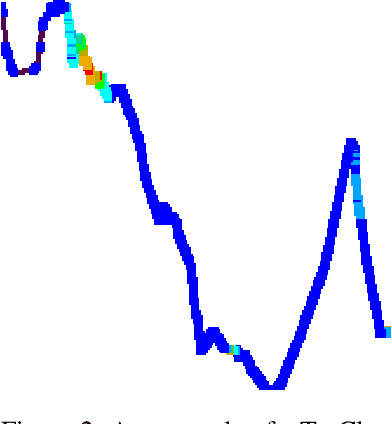
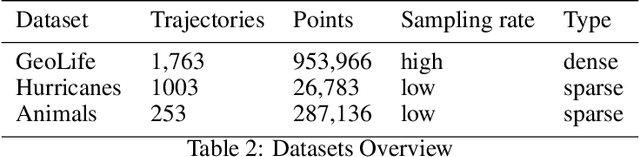
Due to the advent of new mobile devices and tracking sensors in recent years, huge amounts of data are being produced every day. Therefore, novel methodologies need to emerge that dive through this vast sea of information and generate insights and meaningful information. To this end, researchers have developed several trajectory classification algorithms over the years that are able to annotate tracking data. Similarly, in this research, a novel methodology is presented that exploits image representations of trajectories, called TraClets, in order to classify trajectories in an intuitive humans way, through computer vision techniques. Several real-world datasets are used to evaluate the proposed approach and compare its classification performance to other state-of-the-art trajectory classification algorithms. Experimental results demonstrate that TraClets achieves a classification performance that is comparable to, or in most cases, better than the state-of-the-art, acting as a universal, high-accuracy approach for trajectory classification.