 Add to Chrome
 Add to Firefox
 Add to Edge
MUTEX: Leveraging Multilingual Transformers and Conditional Random Fields for Enhanced Urdu Toxic Span Detection
Mar 05, 2026
Urdu toxic span detection remains limited because most existing systems rely on sentence-level classification and fail to identify the specific toxic spans within those text. It is further exacerbated by the multiple factors i.e. lack of token-level annotated resources, linguistic complexity of Urdu, frequent code-switching, informal expressions, and rich morphological variations. In this research, we propose MUTEX: a multilingual transformer combined with conditional random fields (CRF) for Urdu toxic span detection framework that uses manually annotated token-level toxic span dataset to improve performance and interpretability. MUTEX uses XLM RoBERTa with CRF layer to perform sequence labeling and is tested on multi-domain data extracted from social media, online news, and YouTube reviews using token-level F1 to evaluate fine-grained span detection. The results indicate that MUTEX achieves 60% token-level F1 score that is the first supervised baseline for Urdu toxic span detection. Further examination reveals that transformer-based models are more effective at implicitly capturing the contextual toxicity and are able to address the issues of code-switching and morphological variation than other models.

ULTRA:Urdu Language Transformer-based Recommendation Architecture
Feb 12, 2026Urdu, as a low-resource language, lacks effective semantic content recommendation systems, particularly in the domain of personalized news retrieval. Existing approaches largely rely on lexical matching or language-agnostic techniques, which struggle to capture semantic intent and perform poorly under varying query lengths and information needs. This limitation results in reduced relevance and adaptability in Urdu content recommendation. We propose ULTRA (Urdu Language Transformer-based Recommendation Architecture),an adaptive semantic recommendation framework designed to address these challenges. ULTRA introduces a dual-embedding architecture with a query-length aware routing mechanism that dynamically distinguishes between short, intent-focused queries and longer, context-rich queries. Based on a threshold-driven decision process, user queries are routed to specialized semantic pipelines optimized for either title/headline-level or full-content/document level representations, ensuring appropriate semantic granularity during retrieval. The proposed system leverages transformer-based embeddings and optimized pooling strategies to move beyond surface-level keyword matching and enable context-aware similarity search. Extensive experiments conducted on a large-scale Urdu news corpus demonstrate that the proposed architecture consistently improves recommendation relevance across diverse query types. Results show gains in precision above 90% compared to single-pipeline baselines, highlighting the effectiveness of query-adaptive semantic alignment for low-resource languages. The findings establish ULTRA as a robust and generalizable content recommendation architecture, offering practical design insights for semantic retrieval systems in low-resource language settings.
Forecasting Drought Using Multilayer Perceptron Artificial Neural Network Model
Apr 17, 2019
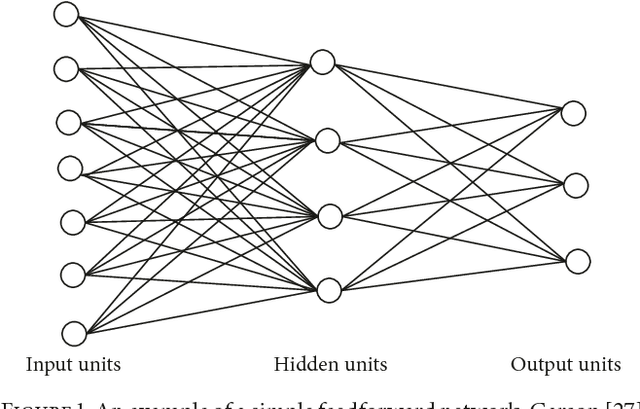


These days human beings are facing many environmental challenges due to frequently occurring drought hazards. It may have an effect on the countrys environment, the community, and industries. Several adverse impacts of drought hazard are continued in Pakistan, including other hazards. However, early measurement and detection of drought can provide guidance to water resources management for employing drought mitigation policies. In this paper, we used a multilayer perceptron neural network (MLPNN) algorithm for drought forecasting. We applied and tested MLPNN algorithm on monthly time series data of Standardized Precipitation Evapotranspiration Index (SPEI) for seventeen climatological stations located in Northern Area and KPK (Pakistan). We found that MLPNN has potential capability for SPEI drought forecasting based on performance measures (i.e., Mean Average Error (MAE), the coefficient of correlation R, and Root Mean Square Error (RMSE). Water resources and management planner can take necessary action in advance (e.g., in water scarcity areas) by using MLPNN model as part of their decision making.