 Add to Chrome
 Add to Firefox
 Add to Edge
Graph Neural Network based Hierarchy-Aware Embeddings of Knowledge Graphs: Applications to Yeast Phenotype Prediction
May 05, 2026
We present a method for finding hierarchy-aware embeddings of knowledge graphs (KGs) using graph neural networks (GNNs) enriched with a semantic loss derived from underlying ontologies. This method yields embeddings that better reflect domain knowledge. To demonstrate their utility, we predict and interpret the effects of gene deletions in the yeast Saccharomyces cerevisiae and learn box embeddings for KGs in the absence of a prediction task. We further show how box embeddings can serve as the basis for evaluating KG revisions. Our yeast KG is constructed from community databases and ontology terms. Low-dimensional box embeddings combined with GNNs are used to predict cell growth for double gene knockouts. Over 10-fold cross validation, these predictions have a mean $R^2$~score~of~0.360, significantly higher than baseline comparisons, demonstrating that high-level qualitative knowledge is informative about experimental outcomes. Incorporating semantic loss terms in the training of the models improves their predictive performance ($R^2$=0.377) by aligning embeddings with ontology structure. This shows that class hierarchies from ontologies can be exploited for quantitative prediction. We also test the trained models on triple gene knockouts, showing they generalise to data beyond those seen in training. Additionally, by identifying co-occurring relations in the yeast KG important for the cell-growth predictions, we construct hypotheses about interacting traits in yeast. A biological experiment validates one such finding, revealing an association between inositol utilisation and osmotic stress resistance, highlighting the model's potential to guide biological discovery.

Genesis: Towards the Automation of Systems Biology Research
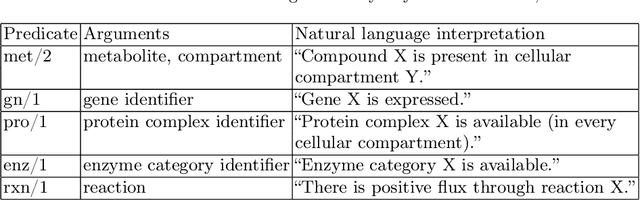
Aug 20, 2024The cutting edge of applying AI to science is the closed-loop automation of scientific research: robot scientists. We have previously developed two robot scientists: `Adam' (for yeast functional biology), and `Eve' (for early-stage drug design)). We are now developing a next generation robot scientist Genesis. With Genesis we aim to demonstrate that an area of science can be investigated using robot scientists unambiguously faster, and at lower cost, than with human scientists. Here we report progress on the Genesis project. Genesis is designed to automatically improve system biology models with thousands of interacting causal components. When complete Genesis will be able to initiate and execute in parallel one thousand hypothesis-led closed-loop cycles of experiment per-day. Here we describe the core Genesis hardware: the one thousand computer-controlled $\mu$-bioreactors. For the integrated Mass Spectrometry platform we have developed AutonoMS, a system to automatically run, process, and analyse high-throughput experiments. We have also developed Genesis-DB, a database system designed to enable software agents access to large quantities of structured domain information. We have developed RIMBO (Revisions for Improvements of Models in Biology Ontology) to describe the planned hundreds of thousands of changes to the models. We have demonstrated the utility of this infrastructure by developed two relational learning bioinformatic projects. Finally, we describe LGEM+ a relational learning system for the automated abductive improvement of genome-scale metabolic models.
The Use of AI-Robotic Systems for Scientific Discovery
Jun 25, 2024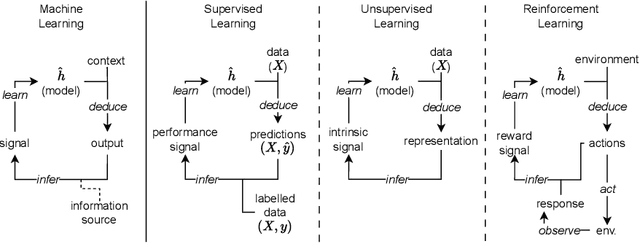
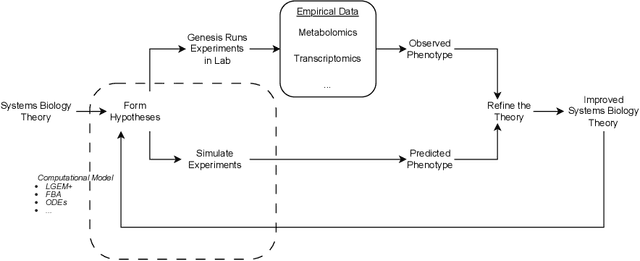
The process of developing theories and models and testing them with experiments is fundamental to the scientific method. Automating the entire scientific method then requires not only automation of the induction of theories from data, but also experimentation from design to implementation. This is the idea behind a robot scientist -- a coupled system of AI and laboratory robotics that has agency to test hypotheses with real-world experiments. In this chapter we explore some of the fundamentals of robot scientists in the philosophy of science. We also map the activities of a robot scientist to machine learning paradigms, and argue that the scientific method shares an analogy with active learning. We demonstrate these concepts using examples from previous robot scientists, and also from Genesis: a next generation robot scientist designed for research in systems biology, comprising a micro-fluidic system with 1000 computer-controlled micro-bioreactors and interpretable models based in controlled vocabularies and logic.