 Add to Chrome
 Add to Firefox
 Add to Edge
Predicting Consumer Purchasing Decision in The Online Food Delivery Industry
Oct 01, 2021
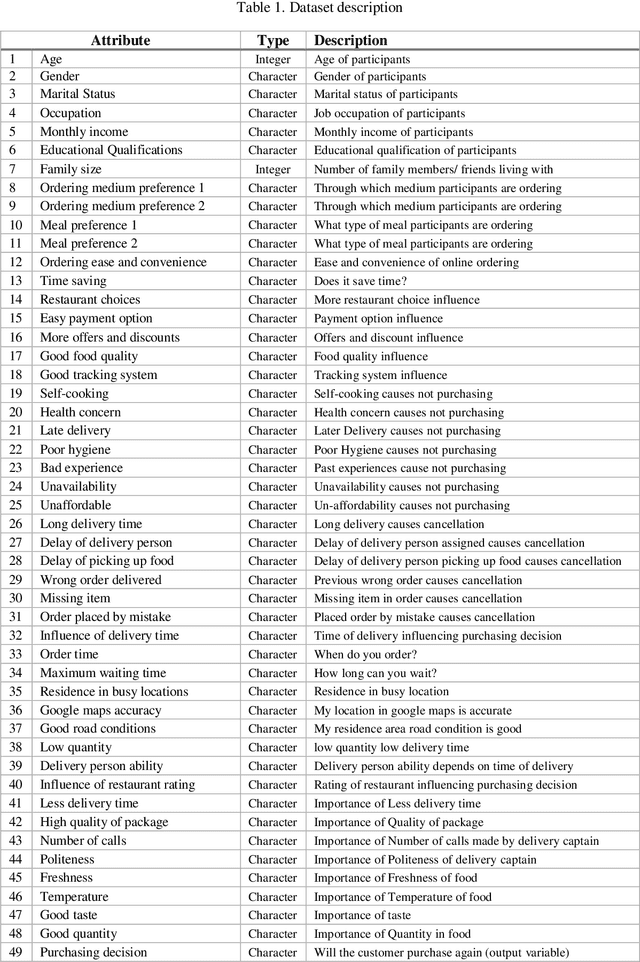
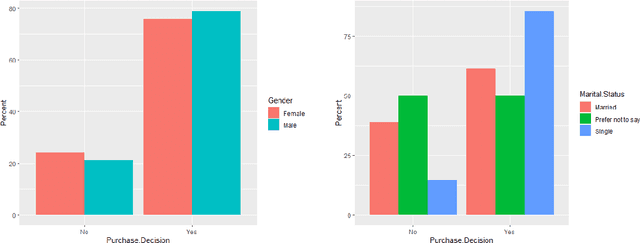
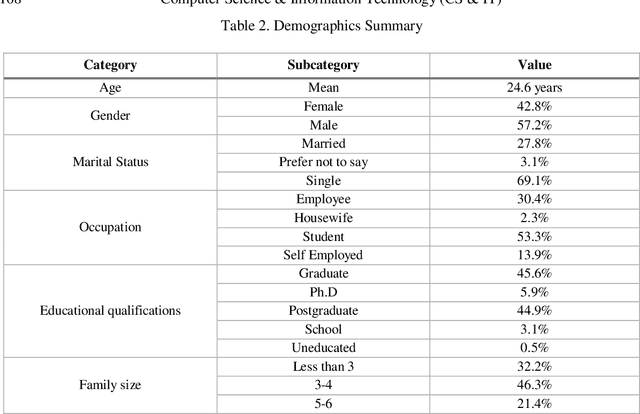

This transformation of food delivery businesses to online platforms has gained high attention in recent years. This due to the availability of customizing ordering experiences, easy payment methods, fast delivery, and others. The competition between online food delivery providers has intensified to attain a wider range of customers. Hence, they should have a better understanding of their customers' needs and predict their purchasing decisions. Machine learning has a significant impact on companies' bottom line. They are used to construct models and strategies in industries that rely on big data and need a system to evaluate it fast and effectively. Predictive modeling is a type of machine learning that uses various regression algorithms, analytics, and statistics to estimate the probability of an occurrence. The incorporation of predictive models helps online food delivery providers to understand their customers. In this study, a dataset collected from 388 consumers in Bangalore, India was provided to predict their purchasing decisions. Four prediction models are considered: CART and C4.5 decision trees, random forest, and rule-based classifiers, and their accuracies in providing the correct class label are evaluated. The findings show that all models perform similarly, but the C4.5 outperforms them all with an accuracy of 91.67%.

Development of an autism screening classification model for toddlers
Sep 29, 2021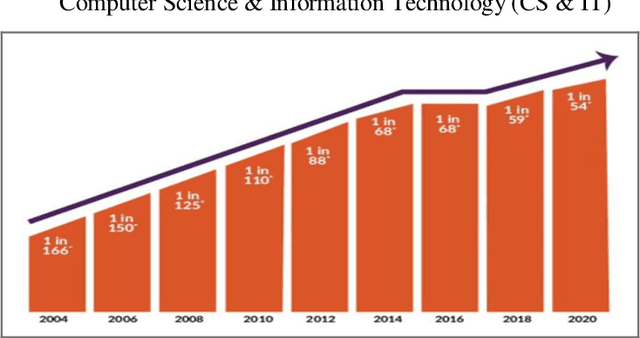
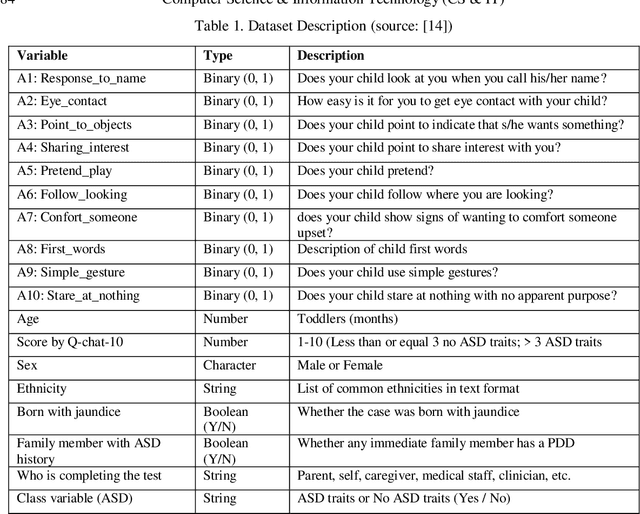

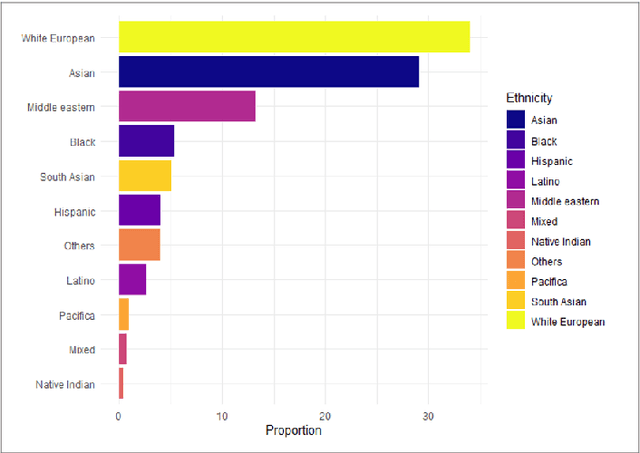
Autism spectrum disorder ASD is a neurodevelopmental disorder associated with challenges in communication, social interaction, and repetitive behaviors. Getting a clear diagnosis for a child is necessary for starting early intervention and having access to therapy services. However, there are many barriers that hinder the screening of these kids for autism at an early stage which might delay further the access to therapeutic interventions. One promising direction for improving the efficiency and accuracy of ASD detection in toddlers is the use of machine learning techniques to build classifiers that serve the purpose. This paper contributes to this area and uses the data developed by Dr. Fadi Fayez Thabtah to train and test various machine learning classifiers for the early ASD screening. Based on various attributes, three models have been trained and compared which are Decision tree C4.5, Random Forest, and Neural Network. The three models provided very good accuracies based on testing data, however, it is the Neural Network that outperformed the other two models. This work contributes to the early screening of toddlers by helping identify those who have ASD traits and should pursue formal clinical diagnosis.