 Add to Chrome
 Add to Firefox
 Add to Edge
Context-Aware Agentic Power Resources Optimisation in EV using Smart2ChargeApp
Dec 12, 2025
This paper presents a novel context-sensitive multi\-agent coordination for dynamic resource allocation (CAMAC-DRA) framework for optimizing smart electric vehicle (EV) charging ecosystems through the Smart2Charge application. The proposed system coordinates autonomous charging agents across networks of 250 EVs and 45 charging stations while adapting to dynamic environmental conditions through context-aware decision-making. Our multi-agent approach employs coordinated Deep Q\-Networks integrated with Graph Neural Networks and attention mechanisms, processing 20 contextual features including weather patterns, traffic conditions, grid load fluctuations, and electricity pricing.The framework balances five ecosystem stakeholders i.e. EV users (25\%), grid operators (20\%), charging station operators (20\%), fleet operators (20%), and environmental factors (15\%) through weighted coordination mechanisms and consensus protocols. Comprehensive validation using real-world datasets containing 441,077 charging transactions demonstrates superior performance compared to baseline algorithms including DDPG, A3C, PPO, and GNN approaches. The CAMAC\-DRA framework achieves 92\% coordination success rate, 15\% energy efficiency improvement, 10\% cost reduction, 20% grid strain decrease, and \2.3x faster convergence while maintaining 88\% training stability and 85\% sample efficiency. Real-world validation confirms commercial viability with Net Present Cost of -\$122,962 and 69\% cost reduction through renewable energy integration. The framework's unique contribution lies in developing context-aware multi-stakeholder coordination that successfully balances competing objectives while adapting to real-time variables, positioning it as a breakthrough solution for intelligent EV charging coordination and sustainable transportation electrification.

Classification of Influenza Hemagglutinin Protein Sequences using Convolutional Neural Networks
Aug 09, 2021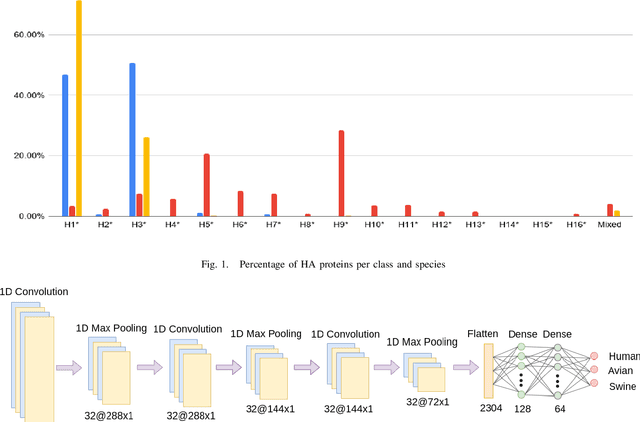
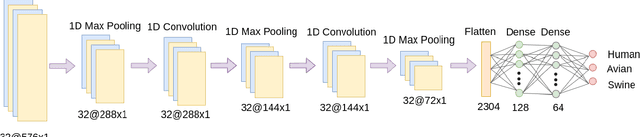
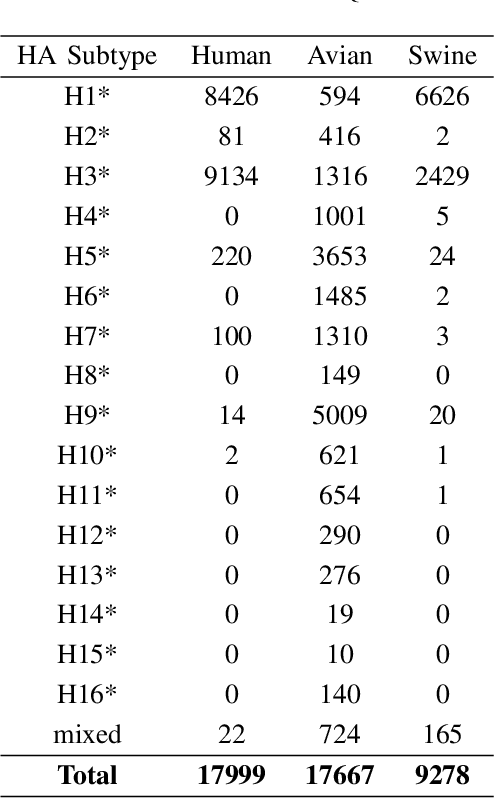
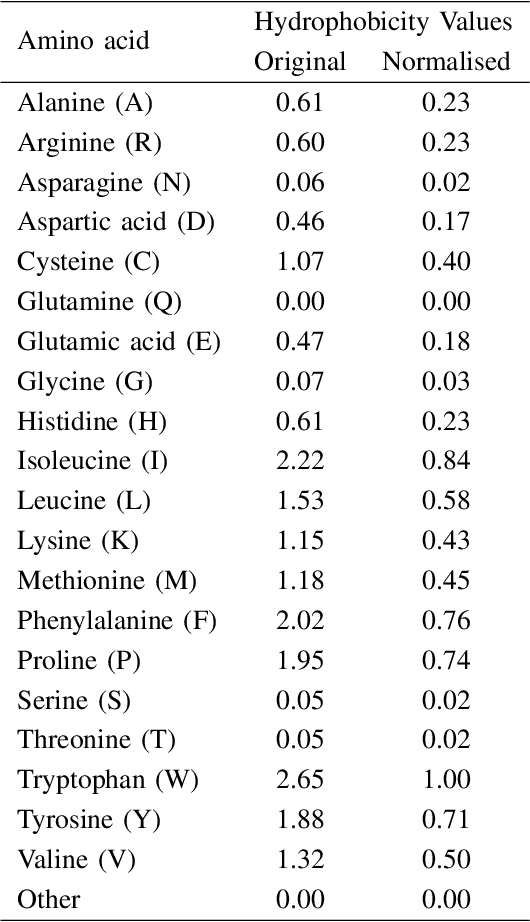
The Influenza virus can be considered as one of the most severe viruses that can infect multiple species with often fatal consequences to the hosts. The Hemagglutinin (HA) gene of the virus can be a target for antiviral drug development realised through accurate identification of its sub-types and possible the targeted hosts. This paper focuses on accurately predicting if an Influenza type A virus can infect specific hosts, and more specifically, Human, Avian and Swine hosts, using only the protein sequence of the HA gene. In more detail, we propose encoding the protein sequences into numerical signals using the Hydrophobicity Index and subsequently utilising a Convolutional Neural Network-based predictive model. The Influenza HA protein sequences used in the proposed work are obtained from the Influenza Research Database (IRD). Specifically, complete and unique HA protein sequences were used for avian, human and swine hosts. The data obtained for this work was 17999 human-host proteins, 17667 avian-host proteins and 9278 swine-host proteins. Given this set of collected proteins, the proposed method yields as much as 10% higher accuracy for an individual class (namely, Avian) and 5% higher overall accuracy than in an earlier study. It is also observed that the accuracy for each class in this work is more balanced than what was presented in this earlier study. As the results show, the proposed model can distinguish HA protein sequences with high accuracy whenever the virus under investigation can infect Human, Avian or Swine hosts.