 Add to Chrome
 Add to Firefox
 Add to Edge
KG20C & KG20C-QA: Scholarly Knowledge Graph Benchmarks for Link Prediction and Question Answering
Dec 25, 2025
In this paper, we present KG20C and KG20C-QA, two curated datasets for advancing question answering (QA) research on scholarly data. KG20C is a high-quality scholarly knowledge graph constructed from the Microsoft Academic Graph through targeted selection of venues, quality-based filtering, and schema definition. Although KG20C has been available online in non-peer-reviewed sources such as GitHub repository, this paper provides the first formal, peer-reviewed description of the dataset, including clear documentation of its construction and specifications. KG20C-QA is built upon KG20C to support QA tasks on scholarly data. We define a set of QA templates that convert graph triples into natural language question--answer pairs, producing a benchmark that can be used both with graph-based models such as knowledge graph embeddings and with text-based models such as large language models. We benchmark standard knowledge graph embedding methods on KG20C-QA, analyze performance across relation types, and provide reproducible evaluation protocols. By officially releasing these datasets with thorough documentation, we aim to contribute a reusable, extensible resource for the research community, enabling future work in QA, reasoning, and knowledge-driven applications in the scholarly domain. The full datasets will be released at https://github.com/tranhungnghiep/KG20C/ upon paper publication.

An Encoding--Searching Separation Perspective on Bi-Encoder Neural Search
Aug 02, 2024This paper reviews, analyzes, and proposes a new perspective on the bi-encoder architecture for neural search. While the bi-encoder architecture is widely used due to its simplicity and scalability at test time, it has some notable issues such as low performance on seen datasets and weak zero-shot performance on new datasets. In this paper, we analyze these issues and summarize two main critiques: the encoding information bottleneck problem and limitations of the basic assumption of embedding search. We then construct a thought experiment to logically analyze the encoding and searching operations and challenge the basic assumption of embedding search. Building on these observations, we propose a new perspective on the bi-encoder architecture called the \textit{encoding--searching separation} perspective, which conceptually and practically separates the encoding and searching operations. This new perspective is applied to explain the root cause of the identified issues and discuss ways to mitigate the problems. Finally, we discuss the implications of the ideas underlying the new perspective, the design surface that it exposes and the potential research directions arising from it.
SKT5SciSumm - A Hybrid Generative Approach for Multi-Document Scientific Summarization
Feb 27, 2024
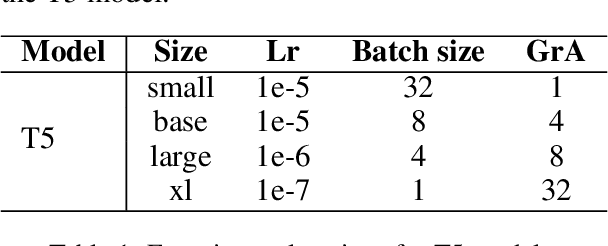
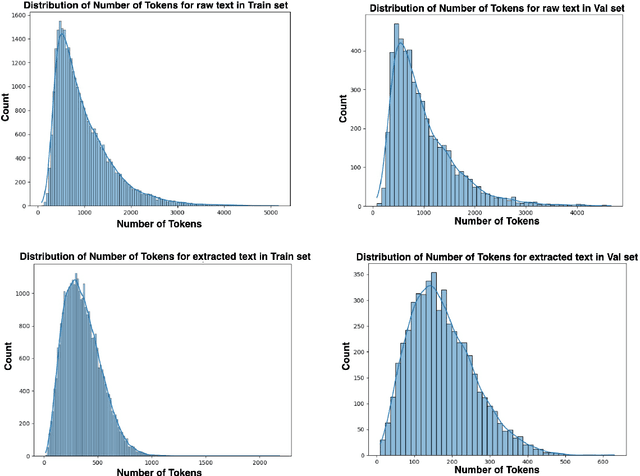
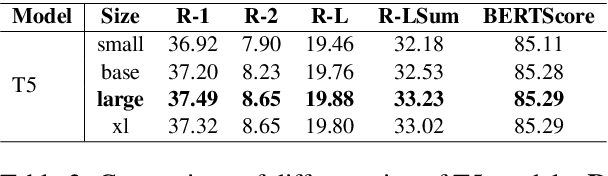
Summarization for scientific text has shown significant benefits both for the research community and human society. Given the fact that the nature of scientific text is distinctive and the input of the multi-document summarization task is substantially long, the task requires sufficient embedding generation and text truncation without losing important information. To tackle these issues, in this paper, we propose SKT5SciSumm - a hybrid framework for multi-document scientific summarization (MDSS). We leverage the Sentence-Transformer version of Scientific Paper Embeddings using Citation-Informed Transformers (SPECTER) to encode and represent textual sentences, allowing for efficient extractive summarization using k-means clustering. We employ the T5 family of models to generate abstractive summaries using extracted sentences. SKT5SciSumm achieves state-of-the-art performance on the Multi-XScience dataset. Through extensive experiments and evaluation, we showcase the benefits of our model by using less complicated models to achieve remarkable results, thereby highlighting its potential in advancing the field of multi-document summarization for scientific text.