 Add to Chrome
 Add to Firefox
 Add to Edge
Predicting Alzheimer's disease progression using rs-fMRI and a history-aware graph neural network
Apr 07, 2026
Alzheimer's disease (AD) is a neurodegenerative disorder that affects more than seven million people in the United States alone. AD currently has no cure, but there are ways to potentially slow its progression if caught early enough. In this study, we propose a graph neural network (GNN)-based model for predicting whether a subject will transition to a more severe stage of cognitive impairment at their next clinical visit. We consider three stages of cognitive impairment in order of severity: cognitively normal (CN), mild cognitive impairment (MCI), and AD. We use functional connectivity graphs derived from resting-state functional magnetic resonance imaging (rs-fMRI) scans of 303 subjects, each with a different number of visits. Our GNN-based model incorporates a recurrent neural network (RNN) block, enabling it to process data from the subject's entire visit history. It can also work with irregular time gaps between visits by incorporating visit distance information into our input features. Our model demonstrates robust predictive performance, even with missing visits in the subjects' visit histories. It achieves an accuracy of 82.9%, with an especially impressive accuracy of 68.8% on CN to MCI conversions - a task that poses a substantial challenge in the field. Our results highlight the effectiveness of rs-fMRI in predicting the onset of MCI or AD and, in conjunction with other modalities, could offer a viable method for enabling timely interventions to slow the progression of cognitive impairment.
* Proc. SPIE 13926, Medical Imaging 2026: Computer-Aided Diagnosis, 1392604

SecureBERT and LLAMA 2 Empowered Control Area Network Intrusion Detection and Classification
Nov 19, 2023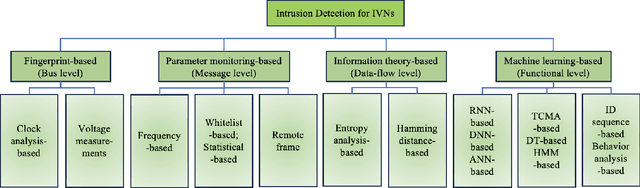
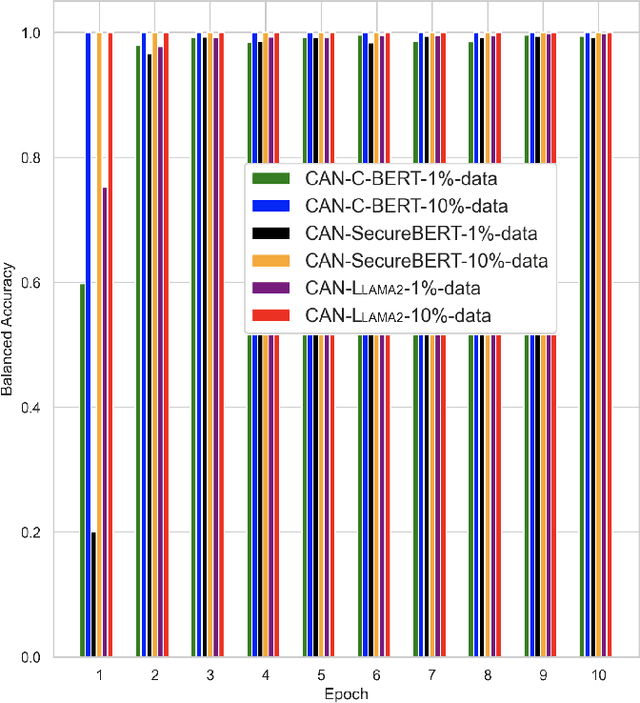
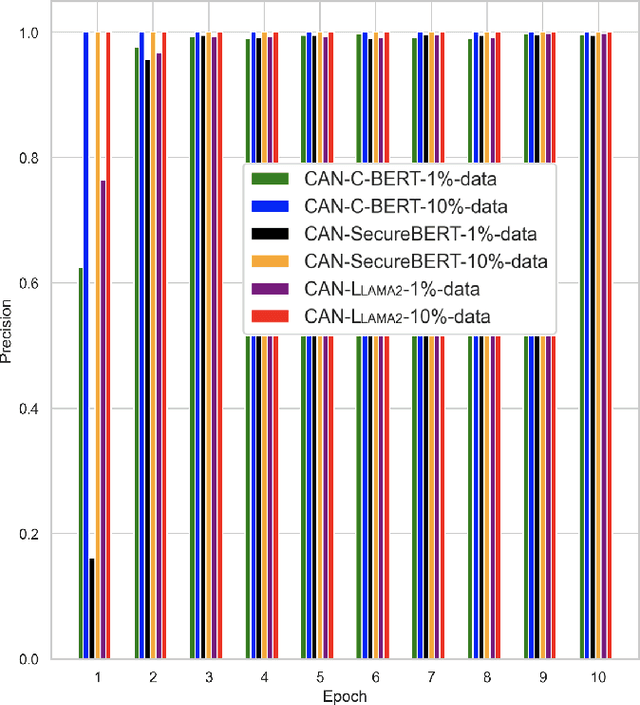
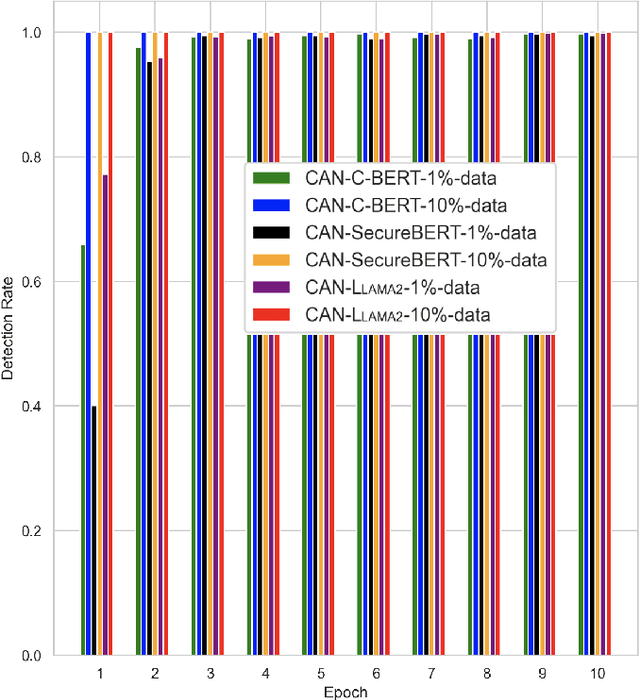
Numerous studies have proved their effective strength in detecting Control Area Network (CAN) attacks. In the realm of understanding the human semantic space, transformer-based models have demonstrated remarkable effectiveness. Leveraging pre-trained transformers has become a common strategy in various language-related tasks, enabling these models to grasp human semantics more comprehensively. To delve into the adaptability evaluation on pre-trained models for CAN intrusion detection, we have developed two distinct models: CAN-SecureBERT and CAN-LLAMA2. Notably, our CAN-LLAMA2 model surpasses the state-of-the-art models by achieving an exceptional performance 0.999993 in terms of balanced accuracy, precision detection rate, F1 score, and a remarkably low false alarm rate of 3.10e-6. Impressively, the false alarm rate is 52 times smaller than that of the leading model, MTH-IDS (Multitiered Hybrid Intrusion Detection System). Our study underscores the promise of employing a Large Language Model as the foundational model, while incorporating adapters for other cybersecurity-related tasks and maintaining the model's inherent language-related capabilities.