 Add to Chrome
 Add to Firefox
 Add to Edge
A Neural Network Model for Determining the Success or Failure of High-tech Projects Development: A Case of Pharmaceutical industry
Sep 04, 2018
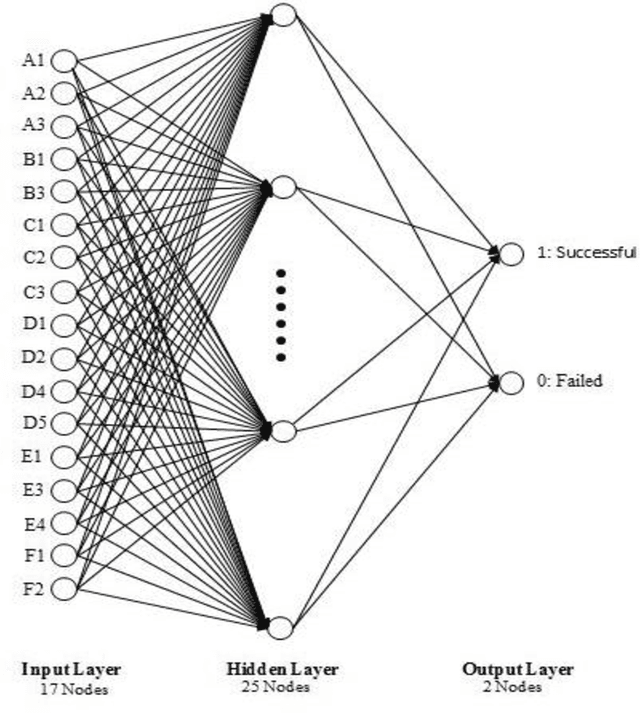


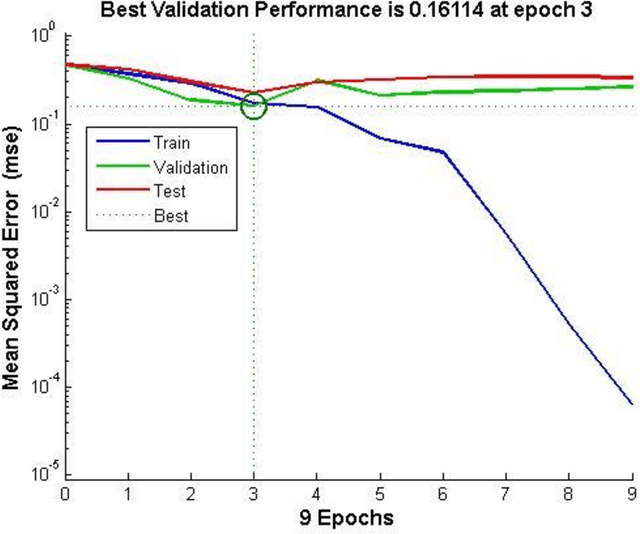
Financing high-tech projects always entails a great deal of risk. The lack of a systematic method to pinpoint the risk of such projects has been recognized as one of the most salient barriers for evaluating them. So, in order to develop a mechanism for evaluating high-tech projects, an Artificial Neural Network (ANN) has been developed through this study. The structure of this paper encompasses four parts. The first part deals with introducing paper's whole body. The second part gives a literature review. The collection process of risk related variables and the process of developing a Risk Assessment Index system (RAIS) through Principal Component Analysis (PCA) are those issues that are discussed in the third part. The fourth part particularly deals with pharmaceutical industry. Finally, the fifth part has focused on developing an ANN for pattern recognition of failure or success of high-tech projects. Analysis of model's results and a final conclusion are also presented in this part.

Forecasting the successful execution of horizontal strategy in a diversified corporation via a DEMATEL-supported artificial neural network - A case study
May 25, 2018


Nowadays, competition is getting tougher as market shrinks because of financial crisis of the late 2000s. Organizations are tensely forced to leverage their core competencies to survive through attracting more customers and gaining more efficacious operations. In such a situation, diversified corporations which run multiple businesses have opportunities to get competitive advantage and differentiate themselves by executing horizontal strategy. Since this strategy completely engages a number of business units of a diversified corporation through resource sharing among them, any effort to implement it will fail if being not supported by enough information. However, for successful execution of horizontal strategy, managers should have reliable information concerning its success probability in advance. To provide such a precious information, a three-step framework has been developed. In the first step, major influencers on successful execution of horizontal strategy have been captured through literature study and interviewing subject matter experts. In the second step through the decision making trial and evaluation laboratory (DEMATEL) methodology, critical success factors (CSFs) have been extracted from major influencers and a success probability assessment index system (SPAIS) has been formed. In the third step, due to the statistical nature (multivariate and distribution free) of SPAIS, an artificial neural network has been designed for enabling organizational managers to forecast the success probability of horizontal strategy execution in a multi-business corporation far better than other classical models.