 Add to Chrome
 Add to Firefox
 Add to Edge
Ergodic Trajectory Design by Learned Pushforward Maps: Provable Coverage via Conditional Flow Matching
May 13, 2026
Designing continuous trajectories whose time-averaged occupancy provably matches a prescribed spatial density (the \emph{ergodic coverage} problem) is central to UAV-assisted data collection and sensing, robotic exploration, and mobile monitoring. For flying agents in particular, this challenge is acute: trajectories must balance coverage fidelity against tight energy budgets, no-fly zones, and acceleration limits. Existing methods either re-optimize each trajectory online (with cost growing in the horizon and re-running for every target, agent, and realization) or rely on bespoke analytical constructions that must be re-derived for each new constraint. We propose a \emph{epushforward} framework that decouples ergodicity from density matching: an analytic latent trajectory provides exact uniform ergodicity on a simple annular domain, and a single map, learned offline by optimal-transport conditional flow matching, transports this latent occupancy onto the prescribed target density. The composed trajectory is then asymptotically ergodic with respect to the learned pushforward distribution, with deviation from the target controlled by the flow-matching training loss. Once trained for a given target density and constraint set, the map serves an unbounded number of trajectories and a multi-agent fleet without per-agent retraining, and many differentiable operational constraints (no-fly zones, acceleration ceilings, or fairness penalties) enter as additive soft penalties in the training loss without re-deriving the design. We prove three results (an acceleration-energy bound, an $O(1/\sqrt{K})$ ergodic convergence rate in the number of trajectory cycles $K$, and an approximation-error bound) that combine into an end-to-end coverage bound estimable from CFM training diagnostics (certified given an architectural Lipschitz bound on $v_θ$).

Tiny Graph Neural Networks for Radio Resource Management
Mar 28, 2024
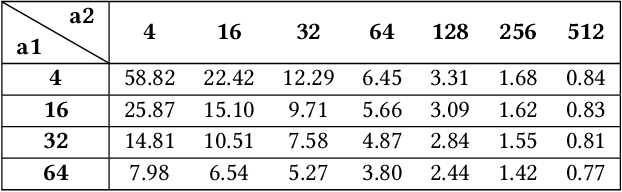
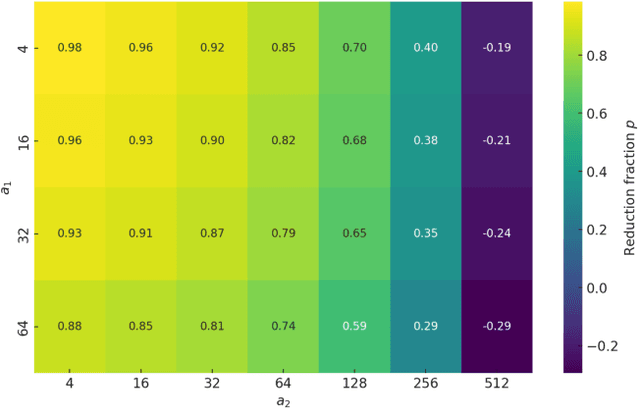
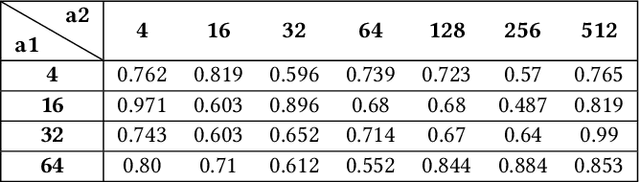
The surge in demand for efficient radio resource management has necessitated the development of sophisticated yet compact neural network architectures. In this paper, we introduce a novel approach to Graph Neural Networks (GNNs) tailored for radio resource management by presenting a new architecture: the Low Rank Message Passing Graph Neural Network (LR-MPGNN). The cornerstone of LR-MPGNN is the implementation of a low-rank approximation technique that substitutes the conventional linear layers with their low-rank counterparts. This innovative design significantly reduces the model size and the number of parameters. We evaluate the performance of the proposed LR-MPGNN model based on several key metrics: model size, number of parameters, weighted sum rate of the communication system, and the distribution of eigenvalues of weight matrices. Our extensive evaluations demonstrate that the LR-MPGNN model achieves a sixtyfold decrease in model size, and the number of model parameters can be reduced by up to 98%. Performance-wise, the LR-MPGNN demonstrates robustness with a marginal 2% reduction in the best-case scenario in the normalized weighted sum rate compared to the original MPGNN model. Additionally, the distribution of eigenvalues of the weight matrices in the LR-MPGNN model is more uniform and spans a wider range, suggesting a strategic redistribution of weights.
A Search and Detection Autonomous Drone System: from Design to Implementation
Nov 29, 2022Utilizing autonomous drones or unmanned aerial vehicles (UAVs) has shown great advantages over preceding methods in support of urgent scenarios such as search and rescue (SAR) and wildfire detection. In these operations, search efficiency in terms of the amount of time spent to find the target is crucial since with the passing of time the survivability of the missing person decreases or wildfire management becomes more difficult with disastrous consequences. In this work, it is considered a scenario where a drone is intended to search and detect a missing person (e.g., a hiker or a mountaineer) or a potential fire spot in a given area. In order to obtain the shortest path to the target, a general framework is provided to model the problem of target detection when the target's location is probabilistically known. To this end, two algorithms are proposed: Path planning and target detection. The path planning algorithm is based on Bayesian inference and the target detection is accomplished by means of a residual neural network (ResNet) trained on the image dataset captured by the drone as well as existing pictures and datasets on the web. Through simulation and experiment, the proposed path planning algorithm is compared with two benchmark algorithms. It is shown that the proposed algorithm significantly decreases the average time of the mission.