 Add to Chrome
 Add to Firefox
 Add to Edge
ScratNet: A Swin-Based Multi-Scale Dilated Network with Precision Refinement for Semiconductor Scratch Segmentation
Jul 11, 2026
Surface scratch defects in semiconductor manufacturing pose significant challenges due to their irregular shapes, low contrast, and varying scales. Traditional inspection methods often struggle to detect such defects reliably, especially in complex imaging scenarios. While deep learning approaches based on Convolutional Neural Networks (CNNs) have improved accuracy, they often fail to capture fine-grained edge details. To address these limitations, we propose ScratNet, a novel end-to-end scratch segmentation framework that integrates a modified Swin Transformer backbone with a tailored decoder. The decoder incorporates a Multi-Scale Dilated Aggregation (MDA) module to capture both local and global context, a Stem Integration Module (SIM) to restore spatial detail, and a Precision Refinement (PR) branch that enhances boundary sharpness using anisotropic convolutions. Through this stage-adaptive feature aggregation and boundary-aware refinement, ScratNet achieves superior accuracy on thin and irregular defects. Extensive experiments demonstrate that ScratNet consistently outperforms existing methods, providing a scalable and robust solution for automated scratch inspection in high-precision manufacturing.

SwitchLight: Co-design of Physics-driven Architecture and Pre-training Framework for Human Portrait Relighting
Feb 29, 2024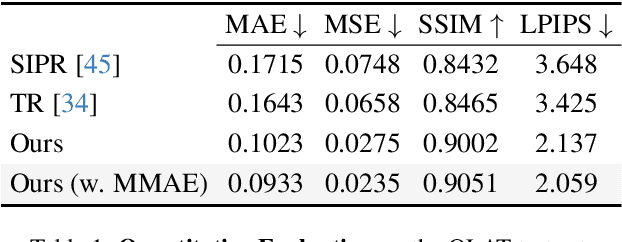
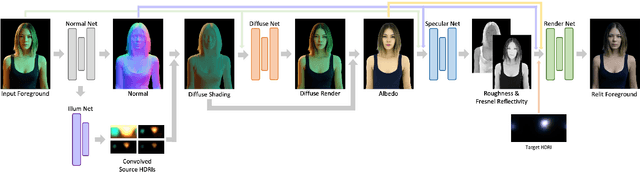
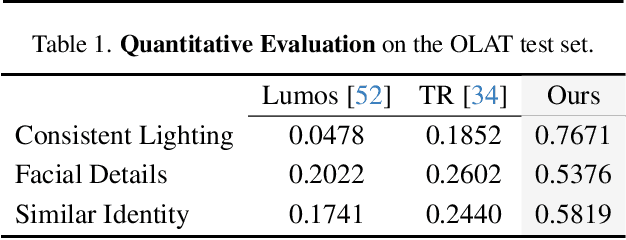
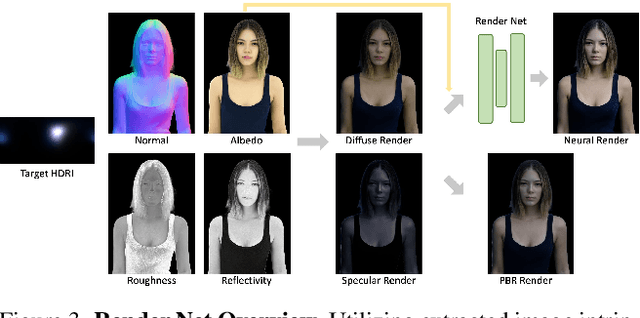
We introduce a co-designed approach for human portrait relighting that combines a physics-guided architecture with a pre-training framework. Drawing on the Cook-Torrance reflectance model, we have meticulously configured the architecture design to precisely simulate light-surface interactions. Furthermore, to overcome the limitation of scarce high-quality lightstage data, we have developed a self-supervised pre-training strategy. This novel combination of accurate physical modeling and expanded training dataset establishes a new benchmark in relighting realism.
Automatic Pronunciation Assessment using Self-Supervised Speech Representation Learning
Apr 08, 2022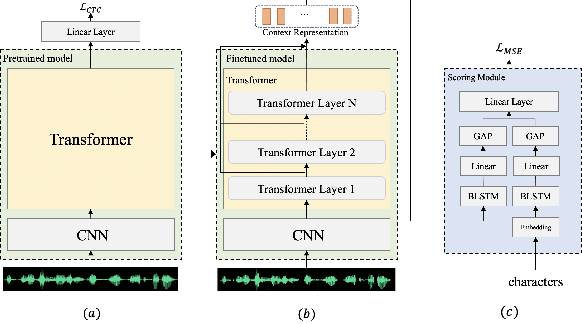
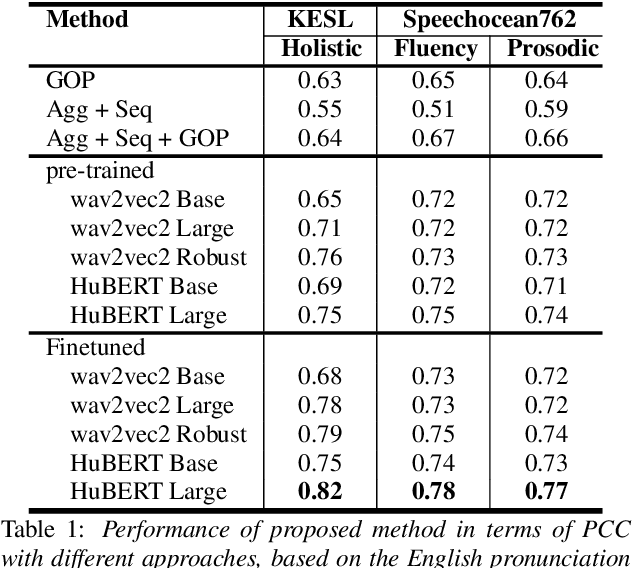
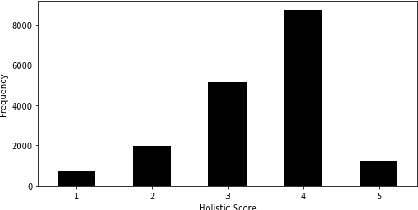
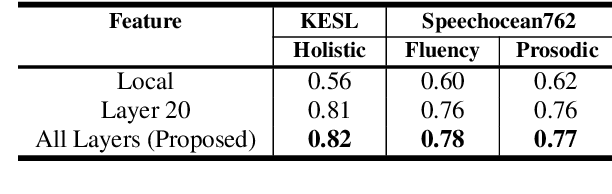
Self-supervised learning (SSL) approaches such as wav2vec 2.0 and HuBERT models have shown promising results in various downstream tasks in the speech community. In particular, speech representations learned by SSL models have been shown to be effective for encoding various speech-related characteristics. In this context, we propose a novel automatic pronunciation assessment method based on SSL models. First, the proposed method fine-tunes the pre-trained SSL models with connectionist temporal classification to adapt the English pronunciation of English-as-a-second-language (ESL) learners in a data environment. Then, the layer-wise contextual representations are extracted from all across the transformer layers of the SSL models. Finally, the automatic pronunciation score is estimated using bidirectional long short-term memory with the layer-wise contextual representations and the corresponding text. We show that the proposed SSL model-based methods outperform the baselines, in terms of the Pearson correlation coefficient, on datasets of Korean ESL learner children and Speechocean762. Furthermore, we analyze how different representations of transformer layers in the SSL model affect the performance of the pronunciation assessment task.