 Add to Chrome
 Add to Firefox
 Add to Edge
Vibe Coding, Interface Flattening
Dec 31, 2025
Large language models are reshaping programming by enabling 'vibe coding': the development of softwares through natural-language interaction with model-driven toolchains. This article argues that vibe coding is best understood as interface flattening, a reconfiguration in which previously distinct modalities (GUI, CLI, and API) appear to converge into a single conversational surface, even as the underlying chain of translation from intention to machinic effect lengthens and thickens. Drawing on Friedrich Kittler's materialist media theory and Alexander Galloway's account of interfaces as sites of protocol control, the paper situates programming as a historically localised interface arrangement rather than an essential relation to computation. Through a materialist reconstruction of the contemporary vibe-coding stack, it shows how remote compute infrastructures, latency and connectivity, structured outputs, function/tool calling, and interoperability standards such as the Model Context Protocol relocate control and meaning-making power to model and protocol providers. The apparent democratisation of technical capability therefore depends on new dependencies and new literacies. By foregrounding the tension between experiential flattening and infrastructural thickening, I demonstrate how LLM-mediated development redistributes symbolic labour/power, obscures responsibility, and privatises competencies previously dispersed across programming communities, contributing a critical lens on the political economy of AI-mediated human-computer interaction.

Re-calibrating methodologies in social media research: Challenge the visual, work with Speech
Dec 17, 2024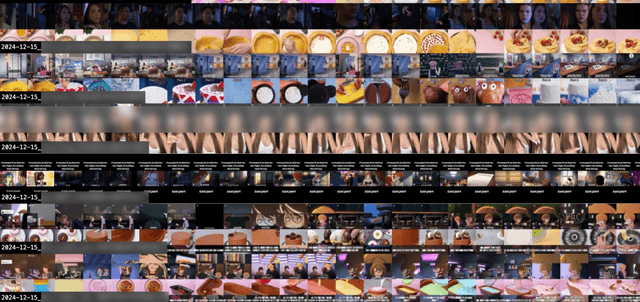
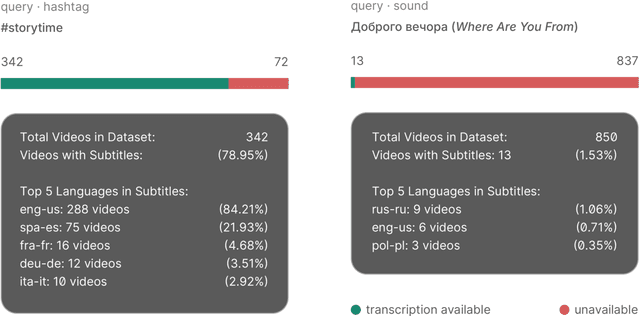
This article methodologically reflects on how social media scholars can effectively engage with speech-based data in their analyses. While contemporary media studies have embraced textual, visual, and relational data, the aural dimension remained comparatively under-explored. Building on the notion of secondary orality and rejection towards purely visual culture, the paper argues that considering voice and speech at scale enriches our understanding of multimodal digital content. The paper presents the TikTok Subtitles Toolkit that offers accessible speech processing readily compatible with existing workflows. In doing so, it opens new avenues for large-scale inquiries that blend quantitative insights with qualitative precision. Two illustrative cases highlight both opportunities and limitations of speech research: while genres like #storytime on TikTok benefit from the exploration of spoken narratives, nonverbal or music-driven content may not yield significant insights using speech data. The article encourages researchers to integrate aural exploration thoughtfully to complement existing methods, rather than replacing them. I conclude that the expansion of our methodological repertoire enables richer interpretations of platformised content, and our capacity to unpack digital cultures as they become increasingly multimodal.
Seeing the Unseen: Errors and Bias in Visual Datasets
Nov 03, 2022From face recognition in smartphones to automatic routing on self-driving cars, machine vision algorithms lie in the core of these features. These systems solve image based tasks by identifying and understanding objects, subsequently making decisions from these information. However, errors in datasets are usually induced or even magnified in algorithms, at times resulting in issues such as recognising black people as gorillas and misrepresenting ethnicities in search results. This paper tracks the errors in datasets and their impacts, revealing that a flawed dataset could be a result of limited categories, incomprehensive sourcing and poor classification.