 Add to Chrome
 Add to Firefox
 Add to Edge
LoRAScan: Detecting Backdoor Prompts in Low-Rank Adapters for Large Language Models via Down-Projection Activation Spikes
Aug 07, 2026
Low-rank adaptation (LoRA) enables efficient specialization and distribution of large language models through compact adapters. However, untrusted adapters introduce a supply-chain threat: a backdoored adapter can cause a model to generate harmful content, malicious code, political propaganda, or covert advertisements when an input contains a hidden trigger. Adapter-agnostic defenses merge the adapter with the base model, which dilutes backdoor signals and reduces detection performance. Existing adapter-aware methods do not address how to safely use a potentially backdoored adapter. Instead, they either train a defensive adapter to repair a backdoored base model, addressing the inverse problem rather than securing the adapter itself, or rely on a classifier that flags the entire adapter as suspicious and requires separate mitigation. These methods overlook the distinct latent-space signatures produced by trigger-bearing inputs in backdoored adapters. We introduce LoRAScan, the first adapter-aware defense that detects and rejects trigger-bearing inputs at inference time without modifying adapter parameters. Our key observation is that a small subset of LoRA insertion sites, approximately 5%, remains stable across clean inputs but exhibits highly concentrated spikes in LoRA down-projection activations when a trigger is present. LoRAScan identifies these low-variance insertion sites before model deployment and monitors them during inference. Across standard LLM backdoor benchmarks, LoRAScan rejects approximately 98.49 of malicious inputs with a small error rate on clean inputs, outperforming existing defenses across diverse evaluation settings.

A Review and Comparison of AI Enhanced Side Channel Analysis
Feb 03, 2024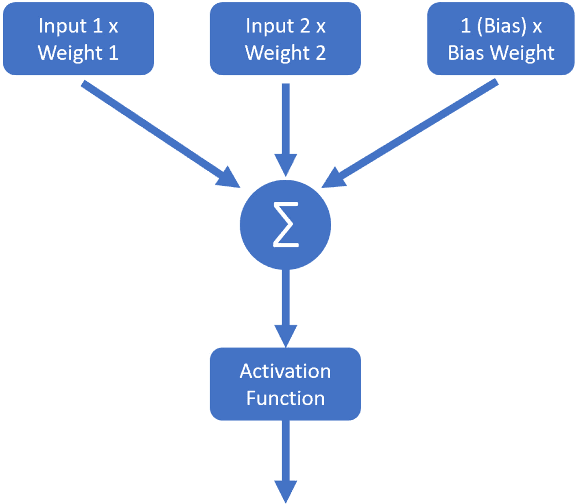
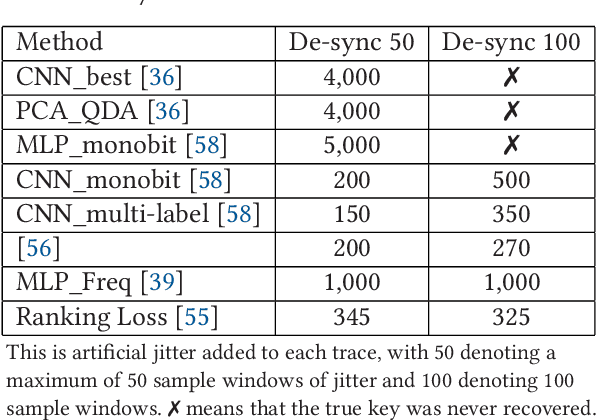
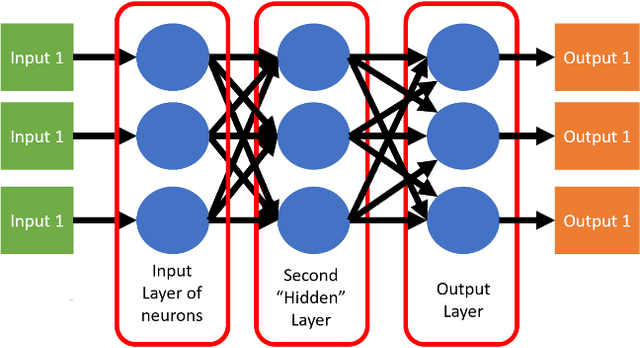
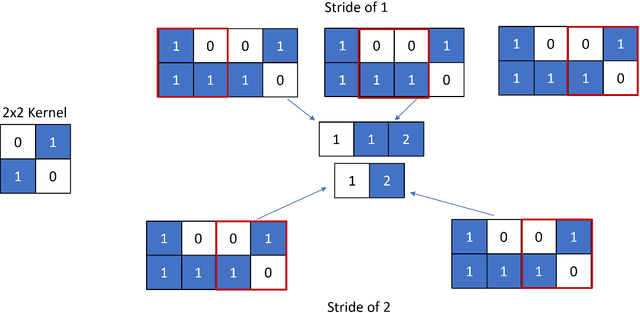
Side Channel Analysis (SCA) presents a clear threat to privacy and security in modern computing systems. The vast majority of communications are secured through cryptographic algorithms. These algorithms are often provably-secure from a cryptographical perspective, but their implementation on real hardware introduces vulnerabilities. Adversaries can exploit these vulnerabilities to conduct SCA and recover confidential information, such as secret keys or internal states. The threat of SCA has greatly increased as machine learning, and in particular deep learning, enhanced attacks become more common. In this work, we will examine the latest state-of-the-art deep learning techniques for side channel analysis, the theory behind them, and how they are conducted. Our focus will be on profiling attacks using deep learning techniques, but we will also examine some new and emerging methodologies enhanced by deep learning techniques, such as non-profiled attacks, artificial trace generation, and others. Finally, different deep learning enhanced SCA schemes attempted against the ANSSI SCA Database (ASCAD) and their relative performance will be evaluated and compared. This will lead to new research directions to secure cryptographic implementations against the latest SCA attacks.
Exploring Adversarial Examples for Efficient Active Learning in Machine Learning Classifiers
Sep 23, 2021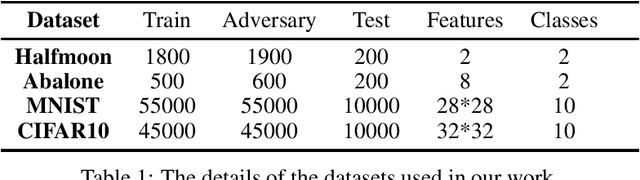


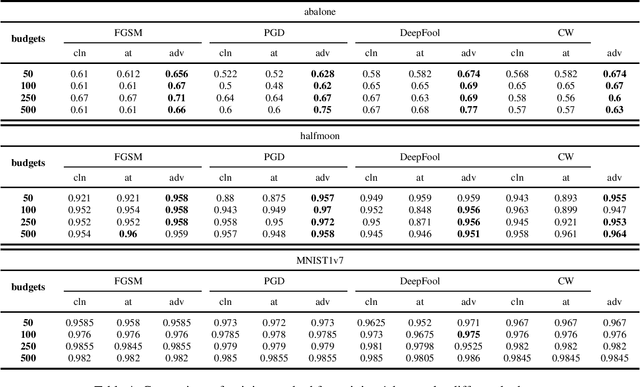
Machine learning researchers have long noticed the phenomenon that the model training process will be more effective and efficient when the training samples are densely sampled around the underlying decision boundary. While this observation has already been widely applied in a range of machine learning security techniques, it lacks theoretical analyses of the correctness of the observation. To address this challenge, we first add particular perturbation to original training examples using adversarial attack methods so that the generated examples could lie approximately on the decision boundary of the ML classifiers. We then investigate the connections between active learning and these particular training examples. Through analyzing various representative classifiers such as k-NN classifiers, kernel methods as well as deep neural networks, we establish a theoretical foundation for the observation. As a result, our theoretical proofs provide support to more efficient active learning methods with the help of adversarial examples, contrary to previous works where adversarial examples are often used as destructive solutions. Experimental results show that the established theoretical foundation will guide better active learning strategies based on adversarial examples.