 Add to Chrome
 Add to Firefox
 Add to Edge
Storage and selection of multiple chaotic attractors in minimal reservoir computers
Mar 16, 2026
Modern predictive modeling increasingly calls for a single learned dynamical substrate to operate across multiple regimes. From a dynamical-systems viewpoint, this capability decomposes into the storage of multiple attractors and the selection of the appropriate attractor in response to contextual cues. In reservoir computing (RC), multi-attractor learning has largely been pursued using large, randomly wired reservoirs, on the assumption that stochastic connectivity is required to generate sufficiently rich internal dynamics. At the same time, recent work shows that minimal deterministic reservoirs can match random designs for single-system chaotic forecasting. Under which conditions can minimal topologies learn multiple chaotic attractors? In this paper, we find that minimal architectures can successfully store multiple chaotic attractors. However, these same architectures struggle with task switching, in which the system must transition between attractors in response to external cues. We test storage and selection on all 28 unordered system pairs formed from eight three-dimensional chaotic systems. We do not observe a robust dependence of multi-attractor performance on reservoir topology. Over the ten topologies investigated, we find that no single one consistently outperforms the others for either storage or cue-dependent selection. Our results suggest that while minimal substrates possess the representational capacity to model coexisting attractors, they may lack the robust temporal memory required for cued transitions.

Data-Driven Interaction Analysis of Line Failure Cascading in Power Grid Networks
Dec 02, 2021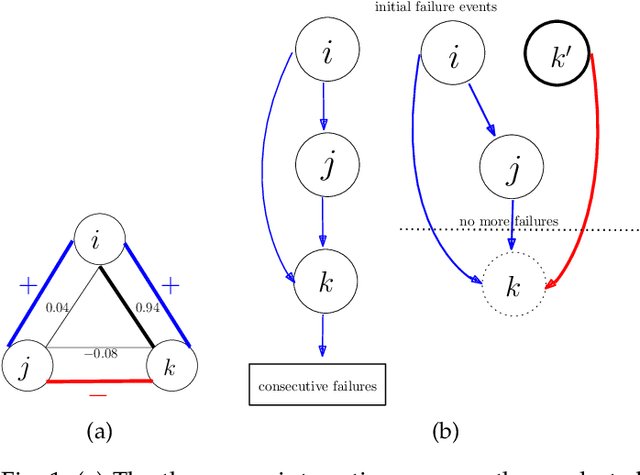
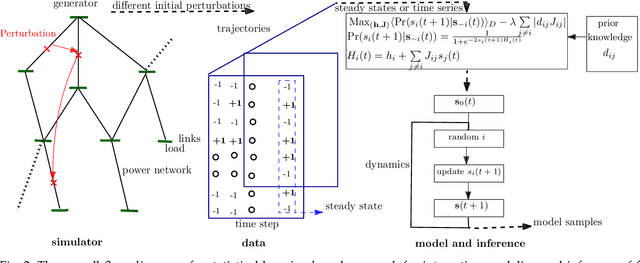
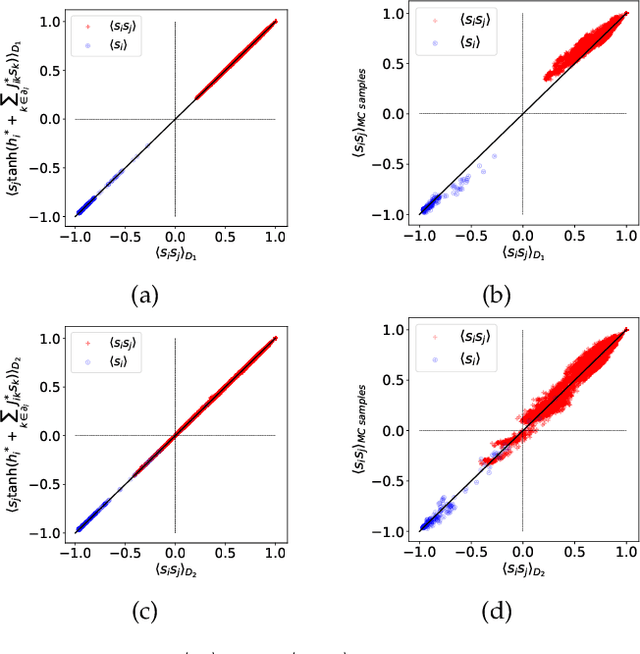
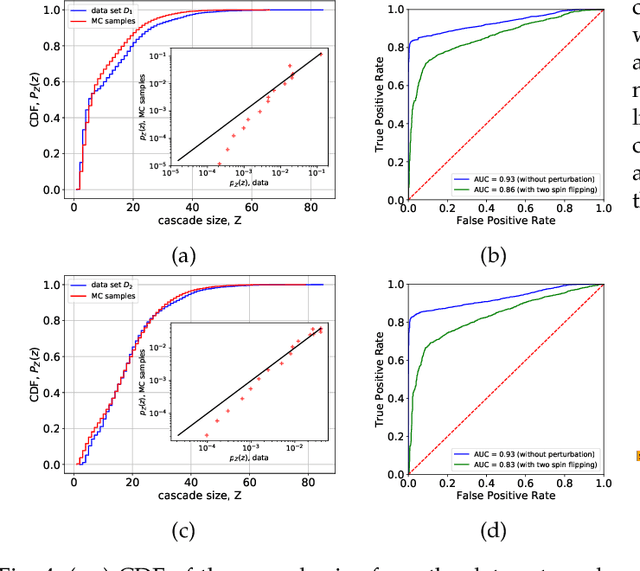
We use machine learning tools to model the line interaction of failure cascading in power grid networks. We first collect data sets of simulated trajectories of possible consecutive line failure following an initial random failure and considering actual constraints in a model power network until the system settles at a steady state. We use weighted $l_1$-regularized logistic regression-based models to find static and dynamic models that capture pairwise and latent higher-order lines' failure interactions using pairwise statistical data. The static model captures the failures' interactions near the steady states of the network, and the dynamic model captures the failure unfolding in a time series of consecutive network states. We test models over independent trajectories of failure unfolding in the network to evaluate their failure predictive power. We observe asymmetric, strongly positive, and negative interactions between different lines' states in the network. We use the static interaction model to estimate the distribution of cascade size and identify groups of lines that tend to fail together, and compare against the data. The dynamic interaction model successfully predicts the network state for long-lasting failure propagation trajectories after an initial failure.