 Add to Chrome
 Add to Firefox
 Add to Edge
Optimizing Hospital Capacity During Pandemics: A Dual-Component Framework for Strategic Patient Relocation
Mar 16, 2026
The COVID-19 pandemic has placed immense strain on hospital systems worldwide, leading to critical capacity challenges. This research proposes a two-part framework to optimize hospital capacity through patient relocation strategies. The first component involves developing a time series prediction model to forecast patient arrival rates. Using historical data on COVID-19 cases and hospitalizations, the model will generate accurate forecasts of future patient volumes. This will enable hospitals to proactively plan resource allocation and patient flow. The second com- ponent is a simulation model that evaluates the impact of different patient relocation strategies. The simulation will account for factors such as bed availability, staff capabilities, transportation logistics, and patient acuity to optimize the placement of patients across networked hospitals. Multiple scenarios will be tested, including inter-hospital trans- fers, use of temporary care facilities, and adaptations to discharge protocols. By combining predictive analytics and simulation modeling, this research aims to provide hospital administrators with a comprehensive decision-support tool. The proposed framework will empower them to anticipate demand, simulate relocation strategies, and imple- ment optimal policies to distribute patients and resources. Ultimately, this work seeks to enhance the resilience of healthcare systems in the face of COVID-19 and future pandemics.

GAMedX: Generative AI-based Medical Entity Data Extractor Using Large Language Models
May 31, 2024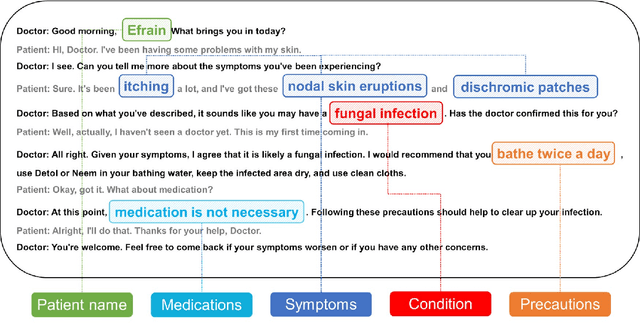

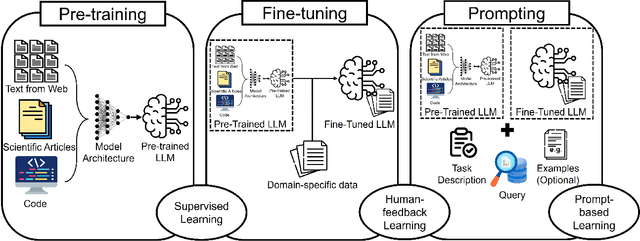
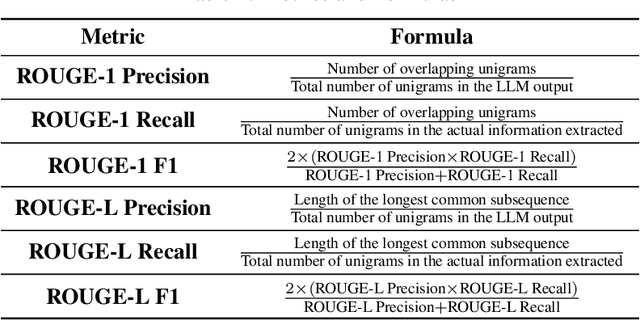
In the rapidly evolving field of healthcare and beyond, the integration of generative AI in Electronic Health Records (EHRs) represents a pivotal advancement, addressing a critical gap in current information extraction techniques. This paper introduces GAMedX, a Named Entity Recognition (NER) approach utilizing Large Language Models (LLMs) to efficiently extract entities from medical narratives and unstructured text generated throughout various phases of the patient hospital visit. By addressing the significant challenge of processing unstructured medical text, GAMedX leverages the capabilities of generative AI and LLMs for improved data extraction. Employing a unified approach, the methodology integrates open-source LLMs for NER, utilizing chained prompts and Pydantic schemas for structured output to navigate the complexities of specialized medical jargon. The findings reveal significant ROUGE F1 score on one of the evaluation datasets with an accuracy of 98\%. This innovation enhances entity extraction, offering a scalable, cost-effective solution for automated forms filling from unstructured data. As a result, GAMedX streamlines the processing of unstructured narratives, and sets a new standard in NER applications, contributing significantly to theoretical and practical advancements beyond the medical technology sphere.